





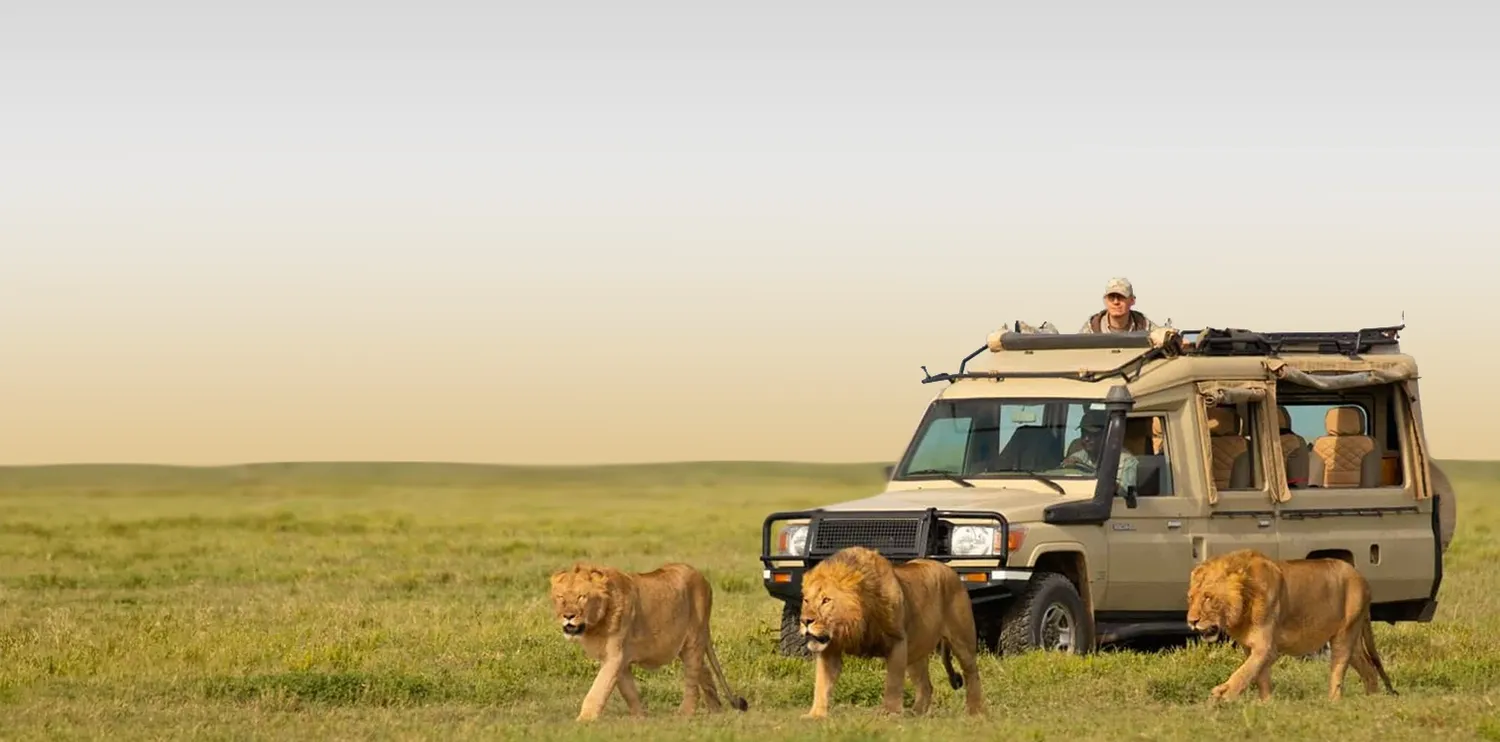
Introduction: The Mechanics of Safari Budgeting
Tanzania is home to some of the most celebrated wildlife sanctuaries on earth, including the vast plains of the Serengeti and the volcanic bowl of the Ngorongoro Crater. However, planning a bespoke high-end journey through these terrains is a significant financial investment. To prepare accurately, you must master how to calculate how much does an 8 day luxury private safari cost in tanzania by dissecting government taxes, exclusive accommodation pricing structures, and elite transportation choices.
A truly private luxury safari is not a packaged group tour; it is a personalized experience where you do not share your custom 4x4 cruiser with strangers, and your daily schedule is dictated entirely by your preferences. This guide provides a mathematical, transparent roadmap to help you calculate your exact costs before booking.
Quick Takeaway
An 8-day private luxury safari in Tanzania typically ranges from $8,500 to $22,000+ USD per person (based on double occupancy). The final total depends heavily on your choice of seasonal dates, lodge tier, and whether you fly between reserves or drive.
When pricing this dream adventure, travelers often choose to book top rated luxury safari operators for Serengeti and Ngorongoro to handle the heavy logistics. An 8-day window allows you to comprehensively cover the iconic Northern Circuit without feeling rushed, but the privacy element means you are absorbing the vehicle and guide expenses exclusively, which drastically influences your calculation.
1. Luxury Accommodation Tier Calculations
Budgeting for luxury accommodation on a Tanzanian safari is a critical task because this area typically accounts for 60% to 70% of your total safari expenses. Unlike standard city hotels, luxury lodges and camps situated in the heart of parks like the Serengeti, Tarangire, or Ngorongoro face immense operational and logistical challenges to deliver five-star service in the middle of the wilderness. This means the rates you pay go toward solar power generation, transporting fresh organic food and premium drinks from cities via air or specialized refrigerated vehicles, and constructing eco-friendly infrastructure that leaves a zero footprint on nature.
To make your 8-day safari calculations accurate, you must understand the two primary accommodation categories (Tiers) to choose from based on your desired comfort level and budget:
- Classic Luxury Camps ($900 to $1,500 per person, per night): These are permanent or mobile tented camps built in a traditional style but equipped with every modern luxury. Inside these large, en-suite canvas tents, you will find king-sized luxury beds, wooden floors or heavy leather rugs, running hot water showers, flushing toilets, and robust solar power systems to charge your devices and provide night lighting. These camps place a strong emphasis on wilderness immersion while offering gourmet three-course meals paired with excellent local and international wines. Examples include camps like Kubu Kubu Tented Lodge or Serengeti Under Canvas.
- Ultra-Luxury Lodges & Exclusive Villas ($1,800 to $3,200+ per person, per night): This is the highest tier of accommodation, competing directly with the world's finest hotels. These properties often feature massive luxury villas built from expensive stone and timber on kopjes or along rivers where wildlife frequent. Here, you enjoy 24-hour private dedicated butler service, private plunge pools on your deck, outdoor bathtubs overlooking the plains, and Michelin-starred quality dining prepared by international chefs. This tier includes ultra-luxury lodges like Singita Sasakwa Lodge, Mwiba Lodge, One&Only, and &Beyond Crater Lodge. Here, you are not just paying for a room; you are paying for exclusivity, top-tier security, and absolute privacy.
When calculating these luxury accommodation rates, there are three critical 'insider' factors that many travelers overlook, leading to unexpected financial surprises upon booking:
A. All-Inclusive Structure
Nearly 95% of all luxury camps and lodges in Tanzania operate on a fully all-inclusive basis. When you pay $1,500 or $2,500 per night, this rate covers:
- Breakfast, lunch (sometimes organized as a bush lunch in the wild), and gourmet dinners.
- All beverages, including local beers, fine international wines, champagne, and spirits (excluding only select ultra-premium vintage items).
- Daily laundry services—crucial since dusty Serengeti game drives require frequent clothes washing.
- High-speed Wi-Fi, even in the middle of the wilderness where standard mobile networks fail.
B. What are 'Concession Fees' or 'WMA Fees'?
This is an area many forget. The Tanzanian government, through TANAPA, charges a Concession Fee (or Special Campsite Fee) for every person staying overnight in a lodge or camp inside a National Park. This fee varies:
- Inside the Serengeti: Approximately $59 to $70.80 per person, per night (including 18% VAT).
- Inside Ngorongoro (NCAA): Can rise to $70.80 or more per night.
- Wildlife Management Areas (WMA): If the camp is just outside the park but within community conservation areas (like northern Tarangire or western Serengeti), you must pay a WMA fee that supports local community development.
Make sure to ask your agent if these fees are included in your quote, because for an 8-day trip (7 nights), concession fees alone can add $400 to $500 per person to the final invoice!
C. Seasonal Impacts (High Season vs. Green Season)
Your lodging calculations must account for the months you travel. The price difference between seasons can be massive:
- Peak Season (July to October, and December to January): Prices are at their highest. A $1,200 room can easily jump to $1,800. This is due to the Great Wildebeest Migration and dry weather making wildlife viewing easier.
- Green Season / Low Season (March to May): This is the long rainy season. Many luxury camps offer massive discounts of up to 30% or 50%. The same $1,200 room might go for $800 a night, with the added benefit of a lush green landscape and empty parks.
Understanding how these camps operate helps you make the right decisions. For example, read more about how to select reliable mobile luxury tented camp safaris in the Serengeti to see how mobile camps position themselves closest to the action based on your travel month, ensuring every penny spent delivers true value.
2. Park Fees and Conservation Tariffs
Tanzania National Parks Authority (TANAPA) and the Ngorongoro Conservation Area Authority (NCAA) set strict conservation and entry fees. Unlike budget options, private luxury safaris require precise calculation of these non-negotiable government tariffs.
| Destination / Item | Daily Fee (USD) | Key Notes |
|---|---|---|
| Serengeti National Park | $82.60 per adult | Includes 18% VAT |
| Ngorongoro Conservation Area | $70.80 per adult | Entry fee per 24 hours |
| Ngorongoro Crater Floor Fee | $295.00 per vehicle | Single descent permit fee |
| Tarangire National Park | $59.00 per adult | Peak season entry tariff |
| Luxury Concession Fees | $59.00 per night | Charged for staying inside the parks |
3. Logistics: Private 4x4 Cruisers and Charter Flights
Navigating the vast wilderness of East Africa requires a carefully planned logistical strategy. Tanzania's legendary Northern Circuit spans hundreds of kilometers across diverse terrains—from the smooth, paved highways leaving Arusha to the punishing, deeply corrugated, and dusty gravel tracks inside the national parks. Getting between these world-renowned reserves can be done either by driving the entire route or by utilizing regional aviation networks. To optimize your precious vacation time and prevent physical exhaustion, you should compare the practical and financial trade-offs of both options. For instance, you can evaluate a luxury fly and drive 8 days tanzania safari itinerary breakdown to see if a hybrid transportation model aligns with your aesthetic and financial expectations.
For the overland segments of your journey, a private, customized 4x4 Safari Land Cruiser accompanied by a highly experienced, professional driver-guide typically costs between $350 and $550 per day. This flat rate covers the vehicle hire, unlimited mileage within the parks, comprehensive passenger insurance, daily fuel, and the guide’s professional fees, meals, and accommodation. If you prefer to skip the long, bumpy transit drives and fly directly into remote bush airstrips to maximize your actual game-viewing hours, you will need to choose safe and licensed domestic safari flight agencies in Tanzania. Well-established local carriers such as Coastal Aviation, Auric Air, and Regional Air operate fleets of rugged Cessna Grand Caravans specifically engineered for unpaved dirt airstrips, with average scheduled flight sectors costing between $250 and $450 per person, per flight leg.
A. The Mathematical Economics of Road vs. Air Travel
Choosing whether to drive or fly between parks is one of the most critical structural decisions in your safari calculation. To understand the economics, look at the physical distance between Arusha and the Northern Serengeti. Driving this route takes approximately 8 to 10 hours of continuous, high-impact travel over bumpy dirt roads, a journey locals affectionately refer to as the "free African massage."
While driving is highly cost-effective for larger groups sharing a single vehicle, it actively drains a full day of your vacation time that could otherwise be spent observing wildlife. Conversely, a scheduled charter flight from Arusha Airport (ARK) directly to Seronera (SEU) or Kogatende (KGT) airstrip in the Serengeti takes only 50 to 90 minutes. This rapid aerial transit keeps you fresh, comfortable, and places you on a game drive in the heart of the savannah by mid-morning, converting lost transit time into high-value wildlife viewing.
B. Technical Anatomy of a Premium 4x4 Safari Land Cruiser
A true luxury safari operator does not use standard commercial vehicles. Premium agencies invest heavily in customizing their fleet to withstand the brutal environment while offering maximum guest comfort. A luxury-spec Safari Land Cruiser includes several custom engineering features:
- Extended Chassis & Modified Seating: Extended frames provide ample legroom and guarantee every passenger a dedicated window seat. High-end vehicles are limited to a maximum of 4 to 6 guests to ensure complete comfort.
- Pop-Up Photographic Roof: Designed for unobstructed 360-degree photography, allowing you to stand and stabilize heavy zoom lenses while keeping you shaded from the tropical sun.
- Onboard Amenities: Integrated electronic charging inverters (110V/220V) at every seat to keep professional cameras and phones powered, a built-in electric refrigerator stocked with chilled mineral water, soft drinks, and beer, and active high-speed Wi-Fi routers.
- Heavy-Duty Off-Road Gear: Dual spare tires, heavy-duty suspension upgrades (such as Old Man Emu leaf springs), a high-capacity recovery winch, and VHF/UHF long-range radios for communication with park rangers and other guides to track rare wildlife sightings.
C. Navigating the Strict Rules of Bush Flight Aviation
If you choose to fly between lodges, you must adapt your packing habits to the strict safety regulations of small-aircraft bush aviation. Because planes like the Cessna Grand Caravan 208B carry limited payloads, they operate under rigid weight-and-balance safety limits:
- Strict Luggage Limits: Guests are limited to a maximum of 15 kg (33 lbs) of total luggage per person, including hand bags and camera gear.
- Soft-Sided Bags Only: Hard suitcases with wheels or rigid plastic frames are strictly prohibited. Bags must be soft-sided duffels so that ground crews can manually squeeze and manipulate them into the aircraft’s small underbelly cargo pods.
- How Luxury Operators Solve This: Top-tier local agencies manage these restrictions seamlessly by offering secure luggage storage facilities at their main offices in Arusha. They will safely store your formal city clothes or heavy international suitcases and deliver them directly to your departure hotel when you return from the bush.
By understanding these physical and mechanical logistics, you can easily see why transportation forms a cornerstone of your safari pricing, and how investing in smart logistics directly elevates the quality and comfort of your private African adventure.
4. Total Cost Calculation for an 8-Day Safari
To provide a clear answer on how to calculate how much does an 8 day luxury private safari cost in tanzania, let's look at a realistic high-end budget template for two travelers sharing a private vehicle during the peak season:
| Budget Component | Calculation Formula | Est. Cost (Per Person) |
|---|---|---|
| Accommodation (7 Nights) | $1,200/night x 7 nights (Shared Double Room) | $8,400 |
| Private Vehicle & Guide | ($450/day x 8 days) / 2 travelers | $1,800 |
| National Park Fees | Daily Entry Fees + Concession Fees + Crater Floor Fee | $1,150 |
| Internal Bush Flights | Arusha to Serengeti + Lake Manyara to Arusha | $700 |
| Guide Gratuities & Extra Tips | $30 to $50 per day for driver-guide and staff | $450 |
| Estimated Total Cost | Sum of all elements (Per Person) | $12,500 USD |
This estimate represents a high-end, comfortable luxury trip. If you are focused on optimizing travel times, you can also understand the cost breakdown of 8 days luxury fly in safari to serengeti to see how an all-flight journey compares.
5. Tips for Selecting Premier Operators
Planning a luxury private safari in Tanzania is a high-stakes investment, and the success of your entire trip rests squarely on the shoulders of the tour operator you choose. In East Africa, hundreds of travel agencies advertise premium services, but there is a vast difference between a broker who simply books hotel rooms and a premier on-the-ground outfit that owns a fleet of customized vehicles, employs highly-trained professional guides, and maintains direct, priority relationships with ultra-luxury lodge managers. Knowing how to check if a Tanzanian safari company is officially registered and licensed is your first and most critical shield against fraud, subpar service, or logistical nightmares during your holiday.
When you book a private safari, your operator is responsible for securing your high-demand national park permits, coordinating domestic bush flights, and providing a reliable, customized 4x4 Land Cruiser. To ensure you are dealing with a legitimate, high-tier agency, you must verify that they are active, dues-paying members of the Tanzania Association of Tour Operators (TATO). TATO membership acts as a badge of credibility, ensuring the operator adheres to a strict code of conduct, possesses comprehensive public liability insurance, and operates ethical business practices. Furthermore, if your Tanzanian adventure is a multi-activity expedition that includes high-altitude climbing, you must do rigorous research on how to select top rated local trekking companies for Mount Meru and Kilimanjaro to guarantee they practice ethical porter treatment and follow strict mountain safety protocols.
Many international travel agencies act as middle-men, charging a hefty 20% to 40% markup just to hand your itinerary over to a local ground handler in Arusha. By doing your homework and reading verified reviews, you can easily bypass these markups and successfully find the best local safari companies in Moshi and Arusha. These local, homegrown premium operators own their vehicles, employ their guides directly, and can offer highly competitive pricing while booking the exact same ultra-luxury lodges (like Singita or &Beyond) and providing identical, if not superior, safety standards on the ground.
A. The Legal Pillars of a Tanzanian Tour Operator
Before wire-transferring thousands of dollars to any agency, demand proof of the following legal registrations. A reputable luxury operator will proudly display or easily provide these documents:
- TALA License (Tourist Agent Licensing Authority): This is the mandatory operational license issued by the Ministry of Natural Resources and Tourism. It is illegal to run safari operations in Tanzania without a valid, active TALA license.
- BRELA Registration (Business Registrations and Licensing Agency): This proves the company is a legally registered corporate entity in Tanzania with a physical office, local tax registration (TIN), and VAT compliance.
- Amref Flying Doctors Insurance: Premier operators automatically bundle AMREF Flying Doctors evacuation coverage into their luxury packages. In the rare event of a medical emergency in the remote corners of the Serengeti, a fully-equipped medical helicopter or plane will evacuate you directly to a high-quality hospital in Nairobi or Dar es Salaam.
B. The Importance of Guide Training and Vehicle Maintenance
On a private safari, you will spend 8 to 10 hours a day with your driver-guide. They are your driver, wildlife spotter, translator, and storyteller. Luxury-tier operators do not hire freelance, underpaid day-laborer guides. Instead, they employ full-time, salaried professionals who hold certifications from prestigious institutions like the College of African Wildlife Management (Mweka).
These guides possess deep, scientific knowledge of animal behavior, botany, and geology. Moreover, premier agencies maintain an in-house garage with dedicated mechanics to service their customized 4x4 Safari Land Cruisers before every departure. These luxury vehicles must be fitted with custom pop-up roofs, heavy-duty suspension systems, high-speed Wi-Fi routers, invertors for charging professional camera gear, and integrated refrigerators stocked with chilled beverages and champagne.
C. Ethical Climbing and Safari Standards (KPAP & More)
If you choose to combine your luxury Serengeti safari with a trek up Mount Kilimanjaro or Mount Meru, safety and ethics become life-or-death variables. Ensure your chosen company is a member of the Kilimanjaro Porters Assistance Project (KPAP). KPAP is an independent watchdog that ensures mountain crews and porters are paid fair wages, provided with warm clothing, fed three nutritious meals a day, and given proper sleeping conditions. High-end trekking companies also equip their guides with pulse oximeters, emergency oxygen cylinders, and hyperbaric chambers, conducting health checks twice daily to monitor altitude sickness (AMS).
By conducting these thorough background checks and choosing a reputable, licensed local operator, you not only protect your financial investment but also support the local Tanzanian economy directly, ensuring your luxury safari has a positive, sustainable impact on both wildlife conservation and local communities.
6. Safari Costing FAQs
Is it cheaper to book with local operators or international agencies?
Yes, booking directly with a locally owned and registered operator in Tanzania is almost always significantly cheaper—often saving you between 20% to 40% on the exact same itinerary—compared to booking through an international travel agency based in the US, UK, or Europe.
International agencies typically act as marketing intermediaries. They do not own safari vehicles, hire local guides, or manage operations on the ground. Instead, when you book with them, they take your payment, deduct their substantial commission markup, and subcontract the actual execution of your safari to a local ground handler based in Arusha or Moshi. By cutting out this middleman, you communicate directly with the team managing your daily logistics, ensuring better customization and real-time support.
To dive deeper into the financial dynamics of these commission margins, retail markups, and payment processing fees, you can read more on how to compare prices between local and international tour operators in East Africa. This guide will help you spot hidden fees and find the best local rates without sacrificing an ounce of luxury.
Does the price of an 8-day safari change depending on the season?
Absolutely. Seasonality is one of the most powerful variables affecting the cost of a Tanzanian safari. The price of an identical 8-day package can fluctuate by thousands of dollars depending on the month you choose to travel. This pricing volatility is driven entirely by supply and demand, which correlates with weather patterns and the movement of the Great Wildebeest Migration:
- Peak/High Season (July to October, and mid-December to January): This is the dry season. Animal tracking is highly predictable as wildlife congregates around permanent water sources, and the dramatic Mara River crossings occur in the northern Serengeti. During this period, luxury lodges operate at 100% capacity and charge maximum rack rates, and booking slots must be secured up to a year in advance.
- Green/Low Season (March to May): This is the long rainy season. While afternoon showers are common, the plains turn a lush, vibrant green, and newborn animals are abundant. To attract travelers, world-class luxury lodges slash their nightly rates by up to 30% to 50%, and concession fees sometimes drop. This is the ultimate time for budget-conscious luxury travelers to experience five-star lodges at a fraction of the cost.
If your primary goal is to witness the spectacular calving or river crossing events, understanding these seasonal pricing shifts is key when deciding how to determine the best month for 8 days luxury wildebeest migration safari in tanzania to optimize both your viewing experience and your financial layout.
What is the average package price for a couple on a luxury safari?
For a couple traveling together, the average total package price for a high-tier, 8-day private safari typically ranges from $17,000 to $28,000 USD (roughly $8,500 to $14,000 per person). This range represents a true luxury experience operating on a double-occupancy basis.
When traveling as a couple, your per-person cost is highly optimized because you share the fixed daily expenses of the private 4x4 Land Cruiser, the guide’s salary, and vehicle fuel, which averages $350 to $550 per day regardless of whether there are two or six passengers inside. If you were traveling solo, you would have to absorb 100% of these private transport costs alone, alongside paying a "single supplement" fee at most luxury lodges.
To see exactly how these costs are distributed among luxury properties, private bush flights, national park tariffs, and professional guiding services, you should check out our detailed financial breakdown to find the average price for 8 days luxury tanzania safari package for two. This will help you and your partner budget precisely and avoid any hidden surprises during booking.
Conclusion: Synthesizing Your Luxury Safari Investment
To accurately answer the multi-faceted question of how to calculate how much does an 8 day luxury private safari cost in tanzania, you must move away from looking at safari pricing as a single flat rate. Instead, a successful budget is built like a puzzle, where you carefully evaluate and assemble three primary financial pillars: exclusive accommodation tiers, mandatory government conservation fees, and your private transportation logistics. When these components are calculated with precision, they transform a complex, intimidating estimate into an organized, transparent financial roadmap. This personalized approach ensures you do not overpay middleman fees while still preserving the absolute comfort, safety, and exclusivity of your wilderness journey.
Every decision you make across these three pillars directly impacts your final price tag. Opting for classic luxury camps over ultra-luxury permanent lodges can instantly save you thousands of dollars without compromising on the thrill of the wild. Similarly, choosing a hybrid "Fly-and-Drive" itinerary allows you to balance the speed and comfort of domestic bush flights with the flexibility of having a private 4x4 Land Cruiser and guide on the ground. By taking control of these variables, you can design a seamless, elite safari experience that perfectly balances your appetite for raw, untamed wilderness adventure with the unparalleled comfort of five-star, world-class hospitality.
A. The Value of Customization vs. Pre-Packaged Deals
Many travelers fall into the trap of purchasing pre-packaged luxury tours, believing they offer the best value. However, in the high-end travel sector, pre-packaged itineraries often include hidden markups, rigid schedules, and pre-selected lodges that may not align with your specific wildlife goals. When you calculate your budget item-by-item, you gain the power of complete customization. If your dream is to spend more time observing the predator-prey dynamics of the Serengeti, you can allocate a larger portion of your budget to premier mobile camps positioned directly along the migration path. If you prefer relaxation, you can shift funds toward an extra night at a secluded lodge on the rim of the Ngorongoro Crater, complete with private spa treatments and dedicated butler services. Customization ensures that every single dollar you spend translates directly into a personalized, high-value experience.
B. The Emotional and Ecological Return on Investment (ROI)
While the financial numbers on your spreadsheet are important, it is equally vital to consider the ecological and social return on your investment. A significant portion of the luxury rates, concession fees, and park tariffs you pay goes directly toward conserving Tanzania’s fragile ecosystems and supporting local communities. Legitimate luxury lodges and premier local operators employ hundreds of local Tanzanians, fund anti-poaching patrol units, build community schools, and invest in clean water initiatives. By choosing reputable, licensed local agencies and eco-conscious properties, your luxury vacation actively contributes to the preservation of Africa’s most iconic wildlife sanctuaries for future generations. This ethical alignment turns your safari from a simple holiday into a deeply meaningful, life-changing journey with a positive global footprint.
C. Final Checklist Before Making Your Booking Deposit
Before you sign any booking contract or authorize a wire transfer, run through this quick, expert-vetted safety checklist to ensure your funds and your vacation are fully protected:
- Get an Itemized Quote: Ensure your tour operator provides a transparent breakdown showing exactly what is included (concession fees, VAT, park permits, meals, and standard drinks) and what is excluded (premium alcohol, tips, and personal insurance).
- Verify Government Licensing: Double-check that the company has an active, officially registered TALA license and is a verified member of TATO (Tanzania Association of Tour Operators).
- Confirm Flight Luggage Allowances: Remember that domestic bush flights in Tanzania have strict luggage limits of 15 kg (33 lbs) per person, which must be packed in soft-sided bags. If you need more gear, you must budget and pay for an extra seat on the aircraft in advance.
- Secure Medical Evacuation Coverage: Confirm that AMREF Flying Doctors evacuation insurance is fully bundled into your package for absolute peace of mind while exploring remote areas.
For official, up-to-date government tariffs, seasonal park fee structures, and official conservation guidelines, we highly recommend consulting the Tanzania National Tourism Portal before finalizing your travel dates. With the right planning, a realistic budget, and a reputable local partner, your Tanzanian safari will be an effortless, unforgettable adventure of a lifetime.