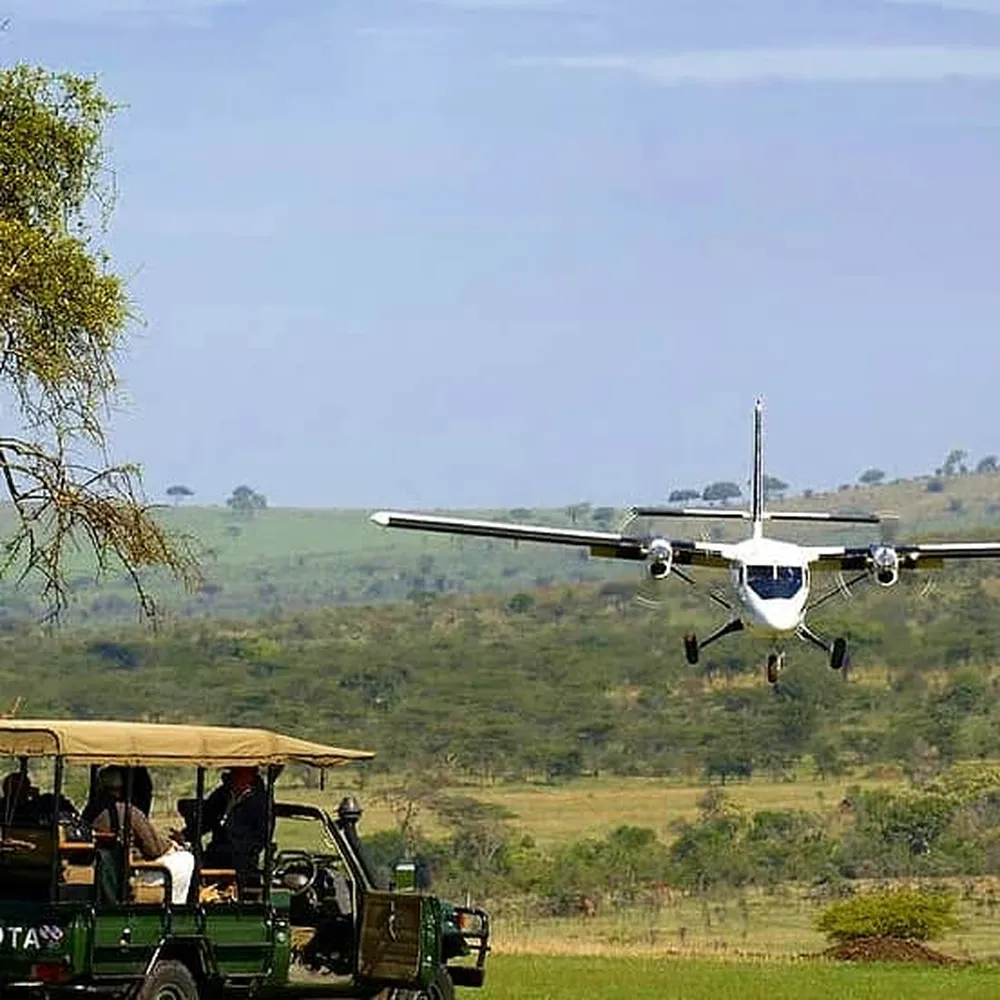
Booking a luxury safari to world-famous locations like the Serengeti National Park, the Ngorongoro Crater, or Selous Game Reserve is an incredible experience. However, exploring the massive geographic layout of Tanzania's northern circuit, rugged southern wilderness, and coastal tropical islands requires smart travel coordination. Many tourists choose local small-aircraft flights to bypass long, bumpy cross-country drives. To protect your investment and avoid illegal, unsafe operators, you must learn how to choose safe and licensed domestic safari flight agencies in Tanzania.
1. The Aviation Regulatory Framework in Tanzania
Every legitimate scheduled airline and private charter outfit routing flights into remote national parks falls under strict government supervision. Before making bank transfers to any aviation agency or tour booking agent, you must understand how to check if a Tanzanian safari company is officially registered and licensed. Legitimate commercial air travel depends entirely on this high-level regulatory oversight to keep daily maintenance standards perfect.
The central governing authority is the Tanzania Civil Aviation Authority (TCAA). This national body coordinates all commercial licenses, conducts random security audits, and grants air operating permits to qualifying companies. A safe aviation agency must keep an active Air Operator Certificate (AOC). This certificate legally verifies that the airline has the infrastructure, specialized mechanics, and flight safety systems needed to carry international passengers.
| Agency Type | Licensing Authority | Key Requirement | Best Use Case |
|---|---|---|---|
| Scheduled Carrier | TCAA Registered | Active AOC & Timetable | Standard Park Hubs |
| Private Charter | TCAA Audited | Ad-hoc Flight Permits | Remote Luxury Camps |
2. Crucial Verification Steps for Safari Flight Agencies
When planning a luxury safari in East Africa, nothing matches the convenience of boarding a light aircraft and landing directly in the heart of the wilderness. However, looking past glossy brochures and professional social media profiles to verify actual corporate and operational credentials is the single most critical step in protecting your journey. In the aviation sector, operating without absolute compliance is not just a financial risk—it is a direct threat to safety. While Tanzania boasts an incredible safety record for its commercial airspace, the rise of unregistered intermediaries and unauthorized private operators—often referred to as "grey charters"—demands that modern travelers become vigilant auditors of their own transport choices. To ensure your entire expedition remains completely secure from the ground up, you can read our extensive, step-by-step insights on how to choose a reliable tour operator for Tanzania safari without getting scammed.
The operational landscape of bush flying requires specialized skill sets, continuous mechanical maintenance, and heavy financial investments in safety systems. Unlicensed operators avoid these high overhead costs by cutting corners, skipping mandatory structural inspections, and flying without public transport permits. For an international tourist or a local agency managing group bookings, identifying these red flags before making wire transfers is paramount. True industry leaders do not hide behind vague promises; they operate with complete transparency and welcome independent verification of their credentials.
To fully secure your itinerary and protect your peace of mind, you must systematically cross-reference and double-check these critical requirements before making any financial commitment or finalizing your seats:
- The Air Operator Certificate (AOC) – The Legal Bedrock of Commercial Flight: An Air Operator Certificate is not a simple business license; it is a highly rigorous, multi-stage authorization granted exclusively by the Tanzania Civil Aviation Authority (TCAA). This document certifies that an aviation agency possesses the professional organization, trained flight crews, specific aircraft maintenance systems, and operational safety manuals required to transport fare-paying passengers. Legitimate and trustworthy bush airlines will proudly display their AOC status or immediately provide their current certificate number upon request. If an agency hesitates, makes excuses, or claims that their certificate is "currently being renewed" without providing official TCAA letters to prove it, you should immediately halt the booking process. Flying with an operator lacking an active AOC means you are stepping onto an unmonitored aircraft with zero regulatory oversight. Read More About License Verification →
- Comprehensive Third-Party Passenger Liability Insurance: A major indicator of a "grey charter" or unsafe operator is the lack of proper commercial aviation insurance. Standard private aircraft insurance policies explicitly forbid carrying commercial, fare-paying passengers. If an accident or an operational disruption occurs under a private policy, the coverage becomes completely void. Safe, licensed safari flight agencies carry extensive third-party passenger liability insurance that strictly adheres to international civil aviation treaties. This multi-million-dollar coverage ensures that in the extremely rare event of an incident, medical evacuations, trauma care, and full financial protections are automatically activated for everyone on board. Always demand written confirmation that your flight is covered under a commercial-grade policy rather than a generic private hull policy. Read More About Travel Insurance Frameworks →
- Active Industry Association Affiliation and Peer Auditing: Beyond mandatory government regulations, elite aviation networks willingly participate in regional trade bodies to benchmark their safety records against world-class standards. Premium operators are almost always active, verified members of prominent professional organizations such as the Regional Air Carriers Association (RACA) of Southern and Eastern Africa or the Flight Safety Foundation. Membership in these elite associations requires airlines to open up their hangars, logbooks, and safety reporting systems to peer reviews and continuous education programs. When an agency invests heavily in these voluntary associations, it proves they are deeply dedicated to maintaining a proactive culture of safety that goes far beyond the minimum requirements of basic local law. Read More About Transport Safety Standards →
Furthermore, the entire experience of a wilderness flight depends on how well the air operator connects with your ground safari logistics. If you are matching local bush flights with ultra-luxury tented camps or high-end permanent lodges, you must ensure your chosen travel coordinator works exclusively with top-tier air networks. Premium aviation agencies maintain direct, real-time communication channels with lodge managers, allowing them to track runway weather changes, surface mud conditions on unpaved airstrips, and wildlife movements near the runways before the aircraft even takes off. This advanced communication minimizes delays, prevents unnecessary diversions, and guarantees a smooth transition from the skies to your open-top safari vehicle. You can dive into more details about selecting top-tier luxury travel partners in our comprehensive guide on how to book top rated luxury safari operators for Serengeti and Ngorongoro.
3. Fleet Performance and Bush Airstrip Suitability
Tanzanian safari planes must routinely handle some of the most challenging aviation environments in the world, landing on unpaved dirt, loose gravel, or seasonal grassy airstrips situated directly inside the wilderness. Because of these incredibly demanding conditions, the structural layout, engine reliability, and rigorous maintenance quality of an aviation agency's fleet are just as critical as their official corporate licenses. Operating a premium flight network across remote reserves requires aircraft engineered specifically for Short Takeoff and Landing (STOL) operations. Reliable local aviation networks choose highly dependable, field-tested turboprops, such as the single-engine Cessna Grand Caravan 208B—the undisputed workhorse of the African bush—or larger twin-engine ATR 42 and ATR 72 models for busier regional airport links between major safari hubs like Arusha, Dar es Salaam, and Zanzibar.
The choice of aircraft directly impacts flight stability, safety margins, and passenger comfort. Bush strips like Seronera in the Serengeti or Kogatende near the Mara River are susceptible to dramatic seasonal changes; heavy rains can turn solid soil into thick mud, while the dry season introduces intense thermal currents and swirling dust. Aircraft like the Cessna Caravan are equipped with specialized high-wing configurations and ruggedized landing gear to protect the fuselage and propeller blades from loose debris during takeoff and landing. Furthermore, regional carriers operating under strict safety regulations must implement continuous engine health monitoring systems, ensuring that every turbine blade, fuel line, and structural joint undergoes non-destructive testing far ahead of standard global timelines.
Using twin-engine planes gives travelers an extra layer of psychological comfort and mechanical redundancy when flying over sprawling forests, deep volcanic calderas, rugged mountain ranges, or large stretches of the open Indian Ocean. This engine redundancy is vital when scheduling island hops and remote coastal transfers. For deep, comprehensive insights on choosing safe, licensed, and highly reliable maritime and coast-hopping outfits, read our expert analysis on how to choose the best boat tour companies for Mafia Island and Pemba.
Read More About Coastal Safety Standards →4. Luggage Limits and Runway Safety Records
Because light aircraft models have limited cabin dimensions, smaller cargo holds, and strict center-of-gravity limits, flight crews enforce baggage regulations with zero exceptions. Safe and professional agencies maintain a strict weight limit, usually capping personal cargo at 15 kilograms (33 pounds) per traveler, and require all items to be packed exclusively in soft-sided duffel bags without rigid frames or rolling wheels. This strict policy is not a matter of airline convenience; it is an irreplaceable aerodynamic safety measure. Heavy, rigid suitcases cannot be compressed to fit into the uniquely shaped under-fuselage cargo pods of bush planes, and more importantly, unexpected weight overages can easily compromise the aircraft's weight-and-balance envelope.
The science behind this restriction is deeply tied to runway length and the atmospheric physics of the African bush. Many safari airstrips are located at high altitudes and experience extreme afternoon temperatures. This combination creates a phenomenon known as "high density altitude," where the air becomes thin and significantly reduces the aerodynamic lift generated by the wings while simultaneously lowering engine thrust. An overloaded aircraft trying to take off from a short, hot, and dusty bush runway runs a severe risk of runway overruns. Certified operators utilize precise load sheets calculated manually by the flight crew before every single departure to ensure the aircraft can clear obstacles safely. Agencies with flawless safety records will proactively communicate these baggage rules during the booking phase and offer secure storage solutions at base airports for travelers who need to leave heavy international luggage behind.
When comparing local flight prices against major international booking platforms to manage your total trip budget, always double-check what is included in the ticket price, such as passenger safety fees, local fuel surcharges, and airstrip landing taxes. Read our direct, transparent assessment on how to compare prices between local and international tour operators in East Africa to fully understand how local runway operational fees, strict safety protocols, and aircraft maintenance costs shape overall travel pricing.
Read More About Tour Pricing Dynamics →5. Insurance Frameworks and Pilot Experience Metrics
A reliable and elite flight agency should clearly outline their insurance coverage limits and explain their pilot recruitment and recurrent training programs. Operating a light aircraft in remote wilderness spaces requires a vastly different set of skills than flying a standard commercial jetliner between major city airports with paved runways and advanced instrument landing systems. Pilots in the bush fly almost exclusively under Visual Flight Rules (VFR), meaning they rely on clear line-of-sight navigation, real-time wind reading, and instant manual adjustments. The top-tier aviation networks in Tanzania refuse to hire low-hour novices; instead, they recruit seasoned captains who have logged thousands of hours in complex bush environments and require them to undergo rigorous emergency simulations and CRM (Crew Resource Management) training twice a year.
These experienced pilots are trained to read subtle environmental signs—such as wild animals crossing the runway, wind direction indicated by moving trees, or soft mud pockets on unpaved surfaces—long before touching down. In tandem with pilot expertise, top-rated carriers back their operations with world-class commercial insurance frameworks. This comprehensive liability protection guarantees that international safety protocols are maintained at every stage of your flight, covering medical evacuations and unexpected flight diversions due to severe weather or wildlife interference.
In addition, always check if the agency has dedicated, permanent ground handlers stationed at major regional hubs like Arusha Airport (ARK), Julius Nyerere International Airport (DAR) in Dar es Salaam, or Abeid Amani Karume International Airport (ZNZ) in Zanzibar. Having trained, onsite staff ensures that check-in processes, luggage weight assessments, passenger manifests, and weather safety communications are handled professionally and efficiently. This structural organization keeps your safari flights on schedule, minimizes human error, and ensures your journey through the African skies is completely secure. You can dive into more details about selecting top-tier travel operators and luxury coordinators in our comprehensive guide on how to book top rated luxury safari operators for Serengeti and Ngorongoro.
Read More About Luxury Operators →6. Frequently Asked Questions (FAQs)
How can I confirm a safari flight agency holds a valid TCAA license?
You can verify an agency's legal status by checking the official, updated registry on the Tanzania Civil Aviation Authority website or by asking the company directly for a copy of their Air Operator Certificate (AOC).
Why do domestic safari flights strictly ban hard-sided suitcases?
Light aircraft baggage compartments have tight spaces and strict weight distribution rules. Soft-sided bags allow ground crews to pack the aircraft evenly, keeping the plane properly balanced during flight.
Are bush airstrips in places like the Serengeti safe for commercial travel?
Yes, bush airstrips are safe when used by licensed agencies. The TCAA regularly inspects these runways, and certified pilots receive specialized training to handle unpaved airfield conditions safely.
7. Official Industry References
To help verify safety data and licensing details for aviation networks in East Africa, consult these official industry resources:
- Tanzania Civil Aviation Authority (TCAA) - The official government regulator for corporate air licenses and domestic safety standards.
- International Civil Aviation Organization (ICAO) - Offers global safety audit metrics and oversight data for East African air travel.