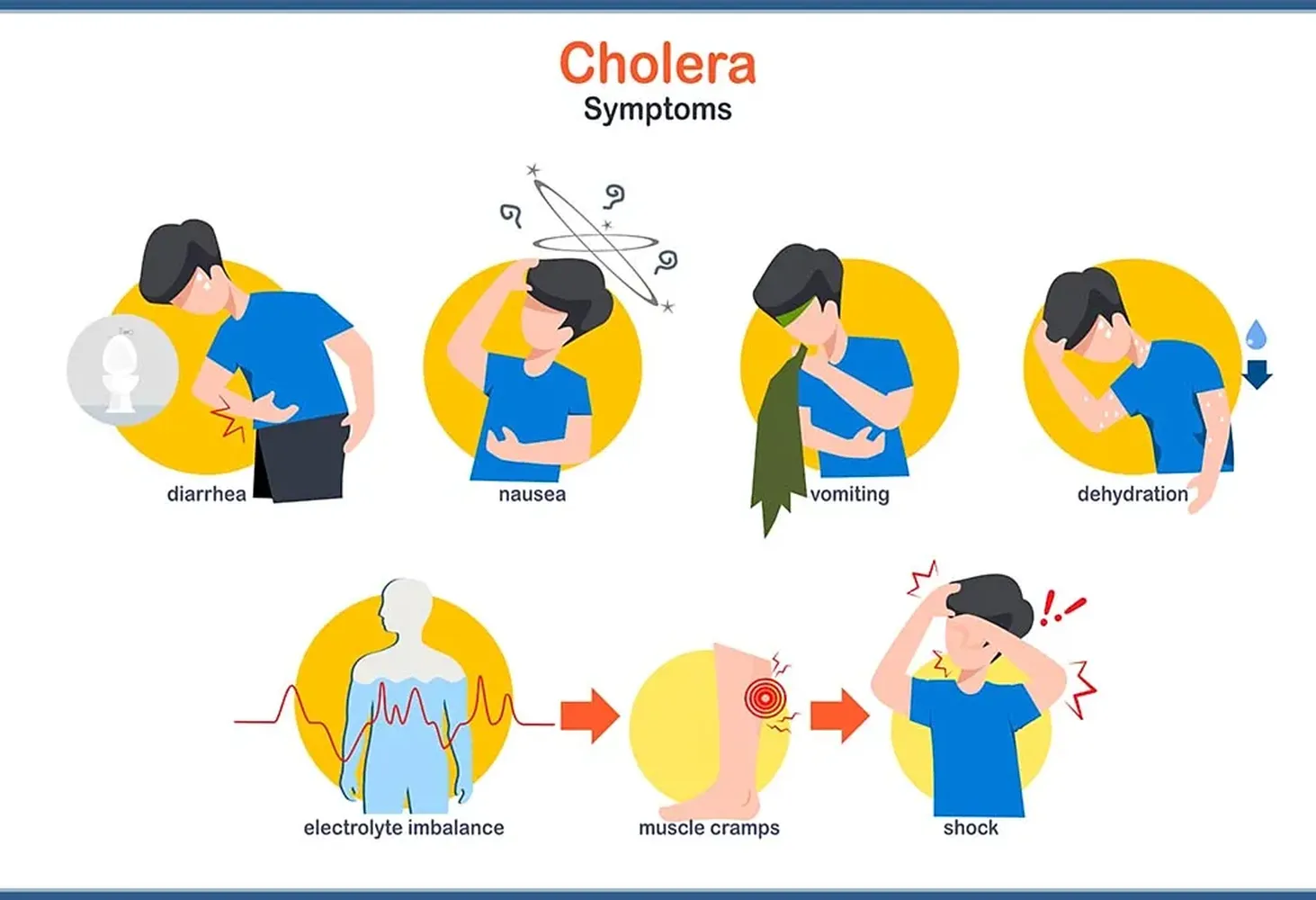
Cholera is a rapid-acting bacterial infection caused by Vibrio cholerae. Because it can cause death within hours if left untreated, knowing how to recognize cholera symptoms early is the most critical step in survival. While many people may have mild or no symptoms, about 1 in 10 infected people will develop severe disease characterized by profuse watery diarrhea.
Key Early Warning Signs of Cholera
Symptoms typically appear 2 to 5 days after exposure to contaminated water or food. The "classic" early signs include:
- Painless Watery Diarrhea: Unlike typical food poisoning, cholera diarrhea often starts suddenly and is not usually accompanied by abdominal cramps.
- "Rice-Water" Stools: The stool looks like the water left over after rinsing rice—pale, milky, and flecked with mucus.
- Frequent Vomiting: This usually occurs in the early stages and can quickly exacerbate fluid loss.
- Leg Cramps: These occur due to the rapid loss of salts (electrolytes) like sodium, chloride, and potassium.
Recognizing Severe Dehydration
In cholera, it is not the bacteria themselves that kill, but the massive dehydration they trigger. You must monitor for these secondary symptoms immediately:
| Symptom | What to Look For |
|---|---|
| Skin Turgor | Skin is slow to bounce back when pinched. |
| Mouth/Eyes | Extreme thirst, dry mouth, and sunken eyes. |
| Urination | Little to no urine output; very dark color. |
| Mental State | Irritability, lethargy, or confusion. |
How to Differentiate Cholera from Regular Diarrhea
It is easy to confuse cholera with other stomach issues. However, if you are in an area with a known outbreak, you should treat every case of watery diarrhea as a potential cholera case. Unlike common bugs, cholera can lead to a loss of up to 1 liter of fluid per hour. If you find it difficult to keep fluids down, you must learn how to treat severe diarrhea and vomiting at home while seeking medical transport.
Immediate Steps After Recognition
If you or a loved one shows these signs, do not wait for a laboratory confirmation. Follow these steps:
- Start ORS Immediately: Use Oral Rehydration Salts. If you don't have a packet, learn how to make ORS at home using clean water, salt, and sugar.
- Seek Professional Help: Go to a cholera treatment center or hospital immediately. Cholera requires IV fluids in severe cases.
- Sanitize Everything: To prevent spread, learn how to purify drinking water at home cheaply and wash hands frequently.
- Monitor Temperature: If a fever accompanies the diarrhea, it may indicate a co-infection. You might need to know how to lower a high fever quickly while en route to the clinic.
Prevention is always better than cure. Ensuring you prevent typhoid fever at home through hygiene often covers cholera prevention as well, as both are waterborne illnesses.
Summary of Quantitative Risks
According to the World Health Organization (WHO), researchers estimate that each year there are 1.3 to 4.0 million cases of cholera, and 21,000 to 143,000 deaths worldwide due to the infection. Early recognition reduces the fatality rate from 50% down to less than 1%.