





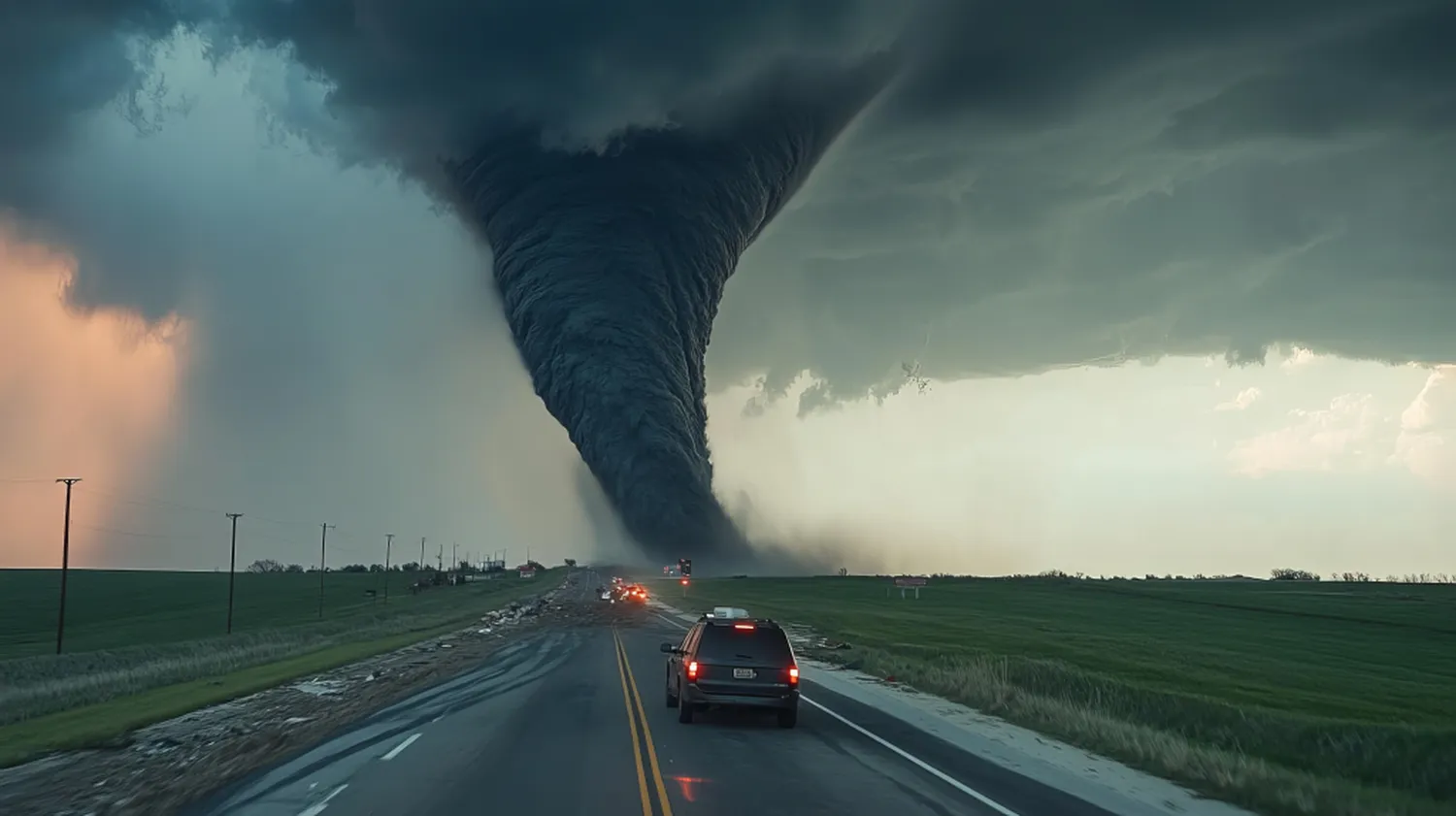
Encountering an active funnel cloud while driving is one of the most terrifying experiences a motorist can face. A vehicle is highly vulnerable to rotating winds that can exceed 200 miles per hour. Knowing exactly how to survive a tornado if you are in a car can make the difference between escaping unharmed and sustaining life-threatening injuries. This guide covers immediate driving decisions, emergency protocols, and myths you must abandon immediately to stay safe on the road.
1. Immediate Actions When a Tornado Appears
If you spot a tornado while driving, your options depend entirely on your current surroundings, traffic flow, and the proximity of the storm. If the funnel cloud is far away and visible, look at its movement relative to a fixed landmark. You can often drive at a right angle away from the tornado's path to find safety.
However, if you are caught in heavy traffic, urban congestion, or if the storm is rapidly approaching, do not attempt to outrun it. Your primary goal is to get off the highway or main road immediately and find a sturdy, permanent structure like a brick-and-mortar grocery store, gas station, or bank. Just as you would consult practical guides on how to stay safe during a severe thunderstorm, reacting quickly to localized updates prevents panic.
2. Choosing Between Your Vehicle and Open Ditches
When structural buildings are not within reach and flying debris begins hitting your vehicle, you must execute an immediate backup survival plan. According to the National Weather Service, you have two primary options based on your immediate environment:
- Stay Inside the Vehicle: Keep your seatbelt fastened securely. Duck down below the line of the windows. Cover your head and neck with your arms, a heavy winter coat, or a thick blanket if you happen to keep one in your back seat.
- Seek a Low-Lying Ditch: If you can safely exit the car and reach an area that is noticeably lower than the level of the roadway, lie flat on your stomach face down and cover your head with your hands. Avoid ditches near large trees or parked heavy machinery that could roll over onto you.
Keeping seasonal emergency items on hand is always wise. Just as learning how to build a winter emergency kit for your car prepares you for freezing temperatures, carrying protective blankets in spring and summer can shield you from broken window glass during extreme windstorms.
3. The Deadly Highway Overpass Myth
One of the most dangerous misconceptions about how to survive a tornado if you are in a car is seeking shelter under a highway overpass or concrete bridge. Many drivers mistakenly believe these massive structures offer overhead protection. In reality, an overpass acts as a narrow wind tunnel.
Emergency Warning: Seeking shelter under an overpass is incredibly dangerous. It restricts wind flow, causing the air current to accelerate rapidly under the bridge. This carries high-speed debris directly into anyone seeking shelter there, while also risking structural collapse or vehicles being swept out into the open vacuum.
If you are on an open interstate, look for exit ramps that lead to service stations or commercial buildings rather than parking beneath a bridge structure.
4. Critical Roadside Safety and Preparedness Data
Tornado situations evolve much faster than typical seasonal hazards. For instance, knowing how to drive safely in heavy fog conditions requires slowing down and utilizing low beams over a prolonged period. A tornado, however, demands high-impact decisions inside a window of 60 to 180 seconds. The data below outlines key metrics related to vehicle vulnerability during extreme storms.
| Tornado Rating | Wind Speeds (mph) | Impact on Vehicles on the Road |
|---|---|---|
| EF0 - EF1 | 65 - 110 mph | Pushes small vehicles, breaks windows, creates flying debris risks. |
| EF2 - EF3 | 111 - 165 mph | Can lift typical consumer cars, SUVs, and heavy trucks completely off the ground. |
| EF4 - EF5 | Over 166 mph | Vehicles are tossed long distances, flattened, or demolished beyond recognition. |
As shown above, any storm rated EF2 or higher makes a standard car entirely unsafe to ride out. While your long-term focus might be on projects like learning how to protect your house from flash floods or managing home resilience, mobile situational awareness is your strongest asset while driving.
5. Frequently Asked Questions
Should I leave my car running if I stay inside during a tornado?
Yes, keep the vehicle running so that your airbags remain fully active and ready to deploy if the car is struck by heavy debris or rolled by high winds.
What should I do if a tornado blocks my view of the road entirely?
Pull over safely to the shoulder immediately, completely away from active lanes of traffic. Turn on your hazard lights, turn the engine on, put on your emergency brake, and execute the protective posture below window level.
Can I open the windows slightly to equalize air pressure?
No. This is an old myth that wastes precious seconds. Keep your windows completely closed to provide a physical barrier against flying glass, dirt, and small debris objects.
Conclusion: Staying Prepared on the Open Road
Mastering how to survive a tornado if you are in a car centers on rapid evaluation and dismissing dangerous myths. Never use an overpass for cover, always seek a permanent building when possible, and secure yourself inside the cabin or low in a ditch if a direct strike is imminent. Staying alert to local weather emergency warnings ensures you can safely navigate sudden regional developments before they compromise your travel path.