





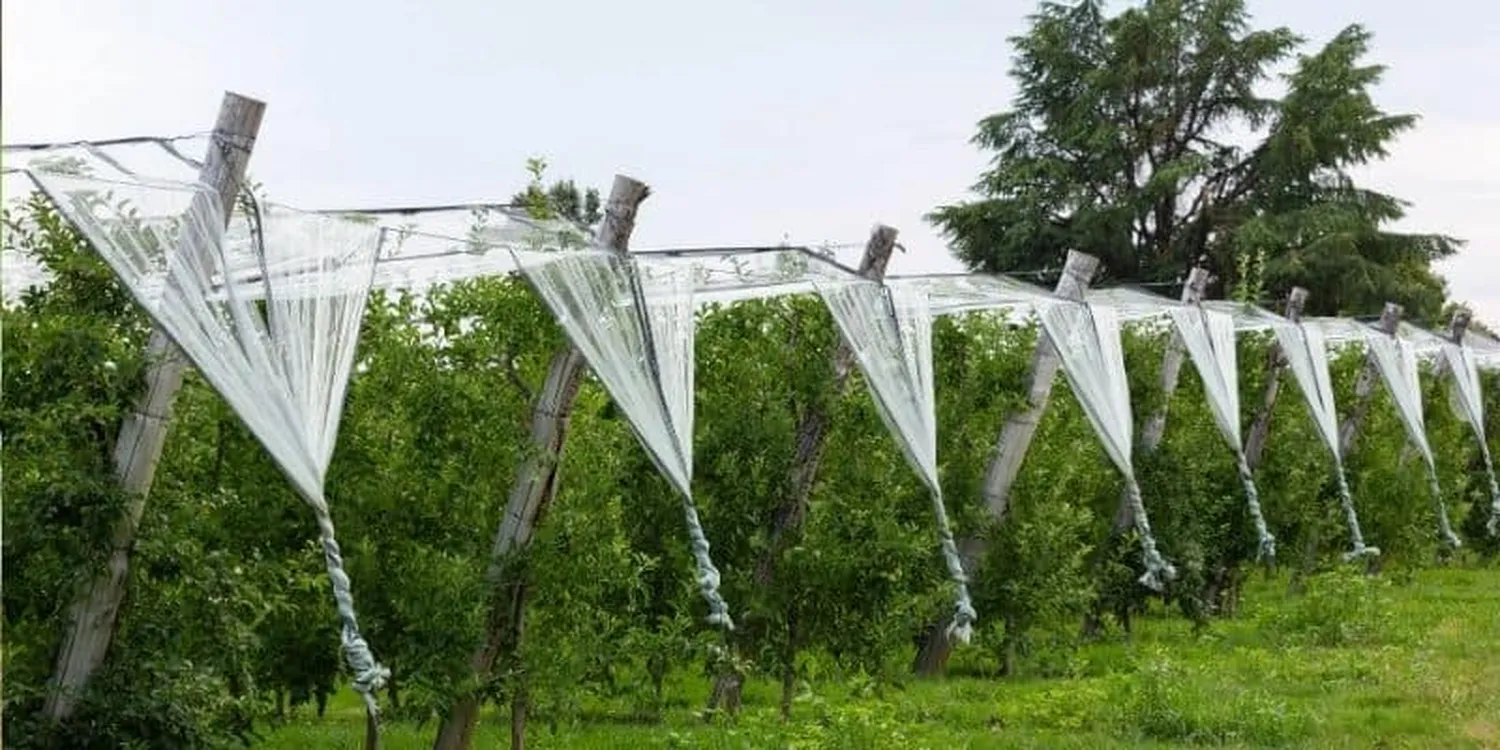
Learning how to protect fruit trees from hail damage is essential for guarding your orchard investments against unpredictable seasonal storms. A few minutes of heavy hail can easily strip away delicate spring blossoms, bruise maturing fruit, and slice open supportive structural bark. These deep wounds leave your trees highly vulnerable to dangerous pathogens and wood rot. By setting up physical barriers and using proper recovery steps, you can save your harvest and protect the long-term health of your trees. This reliable guide walks you through effective anti-hail netting setups, strategic crop protection, and post-storm recovery care.
Why Hail Protection is Critical for Fruit Trees
Ice storms present a major threat to commercial growers and home gardeners alike because they hit with high impact and little warning. When falling ice pellets split open green bark, they destroy the cambium layer—the vital tissue that moves water and nutrients through the tree. Managing this risk is just as important as knowing how to protect greenhouse plants from extreme summer heat; both require shielding delicate leaves from environmental shock.
Without proper protection, wounded trees must redirect their energy away from growing fruit to heal their bark instead. For young saplings, severe stone bruising can completely stunt their growth or kill the tree. Setting up defenses before the storm season arrives ensures your trees keep their canopy structure intact and can support a full crop year after year.
Anti-Hail Material Shielding Options
Not all protective meshes work the same way when facing heavy ice build-up. Choosing the right material ensures your canopy can handle the weight of falling ice without collapsing onto the branches underneath.
| Shielding Type | Mesh Size Range | Best Use Case |
|---|---|---|
| Woven High-Density Polyethylene | 4mm – 6mm | Heavy multi-row commercial orchards |
| Knitted Monofilament Netting | 5mm – 7mm | Individual home backyard fruit trees |
| Temporary Floating Row Covers | Ultra-Fine | Dwarf trees and young spring saplings |
Steps to Build a Reliable Anti-Hail Structure
Follow these structural steps to build a dependable shield that protects your fruit trees from heavy storms and high winds:
- Install Rigid Support Posts: Set sturdy wooden or galvanized steel poles around the perimeter of your tree line. Make sure these posts stand at least two feet higher than the tallest branch so the netting won't weigh down the canopy.
- Stretch Netting with an Angle: Secure your anti-hail mesh over the support frame at a clear, sloped angle. This slope lets ice pellets slide safely off to the sides rather than pooling on top and crushing the structure.
- Anchor Ground Borders Tightly: Use heavy ground stakes or earth staples to pin the bottom edges of the netting down. This keeps strong storm winds from lifting the mesh and exposing the branches.
- Check Structural Soil Moisture: Heavy storms often bring unpredictable downpours. Just like learning how to test soil moisture after heavy rainfall, checking the ground conditions around your frames ensures your root zones stay well-drained and stable during severe weather.
Post-Storm Healing and Orchard Recovery
Your care routine after a storm hits is just as important as the physical barriers you set up beforehand. If ice pellets manage to tear the bark, apply a copper-based fungicide spray within 24 hours. This clean layer blocks airborne spores from entering open wounds and causing deep, systemic infections.
Be careful with your watering and feeding schedules while your trees are recovering. If a major storm leaves your orchard flooded, you need to use strategies similar to how to save a waterlogged plant after heavy rain to dry out the root zones safely. Conversely, if the storm shifts into a prolonged dry spell, adjust your plans to focus on how to water your garden during a severe drought, keeping the roots hydrated without over-stressing the damaged bark. For real-time storm warnings and regional agricultural weather alerts, consult the official updates on the National Oceanic and Atmospheric Administration (NOAA) database.
Frequently Asked Questions
Does anti-hail netting block too much sunlight for fruit production?
No. Quality anti-hail netting only blocks about 8% to 12% of natural sunlight. This minor reduction won't hurt fruit color or sugar development, and it actually helps protect sensitive leaves from sunburn during extreme summer heatwaves.
Can I leave protective netting over my fruit orchard all winter long?
It is best to take the netting down or roll it up after the fall harvest. Heavy winter snow can easily pile up on the fine mesh, creating immense weight that can bow support poles and snap valuable tree branches.
How can I tell if a hail-damaged fruit tree will survive?
Look closely at the main trunk and primary branches. If the hail stripped away less than 50% of the bark around the circumference, the tree can usually heal itself with proper cleanup and fungicide care. If the bark is completely stripped around the base, the tree may be girdled and require replacement.
Conclusion: Protect Your Orchard Assets from Severe Storms
Mastering how to protect fruit trees from hail damage is the best way to safeguard your seasonal harvest and keep your trees producing for years to come. By putting up sloped protective netting, anchoring your support frames tightly, and applying fungicide sprays quickly after a storm, you give your orchard the ultimate defense against ice damage. Stay proactive, track local storm forecasts, and keep your structural barriers ready before severe weather hits your region.