





Comprehensive Introduction to the Western Corridor
The Western Corridor of the Serengeti National Park represents one of East Africa’s most ecologically distinct and dramatically wild safari destinations. Stretching west toward the shores of Lake Victoria, this pristine sub-region is defined by the meanders of the famous Grumeti and Mbalageti Rivers. While many travelers focus heavily on the central Seronera region or the northern Mara River, the Western Corridor offers an intimate, highly exclusive wildlife experience marked by dramatic river crossings, massive Nile crocodiles, dense riverine forests, and expansive savannah stretches.
A 7-day safari centered around the Western Corridor strikes a perfect balance: it gives you ample time to immerse yourself in the tracking of the iconic Great Wildebeest Migration without sacrificing visits to surrounding crown jewels of Tanzania's Northern Circuit, such as the Ngorongoro Crater and Tarangire National Park. To execute this journey flawlessly, understanding seasonal herd movements, booking appropriate accommodations along the riverbanks, and arranging robust ground transport are crucial steps.
Overview of the Western Corridor Safari Experience
Planning a 7-day Western Corridor Serengeti safari requires aligning your travel timeline with nature’s shifting rhythm. Unlike the central plain open grasslands, the Western Corridor presents a varied landscape composed of acacia woodland, riverine forests dominated by giant fig and mahogany trees, and broad floodplain belts. This topography shelters dense populations of resident game, including lions, leopards, black-and-white colobus monkeys, martial eagles, and giant hippos.
When organizing your logistics, you must choose between a fly-in safari (flying into local airstrips like Kirawira or Grumeti) or a scenic drive safari from Arusha. Driving allows you to appreciate the changing geography of Tanzania, whereas flying saves valuable hours for game viewing. Prior to committing funds, always verify that your operator holds valid licensing with the Ministry of Natural Resources and Tourism (MNRT) and the Tanzania Association of Tour Operators (TATO).
Best Timing & Seasonal Dynamics for Grumeti Crossing
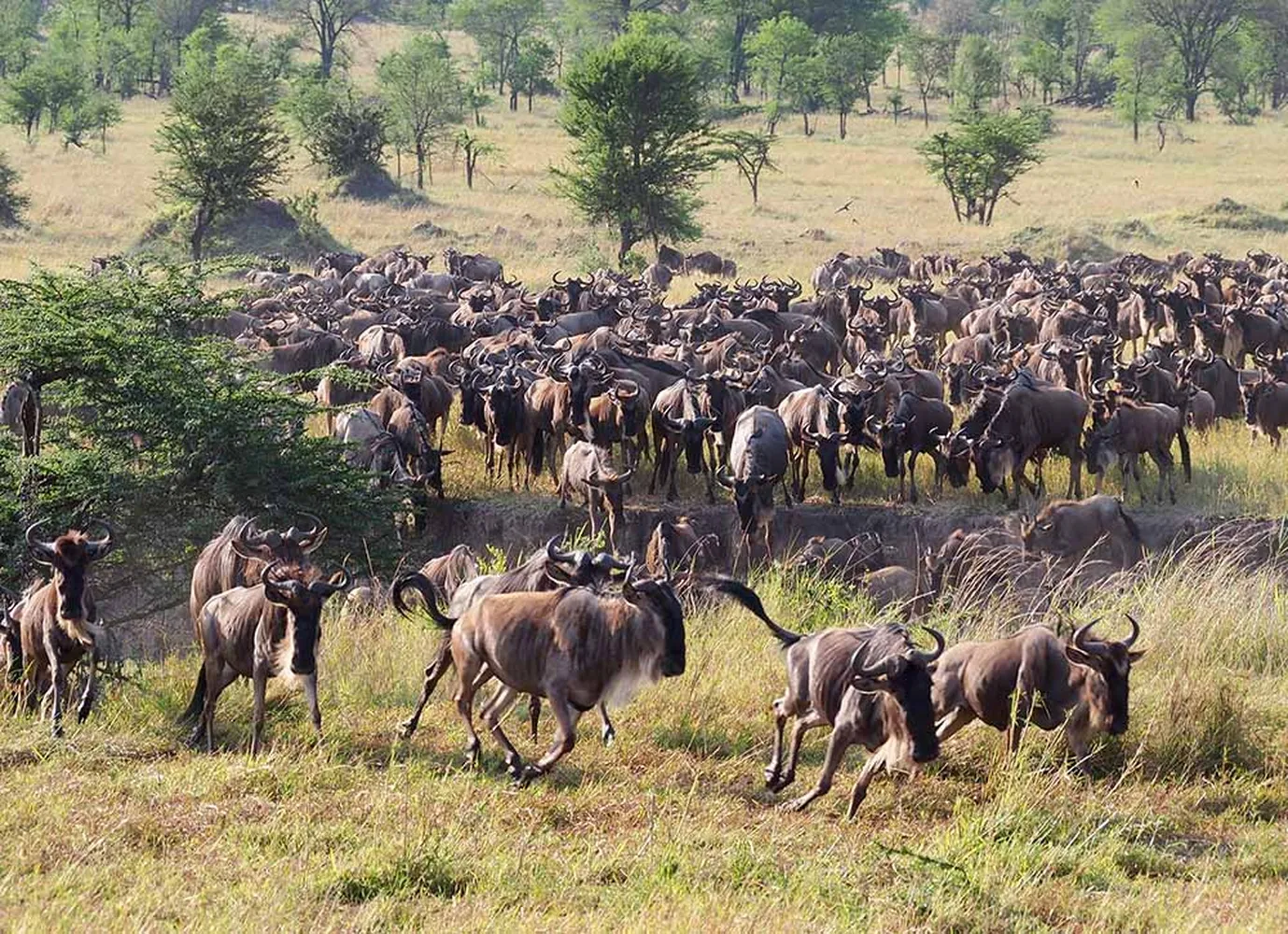
Timing is everything when planning a Great Migration safari in the Western Corridor. The annual arrival of nearly 1.5 million wildebeest and hundreds of thousands of zebras, gazelles, and elands in this sector creates unprecedented safari drama. As herds push westward following fresh rain and sweet grasses, they encounter the steep, muddy banks of the Grumeti River.
The river serves as the first major natural barrier during the northern leg of the Great Migration. Here, animals confront huge Nile crocodiles that have fasted for months awaiting the spectacle. Late May through July marks the prime window to witness these chaotic river crossings. However, even during the dry season (August to October) or green season (November to April), the region boasts incredible resident wildlife viewing with significantly lower tourist vehicle density compared to Central Serengeti.
| Season | Months | Wildlife & Environmental Highlights |
|---|---|---|
| Peak Migration Season | Late May – July | Dramatic Grumeti River crossings, immense wildebeest herds, heavy predator activity (lions, leopards, hyenas). |
| Dry Resident Season | August – October | Clear wildlife visibility along drying riverbeds, excellent lion pride activity, peaceful & uncrowded game drives. |
| Green Season / Calving Prep | November – April | Lush landscapes, vibrant migratory bird watching, lower lodge rates, exceptional photography lighting. |
Detailed 7-Day Day-by-Day Western Corridor Itinerary
This tailored 7-day itinerary balances overland exploration with multi-day immersion in the heart of the Western Corridor. Designed to maximize game viewing hours and lower total travel fatigue, this route covers key northern circuit highlights without feeling rushed.
- Day 1: Arusha to Tarangire National Park. Depart early morning from Arusha. Enjoy a full day of game drives in Tarangire, famous for its iconic baobab trees and giant elephant herds along the Tarangire River. Overnight in Karatu or Mto wa Mbu.
- Day 2: Karatu to Western Corridor Serengeti (Kirawira Sector). Drive through the Ngorongoro Conservation Area, entering Serengeti via Naabi Hill Gate. Enjoy a game drive en route through Seronera before reaching the Western Corridor by late afternoon.
- Days 3 & 4: Full-Day Exploration of the Grumeti & Mbalageti Rivers. Two dedicated days to track wildebeest herds, scan river loops for river crossings, explore dense mahogany forests for rare colobus monkeys, and observe Nile crocodiles basking along the banks.
- Day 5: Western Corridor to Central Serengeti (Seronera Valley). Morning riverbank drive followed by a journey back toward Central Serengeti. Afternoon game drive targeting leopard sightings along the Seronera River and big cats around Maasai Kopjes.
- Day 6: Central Serengeti to Ngorongoro Crater Rim. Early morning game drive around Retima Hippo Pool, followed by a scenic transit drive to the Ngorongoro Conservation Area. Descend into the crater for a 5-hour safari to view the endangered Black Rhino and dense lion populations. Overnight on the rim or in Karatu.
- Day 7: Lake Manyara / Cultural Stop & Return to Arusha. Optional morning walk or brief game drive in Lake Manyara National Park before returning to Arusha or transferring directly to Kilimanjaro International Airport (JRO) for departure.
Wildlife Expectations: Big Cats, Nile Crocodiles & Biodiversity
The ecological diversity of the Western Corridor sets it apart from other sectors of the Serengeti ecosystem. The presence of perennial water sources—namely the Grumeti and Mbalageti Rivers—creates an oasis that sustains dense animal life even during dry spells.
Beyond the Great Migration, the region is famed for its resident lion prides, which have adapted hunting strategies specifically tailored to the river banks and thick riverine bushes. Leopards are frequently spotted resting on large branches of acacia trees along the river courses, while cheetahs utilize the open floodplains surrounding the Kirawira area. Furthermore, bird lovers can spot over 400 species, including African fish eagles, kingfishers, and grey-breasted spurfowl.
Safari Cost Breakdown, Budgeting & TANAPA Park Fees
Planning a financial budget for a 7-day Western Corridor Serengeti safari requires a clear understanding of fixed government statutory fees, park conservation tariffs, seasonal lodging rates, and logistics expenses. Unlike standard holiday trips, a safari in Tanzania involves multiple managing authorities, daily entry fees charged per 24-hour cycle, transit permits, and concession fees for staying inside national park boundaries. By breaking down each financial component, travelers can accurately estimate total package costs and avoid hidden surcharges from tour agencies.
The primary governing body for national park administration is the Tanzania National Parks Authority (TANAPA), while the Ngorongoro Conservation Area Authority (NCAA) oversees the crater region. Both authorities enforce non-negotiable seasonal tariffs that apply to all non-resident, resident, and citizen visitors.
1. Mandatory TANAPA & NCAA Statutory Entrance Fees
Government park fees represent the largest fixed portion of any safari budget. These fees are collected directly to fund ecosystem conservation, anti-poaching patrols, and road infrastructure maintenance across the Northern Safari Circuit.
- Serengeti National Park Entry Fee: For non-resident adults, daily conservation fees are set at $70 USD per person per 24-hour cycle during peak season (and $60 USD during low season), subject to 18% Value Added Tax (VAT), making the effective rate roughly $82.60 USD per day.
- Ngorongoro Crater Conservation Fee: Entry into the Ngorongoro Conservation Area costs $70 USD per adult per 24 hours (excluding 18% VAT).
- Crater Service Fee: Descending into the Ngorongoro Crater floor incurs a fixed vehicle permit fee of $295 USD per vehicle per descent (inclusive of tax).
- Concession & Camping Fees: If your lodge, tented camp, or campsite is situated inside national park boundaries, TANAPA charges a nightly hotel concession fee ranging from $50 to $70 USD per person per night (plus 18% VAT).
2. Tiered Budget Breakdown: Budget, Mid-Range, and Luxury
The overall price of a 7-day Western Corridor safari varies widely depending on your preferred level of accommodation, style of transport (driving vs. flying), and group size. Below is a realistic price breakdown per person based on double occupancy:
| Safari Category | Estimated Cost (Per Person) | Accommodation & Transport Style |
|---|---|---|
| Budget Safari | $1,800 – $2,500 USD | Public campsites or budget lodges outside park gates, shared 4x4 Land Cruiser overland driving. |
| Mid-Range Safari | $2,800 – $4,500 USD | Comfortable permanent lodges and seasonal tented camps inside Serengeti, private 4x4 Land Cruiser. |
| Luxury / Fly-In Safari | $5,500 – $12,000+ USD | Exclusive riverfront luxury lodges in private reserves (e.g., Singita Grumeti), internal domestic flights to Kirawira/Grumeti. |
When comparing quotes between operators, ensure you clarify whether park entrance fees, transit fees, driver-guide accommodation, game drives, fuel, and daily bottled drinking water are fully inclusive in the total price.
3. Variable Costs, Tipping Etiquette & Out-of-Pocket Expenses
In addition to your main safari package, you should allocate extra budget for personal and incidental expenses during your 7-day trip. Key out-of-pocket considerations include:
- Tipping Guidelines: Tipping your professional safari driver-guide is customary in East Africa. The standard guideline is $15 to $20 USD per day per vehicle from the group, while lodge and camp staff tipping usually ranges from $10 to $15 USD per day via a central tip box.
- Optional Activities: Enhancements such as a Serengeti Hot Air Balloon Safari ($550 – $600 USD per person) or guided cultural village visits ($30 – $50 USD per person) are billed separately.
- Tanzania Tourist Visa & Medical Insurance: Tourist visas cost $50 USD for most nationalities ($100 USD for US citizens). Comprehensive travel and medical evacuation insurance (such as AMREF Flying Doctors) is highly recommended.
Where to Stay: Luxury Lodges vs Mobile Tented Camps
Accommodation options in the Western Corridor range from high-end, permanent eco-lodges along private concessions (such as Singita Grumeti Reserves) to semi-permanent or mobile tented camps that adjust their locations according to herd movements. Staying close to the river is paramount during migration months to minimize commute times before morning river crossings begin.
Mobile tented camps offer an authentic bush experience with en-suite canvas tents, solar lighting, hot bucket showers, and campfire dinners under stars. Permanent lodges feature infinity pools, gourmet dining, private decks overlooking riverbanks, and wellness spas.
Packing, Health, Visas & Transport Logistics
Executing a seamless 7-day Western Corridor Serengeti safari requires thorough advance preparation across medical, legal, and operational channels. Because the Western Corridor is one of the more remote sub-regions of the Serengeti ecosystem, addressing transport options, baggage weight limitations, entry permits, and health protocols ahead of time guarantees a stress-free journey into the Tanzanian bush.
1. Travel Visas, Passports & Entry Documentation
All international travelers visiting Tanzania must possess a passport valid for at least six months past their intended departure date, with at least two blank consecutive pages for immigration stamps. Travelers can secure a Tanzania Tourist Visa through the official immigration e-Visa portal prior to departure, or obtain a visa upon arrival at major entry ports like Kilimanjaro International Airport (JRO) or Julius Nyerere International Airport (DAR).
- Ordinary Tourist Visa Fee: $50 USD for most international citizens (valid for single entry up to 90 days).
- US Passport Holders: $100 USD for a Multiple-Entry Tourist Visa (mandatory for US citizens under bilateral agreements).
2. Health Precautions, Vaccinations & Medical Safety
Safeguarding your health during a safari involves taking proactive steps before leaving home. Consult a specialized travel health clinic at least 4 to 6 weeks before your trip to review recommended immunizations:
- Yellow Fever Certification: Proof of Yellow Fever vaccination is required if you are arriving from or transiting for more than 12 hours through a country with endemic Yellow Fever risk.
- Malaria Prophylaxis: The Serengeti and surrounding Northern Circuit lie within malaria-endemic zones. Health authorities strongly advise taking prescribed anti-malarial medication (such as Atovaquone-Proguanil or Doxycycline) and using insect repellent containing DEET.
- Emergency Evacuation Cover: Ensure your tour operator includes local medical evacuation coverage (such as AMREF Flying Doctors) in your package for quick airlift access from bush airstrips directly to regional hospital centers.
3. Comprehensive Packing Guide & Bush Luggage Rules
If your 7-day itinerary includes internal bush flights (such as flying between Arusha/Amani and Kirawira or Grumeti airstrips), strict baggage constraints apply. Regional safari aircraft (such as Cessna Grand Caravans) enforce a maximum baggage weight limit of 15 kg to 15 kg (33 lbs) per passenger, inclusive of hand luggage. Additionally, soft-sided duffel bags without rigid frames are strictly required to fit into narrow aircraft belly pods.
| Category | Recommended Items | Important Tips & Restrictions |
|---|---|---|
| Clothing | Lightweight, breathable, neutral-toned shirts (khaki, olive, tan), long pants, windproof jacket, warm fleece for morning drives. | Avoid dark blue & black: These colors attract tsetse flies in woodland patches. Avoid camouflage patterns (reserved for military). |
| Footwear | Sturdy hiking boots or walking shoes, lightweight sandals for use around camp. | Break in hiking footwear prior to arrival to avoid blisters during guided walking safaris. |
| Gear & Electronics | Binoculars (8x42 or 10x42), DSLR/Mirrorless camera with telephoto lens (200-500mm), power banks, UK 3-pin plug adapters. | Dust protection covers for camera gear are essential during dry-season game drives. |
Frequently Asked Questions (FAQs)
Below are detailed answers to the most common questions travelers ask when organizing a 7-day Western Corridor Serengeti safari expedition.
When is the best time for a 7 day Western Corridor Serengeti safari?
The optimal time to witness the Great Migration in the Western Corridor is from late May through July. During this window, vast herds of wildebeest and zebra converge along the banks of the Grumeti and Mbalageti Rivers to attempt perilous river crossings. However, if you prefer quiet game drives, lower accommodation rates, and lush green scenery, visiting between October and March offers exceptional resident wildlife viewing without the peak-season vehicle crowds.
How much does a 7 day Western Corridor safari cost?
Costs depend heavily on accommodation style and transport logistics. Mid-range road safaris utilizing comfortable tented camps typically cost between $2,800 and $4,500 USD per person. High-end luxury fly-in safaris staying at exclusive riverfront lodges or private reserve concessions range from $6,000 to over $12,000 USD per person. These estimates usually cover TANAPA/NCAA park fees, game drives, meals, vehicle use, and driver-guide fees.
Is 7 days enough time to visit the Western Corridor and Ngorongoro?
Yes, 7 days is considered the sweet spot for a comprehensive Northern Circuit safari. A well-designed 7-day route allows you to spend 2 to 3 full days exploring the Grumeti River and Kirawira sector, 1 day in Central Serengeti (Seronera), 1 day exploring the Ngorongoro Crater floor, and 1 day in Tarangire National Park, all without feeling overly rushed.
Which airstrip should I fly into for the Western Corridor?
The two main bush airstrips serving the Western Corridor are Kirawira Airstrip and Grumeti Airstrip (GTZ). Domestic regional carriers such as Auric Air, Coastal Aviation, and Flightlink schedule daily flights connecting these airstrips directly with Arusha Airport (ARK), Kilimanjaro International Airport (JRO), and Zanzibar (ZNZ).
What makes the Grumeti River crossing different from the Mara River crossing?
While both crossings offer thrilling wildlife encounters, the Grumeti River crossing occurs earlier in the migration cycle (May–July) and is framed by dense riverine forest rather than open grasslands. The Grumeti River is particularly famous for housing some of Africa’s largest giant Nile crocodiles. Additionally, the Western Corridor experiences lower tourist vehicle congestion compared to the Northern Mara River sector.
Comprehensive Conclusion & Final Expert Recommendations
Planning a 7 day Western Corridor Serengeti safari is one of the most rewarding wildlife investments you can make in East Africa. Stretching from the grassy acacia woodlands of Central Seronera to the lush floodplains near Lake Victoria, the Western Corridor offers an exceptional combination of high-density resident game and heart-pounding seasonal migration action. Whether you are standing on the banks of the Grumeti River waiting for thousands of wildebeest to brave crocodile-infested waters or tracking resident lion prides in private concessions, this region delivers an authentic, raw wilderness experience that stays with you for a lifetime.
To ensure your trip is seamlessly executed and free of operational hurdles, careful attention must be paid to three core pillars: timing, logistics, and operator credentials. Choosing the right month determines whether you witness massive herd movements or enjoy quiet, low-density resident game drives. Furthermore, securing permits early through official wildlife authorities avoids delays at park gates and ensures guaranteed accommodation spots during peak season months.
Summary of Essential Steps for Your 7-Day Journey
To make the most of your 7-day itinerary across the Western Corridor and the Northern Circuit, keep these expert-tested steps at the top of your planning checklist:
- Align Travel Dates with Herd Movements: Target mid-May to July for Grumeti River migration crossings, or plan between October and March for peaceful, low-season resident game viewing with fewer safari vehicles around.
- Optimize Your Transit Strategy: Decide whether a classic overland route via Tarangire and Ngorongoro fits your style, or opt for domestic fly-in options straight to Kirawira or Grumeti airstrips to maximize hours in the field.
- Book Early for Prime Lodging: High-demand mobile tented camps and luxury lodges along the riverbanks fill up 6 to 12 months in advance for peak migration months.
- Budget for Full Permit Compliance: Account for TANAPA park entry fees, NCAA crater service fees, and transit permits transparently within your total package quote.
Final Thoughts: Crafting Your Lifetime Serengeti Experience
An extraordinary safari comes down to the quality of preparation and the expertise of your local guide. By selecting a fully licensed Tanzanian tour operator with experienced spotters, you ensure both your safety and an enriched understanding of Serengeti flora, fauna, and local culture. Take the step today to finalize your dates, review operator credentials, and secure your place along the banks of the Grumeti River for a truly unforgettable Tanzanian expedition.