





Planning a high-end wilderness expedition involves orchestrating a complex set of natural elements. While most travelers focus solely on weather or season, experienced modern explorers know that the night sky holds the master key to the wild. Learning how to plan a 6 day safari around moon phases elevates your journey from a standard holiday to a precision-timed safari masterclass. The lunar cycle regulates night-time visibility, prey vigilance, predator hunting efficiency, and atmospheric conditions, completely dictating what unfolds when the sun sets over the horizon.
By matching your 6-day itinerary to the shifting celestial canvas, you can deliberately position your game drives to witness high-intensity predator hunts, dramatic waterhole congregation, or spectacular stargazing. This comprehensive guide details the deep science behind moonlit animal behaviors, provides an exhaustive day-by-day blueprint, and shares the secrets to booking a seamless lunar safari.
1. The Biological Impact: How Moon Phases Govern the Savanna
The "lunar effect" is not merely a myth or a romantic backdrop for a bush dinner; it is a powerful, scientifically proven biological reality that dictates the daily survival strategies of almost every living organism in African ecosystems. In the vast savannas of East Africa, where artificial light does not exist, the moon acts as the primary celestial regulator. It governs the visual field, controls evolutionary instincts, and establishes a complex balance between the hunter and the hunted. To truly appreciate this dynamic during your six-day journey, you must understand the deep physiological and behavioral responses of different species to shifting lunar illumination levels.
The Evolutionary Armor of Apex Predators (Lions, Leopards & Hyenas)
Nocturnal carnivores are evolutionary masterpieces designed to dominate the dark. Lions, leopards, and spotted hyenas possess a specialized reflective layer behind their retinas known as the tapetum lucidum. This biological mirror absorbs and multiplies even the faintest glimmer of ambient light, giving them night vision that is roughly six times more powerful than that of a human. However, their primary hunting strategy relies entirely on the element of surprise and perfect camouflage.
During a bright full moon, the savanna is flooded with a brilliant silvery light that turns the open plains into a highly visible stage. Under these conditions, the tall golden grasses of the Serengeti or Maasai Mara fail to hide the low-slung, stalking silhouettes of a lion pride. Prey animals can easily spot the glint of a predator's eye or the movement of a shoulder from hundreds of meters away, rendering ambush tactics useless. Scientific satellite tracking data reveals that lion hunting success rates drop drastically during the peak of a full moon. To survive, these apex predators must adapt: they either hunt in thick riverine woodlands where shadows remain deep, or they wait for the moon to set in the early morning hours, launching frantic, high-energy attacks under the sudden cover of pre-dawn darkness.
The Defensive Architecture of Herbivores (Wildebeest, Zebras & Antelopes)
For the savanna’s herbivores, light levels represent the thin line between life and death. Large migratory herds like wildebeest, zebras, and impalas must constantly adjust their anti-predator vigilance based on the lunar calendar. When the moon is full, these animals take full advantage of the high visibility. They gather in massive, open plains where they can use their panoramic vision to survey the landscape for any sign of movement. Because they can spot threats from afar, their stress levels are lower, allowing them to graze peacefully, socialize, and travel to watering holes deep into the night without fear.
However, when the lunar cycle transitions into the pitch-black darkness of a New Moon, the savanna transforms into a high-anxiety zone. Herbivores, whose night vision is significantly weaker than that of big cats, find themselves virtually blind. In response, their behavioral patterns shift dramatically. They abandon woodlands, thickets, and riverbeds—areas ripe for a leopard’s ambush—and tightly cluster together on flat, open terrain. Here, they rely heavily on their acute senses of hearing and smell, as well as the collective vigilance of the herd. Every snap of a dry twig or rustle of wind triggers a wave of nervous tension, making this the most dramatic time to observe the raw, unfiltered tension of the wild.
The Lunar Synchronicity of the Micro-Fauna
The impact of the moon extends far beyond the charismatic megafauna. Insect populations, amphibians, and nocturnal birds are equally bound to the lunar cycle. For instance, nightjars and owls use the bright nights of the waxing gibbous to hunt flying insects and small rodents with pinpoint precision. Dung beetles rely on the polarized light of the moon—and even the glowing band of the Milky Way during dark new moons—as a celestial compass to roll their dung balls in straight lines away from aggressive competitors at the pile.
The Apex Predators: Hunters of the Shadows
Lions, leopards, and spotted hyenas are highly adapted nocturnal hunters possessing specialized visual structures (like the tapetum lucidum) that multiply ambient light. However, their primary hunting strategy is based on absolute stealth and surprise. During a bright full moon, the savanna is flooded with silver light, stripping away their cover. Scientific tracking data shows that lions are significantly less successful at catching prey during a full moon. To compensate, they often hunt on dark, overcast nights or during the early morning hours after the moon has set. Conversely, during the pitch-black new moon phase, predators become exceptionally bold, vocal, and active, knowing their prey is virtually blind in the dark.
Ocular Biology: How the Tapetum Lucidum Multiplies the Dark
To truly comprehend why moon phases dictate the survival of Africa's big cats, one must peer into the microscopic biology of their eyes. Behind the retina of lions, leopards, and hyenas lies a specialized, iridescent layer of tissue called the tapetum lucidum (Latin for "bright tapestry"). This biological structure acts as a retroreflector. When light enters the eye, it passes through the retina to hit the tapetum, which reflects the light directly back through the photoreceptors. This essentially gives the optical nerves a second opportunity to process the visual image.
This anatomical adaptation increases their visual sensitivity in low-light conditions by nearly six times compared to humans. It is also the reason why, when you shine a red-filtered spotlight on a night drive, the animals' eyes glow with a piercing, ghostly green or gold intensity. In absolute darkness (such as during a New Moon), this cellular mirror allows a leopard to map out the exact contours of the landscape, judge distances with millimeter precision, and detect the twitch of an impala’s ear from across a pitch-black clearing. However, this extreme sensitivity has a structural drawback: when the moon is full, the flood of silver light can occasionally oversaturate their vision, making them rely more heavily on their acute hearing and spatial memory.
The Tactical Divergence: Simba vs. Chui in Shifting Moonlight
While all apex predators must navigate the challenges of the lunar cycle, different species employ completely distinct tactical strategies to cope with the light:
- The Lion Pride (Simba) - Group Ambush Tactics: Simba relies on cooperative, coordinated ambushes. On bright, moonlit nights, their massive physical profiles make them easily visible. Prey herds like wildebeest can spot them from afar and sound their distinctive alarm snorts. This forces the pride to change tactics. Instead of chasing swift antelopes, they will target larger, slower, or more dangerous game—such as buffalo or young giraffes—that are less capable of fleeing quickly, or they will completely postpone active hunting until the early morning hours when the moon has dipped below the horizon, creating a sudden window of intense, pitch-black vulnerability.
- The Solitary Leopard (Chui) - Shadow Exploitation: Chui is the ultimate master of shadow engineering. Unlike lions, a leopard hunts alone and cannot afford to lose its prey or risk an injury that could lead to starvation. During a full moon, a leopard will completely avoid open grasslands. Instead, it utilizes the high-contrast shadows cast by riverine forests, acacia canopies, and rocky kopjes. By moving exclusively through these dark, unlit pockets of the terrain, the leopard remains completely invisible, demonstrating an extraordinary understanding of celestial geometry.
The "Shadow Hour" phenomenon
Professional safari guides often talk about the "Shadow Hour." This refers to the brief, highly dramatic period on a waning moon cycle when the moon rises late in the evening. During the initial hours of darkness before the moonrise, the savanna is plunged into absolute, star-studded blackness. Predators seize this specific window of time to initiate highly aggressive, coordinated hunts. If you are lucky enough to be on a night drive during this transition, you will feel the palpable tension as the air fills with the sounds of snapping branches, low warning rumbles, and the sudden, explosive chase of a hunt in progress.
The Herbivores: Vigilance and Strategy
Large herds of wildebeest, zebras, and impalas adjust their defenses based on lunar light. On dark nights, they avoid thick woodlands or riverbeds where ambush predators lurk, preferring open, flat plains where they can listen for approaching danger. During a full moon, because they can see much further, herds are more relaxed, moving freely to water sources and grazing late into the night. Understanding these behavioral shifts is invaluable when discovering how to time a 6 day luxury safari perfectly to target specific nocturnal activities.
"When the moon disappears, the savanna belongs to the cats. When the moon is full, the plains belong to the herds."
Sensory Trade-Offs: Visual Limitations vs. Acoustic Vigilance
Unlike apex predators, whose eyes are physically optimized to amplify low light levels, herbivores like wildebeests, zebras, and impalas possess eyes located on the sides of their heads. This lateral eye placement grants them an incredible panoramic field of view—nearly 340 degrees—allowing them to detect movement across the horizon while grazing. However, this comes at a biological cost: they have very poor binocular vision and depth perception, particularly in low-light environments.
When the lunar cycle drops into the pitch-black darkness of a New Moon, these animals lose their primary defense mechanism—their sight. To survive, they must completely shift their sensory reliance from sight to their hearing and sense of smell. Under a dark sky, you will observe herds constantly flicking their ears, sniffing the wind, and standing in highly organized formations where individuals face in different directions. Every tiny sound, from the snapping of a small twig to the soft rustle of wind through dry grass, is amplified in their collective consciousness, keeping the entire herd in a state of high alert.
Micro-Habitat Selection: The Geography of Fear
In ecology, the "Landscape of Fear" describes how prey animals alter their geographical movements to minimize their risk of being killed. During different moon phases, this landscape shifts dramatically:
- The Dark Moon Retreat (New Moon Phase): During pitch-black nights, thick brush, acacia woodlands, and river valleys become extremely dangerous zones. A leopard or lion can easily hide in these areas without being detected. Consequently, massive herds of wildebeest and zebras migrate out of the woodlands and gather on the wide, open plains. By positioning themselves in flat, barren areas, they strip predators of any natural cover, making a successful ambush nearly impossible.
- The Full Moon Liberation: When the full moon rises, casting a bright, daylight-like illumination across the savanna, the dynamic flips. Because the herbivores can now see clearly over long distances, they feel secure enough to venture into denser vegetation to feed on nutrient-rich shrubs. They also take advantage of this high visibility to travel safely to major rivers and watering holes—activities they would never dare to attempt in the pitch dark of a new moon.
Interspecies Defensive Alliances
One of the most fascinating spectacles to witness during a dark lunar phase is the formation of interspecies alliances. Zebras, which have excellent eyesight but a weaker sense of smell, will pack tightly alongside wildebeests, which possess legendary olfactory capabilities and highly sensitive hearing. By pooling their sensory strengths during the dark, moonless nights, these species create a powerful collective defensive barrier that even the most calculated lion pride struggles to penetrate.
2. Designing the Perfect 6-Day Lunar Transition Itinerary
To experience the absolute best of both worlds—stunning celestial photography and high-octane predator tracking—we recommend structuring your 6-day journey during the transition from the **Waning Gibbous / Third Quarter** moon into the **New Moon** phase. This ensures that your first few nights offer beautiful lunar landscapes, while your final nights plunge into complete darkness for maximum predator action. When putting together this high-concept trip, learning how to measure value of a 6 day luxury tour will guarantee your budget is optimized for exclusive night-drive concessions.
The Architecture of a Lunar-Transition Itinerary
Designing a luxury safari around the moon's phases requires a masterfully calculated schedule. Most travelers make the mistake of booking their trip without looking at the lunar calendar, often landing in the middle of a full moon phase when predators are quietest, or a pitch-black phase when they wanted to capture beautifully illuminated evening landscapes. By planning your 6-day transition specifically from a Waning Gibbous (where the moon is shrinking but still provides brilliant light in the late evening) down to a New Moon (complete dark skies), you program your itinerary to follow the exact physiological arc of the savanna's wildlife.
In the first half of your journey (Days 1 to 3), the residual evening moonlight offers breathtaking landscape photography opportunities, serene night tracking, and beautiful stargazing. As you transition into the second half (Days 4 to 6), the sky becomes completely dark immediately after sunset, triggering intense predator behavior and allowing for unmatched deep-space astrophotography. This strategic progression ensures you do not miss a single dimension of the wild African night.
Day 1: Arrival, Waning Gibbous Sunset, and Ambient Evening Tracking
Arrive at your exclusive private lodge nestled in a wildlife-rich concession. Concessions are essential because public national parks enforce strict sunset curfews, whereas private reserves allow unrestricted night driving. Set out on an afternoon game drive, stopping for sundowners. As the twilight deepens, look to the eastern horizon. The waning gibbous moon rises shortly after dark, casting a brilliant, warm glow across the trees. Watch as elephants move like silent ghosts in the pale light, feeding confidently under the illuminated sky.
The Golden Hour Arrival & Private Concession Advantage
Your journey begins as your light aircraft touches down on a remote bush airstrip. The air is warm, thick with the scent of wild sage and dry earth. From the moment you arrive, the difference between a standard public park safari and a private concession becomes immediately clear. Public national parks in Tanzania and Kenya enforce a strict 6:00 PM or 6:30 PM curfew, requiring all vehicles to return to camp before dark. This regulation completely cuts you off from 50% of the savanna's life. In contrast, a private concession gives your expert guide the legal freedom to drive off-road to track wildlife and stay out long after the sun has vanished.
After checking into your luxury tented suite, you will board an open 4x4 safari vehicle for your inaugural afternoon game drive. As the sun begins its dramatic descent, painting the sky in deep shades of amber, crimson, and violet, your guide will select a scenic overlook for the classic safari ritual: sundowners. With a cold drink in hand, you will watch the transition from day to night—a period scientists call the crepuscular window, when both day-active (diurnal) and night-active (nocturnal) species are simultaneously awake.
The Magic of the Waning Gibbous Rise
As twilight fades and the first stars begin to pinprick the sky, you will point your eyes toward the eastern horizon. Under a waning gibbous phase, the moon rises roughly an hour or two after sunset. When it emerges, it does so with a spectacular, warm orange or deep golden hue due to the thick atmospheric dust of the savanna. The landscape is suddenly bathed in a soft, ethereal silver-blue glow that is bright enough to cast distinct shadows across the plains.
Using red-filtered spotlights—which do not damage the sensitive night vision of the animals or disrupt their natural behavior—your tracker will guide you through this illuminated wonderland. This is the perfect environment for observing giant herbivores like elephants and giraffes. Under the confident light of the waning gibbous, these massive creatures feel completely safe from ambush. You will watch in awe as a breeding herd of elephants feeds on acacia branches just meters from your vehicle, their massive gray shapes looking like moving hills in the moonlight, completely relaxed under the protective celestial glow.
Day 1 Photography Tip: The Moonlight Silhouette
The rising waning gibbous moon provides a spectacular opportunity for silhouette photography. Ask your guide to position the vehicle so that a solitary acacia tree, a giraffe, or an elephant herd stands directly between your camera lens and the rising moon. Use a telephoto lens (200mm to 400mm), set a fast shutter speed to avoid camera shake from the vehicle, and capture the breathtaking, crisp outlines of Africa's iconic wildlife stamped against a giant, golden lunar disc.
Day 2: Morning Tracking & Lunar Crater Astronomy
Embark on an early morning drive. Because the night was partially lit, predators may have hunted late into the morning hours, giving you a high chance of spotting fresh lion kills. In the evening, gather around the camp’s observation deck. With the moon still bright but rising later, use the lodge's high-powered telescope to map out major lunar craters, seas, and mountain ranges before the sky gets too bright.
The Dawn Patrol: Capitalizing on Delayed Lunar Hunts
Your second day begins before the sun rises, during the cold, crisp hours of the African dawn. Under a waning gibbous moon, the early part of the night was brightly illuminated, meaning that apex predators like lions faced low hunting success rates during their usual post-sunset window. However, as the moon sank lower and set in the early hours of the morning, a sudden curtain of deep darkness fell over the savanna. This transition triggers a burst of late-night and pre-dawn predatory activity.
Embarking on a "Dawn Patrol" game drive at 5:30 AM allows you to capitalize on this exact window. As you drive through the dew-covered grass, your guide and tracker will scan the sandy tracks for fresh, sharp-edged paw prints overlaying the older tracks from the previous evening. The cool morning air often carries the heavy, distinct scent of a fresh kill or the distant, excited giggles of hyenas squabbling over leftovers. This is the prime time to witness a lion pride actively feeding on a carcass, or a leopard frantically dragging its prize up into the safe branches of a sausage tree before daytime scavengers arrive to steal it.
Twilight Astronomy: Mapping the Moon from the Observation Deck
After a thrilling morning and an afternoon relaxing by the plunge pool, the transition back to evening opens up a completely different celestial playground. Because the waning moon now rises later in the night, the hours immediately following sunset offer a spectacular astronomical window. The sky is incredibly dark and free from light pollution, yet the moon will soon rise to showcase its magnificent geography.
Gather around your lodge's specialized stargazing deck, where a high-powered telescope (such as a computerized Schmidt-Cassegrain) awaits. Guided by the lodge’s resident astronomer or your expert guide, you will point the lens toward the lunar terminator—the line dividing the illuminated and dark sides of the moon. This is where shadows are longest and most dramatic, revealing the staggering topography of the lunar surface in breathtaking, three-dimensional detail:
- The Lunar Maria (Seas): Observe the vast, dark basaltic plains formed by ancient volcanic eruptions, such as the famous Mare Serenitatis (Sea of Serenity) and Mare Tranquillitatis (Sea of Tranquility), where humanity first touched the lunar surface.
- Impact Craters & Mountain Ranges: Peer deep into the massive, ribbed walls of craters like Tycho and Copernicus, and trace the towering peaks of the Lunar Apennines, which rise thousands of meters above the lunar plains, casting long, dramatic shadows into the darkness.
Astronomy Tip: Why "The Terminator" is Best
When stargazing through a telescope, avoid looking directly at the brightest part of a fully illuminated moon, as the flat lighting washes out geological details. Instead, focus your lens directly on the edge of the shadow (the terminator line). The low-angle "sunlight" on the moon at this boundary casts extreme shadows, highlighting the sheer depth of craters and the rugged altitude of mountain peaks in a way that flat lighting never can.
Day 3: Waning Crescent Dawn Patrol & Foot Tracking
As the moon's illumination decreases to a slender crescent, the early hours of the night are now completely dark. This darkness triggers predators to hunt earlier. Spend your morning on a guided walking safari, learning how to track elusive wildlife on foot. If you are eager to see the continent’s most critically endangered giants, you can read our tactical tips on how to track rhino during a 6 day luxury safari to understand how wind direction and terrain play into tracking.
The Waning Crescent Shift: Early Darkness and Early Predator Hunts
By day three, the moon has shrunk to a delicate, curved silver sliver—the waning crescent. Because a crescent moon rises only in the very late hours of the night (shortly before dawn), the critical first half of the night is plunged into pitch-black, starlit darkness immediately after sunset. This early-evening blackout forces a massive behavioral shift across the savanna. Predators no longer have to wait for the late-night hours or the setting of a bright moon to begin their hunts; they strike almost immediately after twilight fades.
Knowing that the night before was filled with early, high-intensity predatory activity, your morning safari shifts from the vehicle to the ground. Guided by an armed, expert tracker and a professional ranger, you will step off the vehicle and onto the ancient soil of the savanna for an intimate, adrenaline-filled walking safari. On foot, your senses are heightened to an extraordinary level. You are no longer just an observer in a metal machine; you are an active participant in the ecosystem, feeling the morning dew under your boots and listening to the warning whistles of nearby impalas.
The Ancient Science of Foot Tracking: Reading the Savanna's Newspaper
During your walking safari, your guide will teach you the ancient art of tracking, which relies on reading the subtle clues left behind during the dark, moonless hours. You will learn that the ground is like a morning newspaper, telling the stories of who passed by, what direction they were traveling, and how fast they were moving:
- Soil Compaction and Track Age: Learn how to look at the sharp edges of a track. If the loose grains of sand inside a paw print are still damp and have not yet been dried by the morning breeze, the predator is nearby. You will differentiate between the flat, dog-like clawed print of a spotted hyena and the rounded, clawless pad of a massive male lion.
- Alarm Calls and Bird Language: Your guide will teach you to interpret the alarm calls of the bush. The sharp, metallic "bark" of a bushbuck or the frantic chattering of yellow baboons in the canopy are dead giveaways that a predator is currently moving through the undergrowth just a few hundred meters away.
Day 4: Deep Darkness and Thermal-Infrared Night Drive
With the moon approaching the new moon phase, the night is now pitch black. Set out on a specialized night drive equipped with infrared searchlights or thermal imaging cameras. Under the cover of total darkness, you can hear the deep, resonant roars of lions coordinating their territories. Watch leopards use drainage lines to stalk herds that are nervously clustered in the open clearings.
The Ultimate Blackout: Navigating the New Moon Savanna
On Day 4, the moon reaches its "New Moon" phase, meaning it is completely invisible from Earth. The savanna is plunged into an absolute, velvety blackout. In public national parks, this is when the gates are locked and the wild is shut away. But in your private concession, this is the exact moment the ultimate adventure begins. As dinner finishes, you will grab your warmest fleece, bundle into your open 4x4, and drive out into a darkness so deep that you cannot see your hand in front of your face.
Under a new moon, the acoustic landscape of the savanna expands dramatically. Because visibility is limited, the night air is filled with a raw symphony of sounds. You will hear the deep, chest-vibrating, bass-heavy roars of territorial lions—a sound that can travel up to eight kilometers. You will hear the eerie, rising whoops of hyenas calling to their clan members, and the dry, sandpaper-like rasp of a leopard calling from the riverbed. Every sound is sharp, clear, and incredibly close, raising the hairs on the back of your neck.
High-Tech Nocturnal Exploration: Thermal Imaging & Red Filters
To observe wildlife without disrupting this delicate nocturnal balance, modern luxury concessions utilize advanced, non-intrusive technology. Traditional white spotlights are highly disruptive, as they temporarily blind both predators and prey, altering the natural outcome of a hunt. Instead, your guide will utilize highly specialized gear:
- Infrared (IR) Spotlights & Night Vision: These lights cast a beam of light that is completely invisible to both humans and animals. Through specialized night-vision scopes or cameras, your guide can show you lions stalking prey in real-time, completely unaware that they are being observed.
- Thermal Imaging Cameras: This revolutionary technology detects heat signatures rather than light. On a dark night, the glowing white or orange shapes of elephants, owls, and hunting cats stand out brilliantly against the cold, dark background of the vegetation, allowing you to spot highly camouflaged creatures that would otherwise remain completely hidden in the brush.
Night Drive Etiquette: Protecting the Hunt
A true luxury safari operator prioritizes conservation and animal welfare. When a predator is actively stalking a prey animal in the pitch black, your guide will turn off all spotlights and switch strictly to thermal monoculars. This prevents the spotlight from accidentally blinding a grazing impala, which would give the lion an unfair, unnatural advantage, or scaring off the predator entirely. Observing a hunt in pure, natural darkness using thermal equipment is one of the most ethical and thrilling experiences available in modern ecotourism.
Day 5: Water Crossing Dynamics & Deep Space Photography
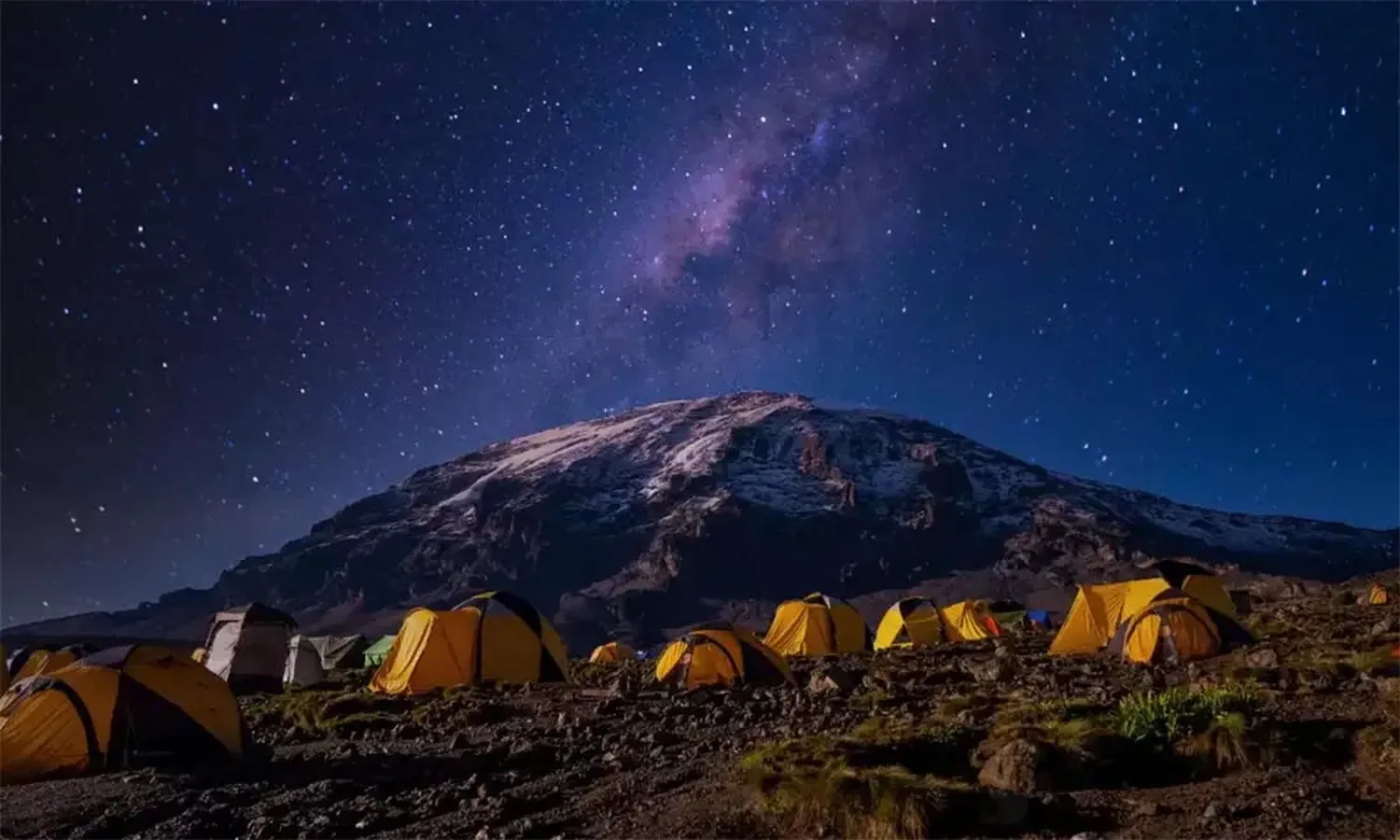
Use the dark-sky conditions to master astrophotography. With no lunar light pollution, the Milky Way shines like a brilliant highway across the sky, perfect for capturing long-exposure star trails over iconic acacia trees. During the day, shift your focus to high-activity river crossings and drinking spots. If you want to plan your days around river crossings, explore our step-by-step strategy on how to plan 6 days around Mara River activity.
Day 6: Sunrise Bush Walk and Departure
On your final morning, take part in a short sunrise bush walk. Under the thin sliver of the old moon rising just before the sun, study the fresh tracks left by nocturnal creatures during the dark night. Return to the lodge for a hearty breakfast before boarding your charter flight back to civilization.
3. Moon Phase Comparison: Activity, Sightings & Astronomy
Before locking in your travel calendar, consult this streamlined matrix to understand how different phases impact your viewing conditions:
| Moon Phase | Savanna Lighting | Predator Activity | Best Focus |
|---|---|---|---|
| New Moon | Pitch Black | Extreme (Ambush Hunts) | Infrared night drives & Milky Way photography |
| First Quarter | Moderate (Early) | Moderate | Crepuscular species, nocturnal birds |
| Full Moon | Very Bright | Low (Very Quiet) | Large mammal tracking, moonlit walking safaris |
| Third Quarter | Moderate (Late) | High (Early Night) | Fresh morning kills, telescope stargazing |
4. Essential Gear and Private Concession Strategies
Planning a safari around moon phases requires specific booking choices and specialized gear to realize the full potential of your trip. The success of a celestial-themed expedition does not rely on luck; it is a product of deliberate preparation, selecting the right geographical zones, and packing specialized equipment designed to master both the blinding brilliance of a full moon and the pitch-black darkness of a new moon.
The Strategic Choice: Private Concessions vs. National Parks
The single most critical decision you will make when planning a moon-phase safari is where you lay your head at night. Standard public national parks across East and Southern Africa (such as the main reserve of the Serengeti, Lake Manyara, or Ngorongoro Crater) operate under strict conservation laws. These include rigid sunset curfews—usually requiring all vehicles to be completely off the roads and inside their camp gates by 6:00 PM or 6:30 PM. Furthermore, off-road driving is strictly prohibited to protect the delicate grassland soils.
To experience the true magic of the savanna’s nocturnal transition, you must book your stay within private concessions or private game reserves adjacent to these parks (such as the Grumeti, Loliondo, or private conservancies in the Maasai Mara and Greater Kruger). These exclusive zones operate under flexible local management models. Here, highly trained guides are legally permitted to conduct night game drives until late hours, utilize thermal imaging gear, and drive off-road to closely follow predators as they coordinate their hunts. To ensure you connect with a registered and highly rated operator who possesses these exclusive traversing rights, read our comprehensive guide on how to find the best local safari companies in Moshi and Arusha.
The Ultimate Celestial Safari Packing List: Specialized Gear
Standard safari packing lists focus on neutral-colored clothing and sun protection. However, a lunar-focused expedition requires specialized optical and technical equipment to help you navigate the dark:
- High-Performance Low-Light Optics (Binoculars): Do not make the mistake of bringing standard compact binoculars. For low-light and night viewing, look for binoculars with a large objective lens diameter and high light transmission ratings. Optics labeled as **8x42** or **10x50** are ideal. The second number (42mm or 50mm) represents the front lens size; the larger this lens, the more ambient starlight and moonlight it can gather, allowing you to see sharp details in the dark where the human eye sees only shadows.
- Red Filters and Wildlife-Friendly Lighting: Standard white spotlights emit a harsh glare that temporarily blinds animals, disrupts their natural hunting patterns, and can expose a hiding prey animal to predators. High-end lodges use spotlights fitted with deep red filters. Most nocturnal mammals cannot perceive red light waves, allowing you to observe their natural, undisturbed behavior without causing stress or ecological interference.
- Camera Gear for Star Trails and Moonscapes: If you want to capture the stunning African night sky, pack a camera with full manual control capabilities and excellent high-ISO performance. A wide-angle, fast lens (f/2.8 or wider) is essential for astrophotography. Most importantly, bring a **heavy, sturdy tripod** to keep your camera perfectly still during the long-exposure shots (ranging from 15 to 30 seconds) required to capture the glowing band of the Milky Way.
- NASA Lunar Chart Alignment: Before locking in your flights, do your homework. Consult the official NASA Lunar Portal or a reputable moon phase calculator. Do not just look at the phase (e.g., 50% illuminated); calculate the exact times of moonrise and moonset for your specific coordinates in Tanzania or Kenya. This ensures you can schedule your night drives to align perfectly with the exact hour the moon rises or dips below the horizon.
Quick Luggage Check: Warm Layers are Mandatory
Many travelers associate Africa with scorching daytime heat and forget that the dry savannas cool down rapidly after sunset. Because night game drives are conducted in completely open 4x4 vehicles, wind chill can make a 15°C night feel like 5°C. Always pack a windproof jacket, a warm fleece layer, a beanie, and lightweight gloves. Keeping your body warm ensures you can stay focused on tracking predators for hours without discomfort.
5. Frequently Asked Questions (FAQs)
Does a full moon make nighttime predator sighting difficult?
Yes. Because the savanna is highly illuminated, predators lose their tactical advantage of stealth. They tend to stay quiet and avoid moving in the open, which can make them harder to spot during active hunts. However, viewing large herbivores is incredibly easy and beautiful.
Are night game drives safe in the pitch black of a new moon?
Absolutely. When operating in reputable private reserves with experienced, licensed guides, night game drives are perfectly safe. Vehicles are equipped with safety equipment, and guides are trained to read animal behavior closely.
Is stargazing better during a new moon or full moon?
The new moon is significantly better. Without any glare from the moon, the dark African sky reveals millions of stars, distant nebulae, and the vibrant band of the Milky Way in absolute clarity.
Conclusion: Let the Moon Guide Your Wild Adventure
Taking the time to understand and align your 6-day safari with the lunar cycle turns a normal wildlife trip into an extraordinarily planned adventure. Whether you are looking to capture jaw-dropping long-exposure astro-photos or track a pride of lions as they navigate a moonless night, planning with the cosmos ensures you are always in the right place at the perfect biological moment.