





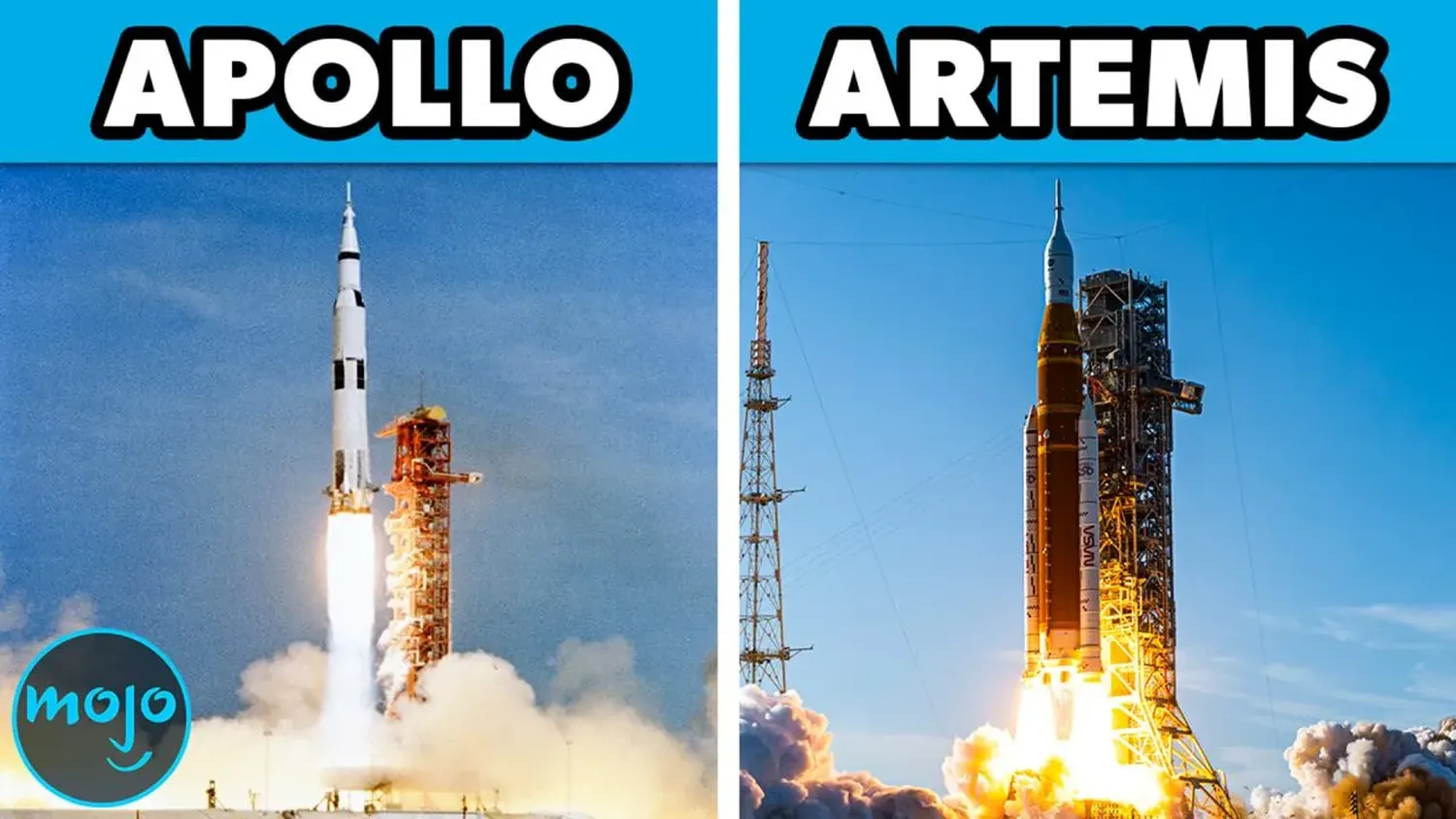
More than 50 years after Apollo 17, NASA is back on the path to the Moon with the Artemis program. While both programs share the same destination, almost everything else has changed. This clear Apollo vs Artemis differences comparison shows how technology, goals, and even the people flying have evolved since the 1960s and 1970s.
What Was the Apollo Program?
Apollo was born during the Cold War space race. Its main job was simple and urgent: land Americans on the Moon before the Soviet Union. Between 1969 and 1972, six missions put 12 astronauts on the lunar surface. The program used the massive Saturn V rocket and the three-person Apollo command and service module. It was a huge success, but it was designed for short visits—not long-term exploration.
What Is the Artemis Program?
Artemis is NASA’s plan for a sustainable return to the Moon. Named after Apollo’s twin sister, it focuses on building a long-term presence, testing technology for Mars, and opening space to more people. The program already proved itself with the successful Artemis II mission that launched on April 1, 2026. If you want the full story, read our detailed Artemis II mission details and launch date.
Apollo vs Artemis: Side-by-Side Comparison
| Aspect | Apollo Program (1960s-70s) | Artemis Program (2020s+) |
|---|---|---|
| Primary Goal | Beat Soviets to the Moon | Sustainable lunar base + Mars preparation |
| Rocket Thrust | Saturn V – 7.6 million lbs | SLS – 8.8 million lbs |
| Spacecraft | Apollo Command Module (3 crew) | Orion (4 crew, 57% more living space) |
| Mission Duration | Up to 12 days | Up to 21+ days (expandable) |
| Crew Diversity | All male, all American | Includes first woman and person of color planned |
| International Partners | None | ESA, CSA, JAXA and more |
Technology and Hardware Differences
Apollo used 1960s analog technology. Artemis brings modern digital systems, better computers, and advanced materials. The Orion spacecraft (built with the European Service Module) has superior radiation shielding, a more powerful heat shield, and solar arrays that generate 11 kilowatts of electricity. To understand the rocket that powers it, see our guide on Space Launch System SLS rocket power and specs. For a closer look at the capsule itself, check Orion spacecraft features and technology.
Crew Diversity and International Partnership
Apollo flew only American men. Artemis is deliberately inclusive. The program plans to land the first woman and first person of color on the Moon. It also brings together space agencies from around the world—something Apollo never had. This teamwork makes missions safer and spreads the cost and knowledge globally.
Artemis II Success in 2026
The differences became real on April 1, 2026, when Artemis II lifted off with four astronauts. The mission flew around the Moon and back in 10 days—the first crewed deep-space flight since Apollo 17. Every system worked as planned, proving that the new hardware is ready for the next steps. If you’re new to the whole program, our beginner-friendly article NASA Artemis Program explained for beginners gives the perfect overview.
Long-Term Goals and What Comes Next
Apollo ended after six landings. Artemis is just getting started. Future missions will build the Lunar Gateway station, create a permanent base near the south pole, and test technologies we’ll need for Mars. The program is designed to keep humans exploring for decades, not just a few years. Learn more about the roadmap in our article on future Moon missions and lunar exploration goals.
Frequently Asked Questions About Apollo vs Artemis
Why did NASA stop Apollo and start Artemis?
Apollo achieved its political goal. Artemis was created to build lasting exploration capability instead of one-time visits.
Is the SLS rocket better than the Saturn V?
Yes—the SLS delivers more thrust (8.8 million pounds) and is designed for repeated deep-space missions with modern safety features.
Will Artemis be more expensive than Apollo?
Adjusted for inflation, early Artemis missions cost less per flight because of reusable elements and international sharing.
How can I see real photos from both programs?
Visit the NASA image and video library free download guide for official high-resolution images and videos from Apollo and Artemis.
When will the first Artemis landing happen?
NASA targets Artemis III for 2027, which will include the first crewed lunar landing since 1972.
Conclusion: From One-Time Visits to a Lunar Future
The Apollo program proved we could reach the Moon. Artemis is proving we can stay there and use it as a stepping stone to Mars. With more powerful rockets, smarter spacecraft, diverse crews, and international partners, the differences go far beyond hardware—they reflect how humanity’s approach to space has grown in the last 50 years. The successful Artemis II mission in April 2026 showed that the future is already here.