





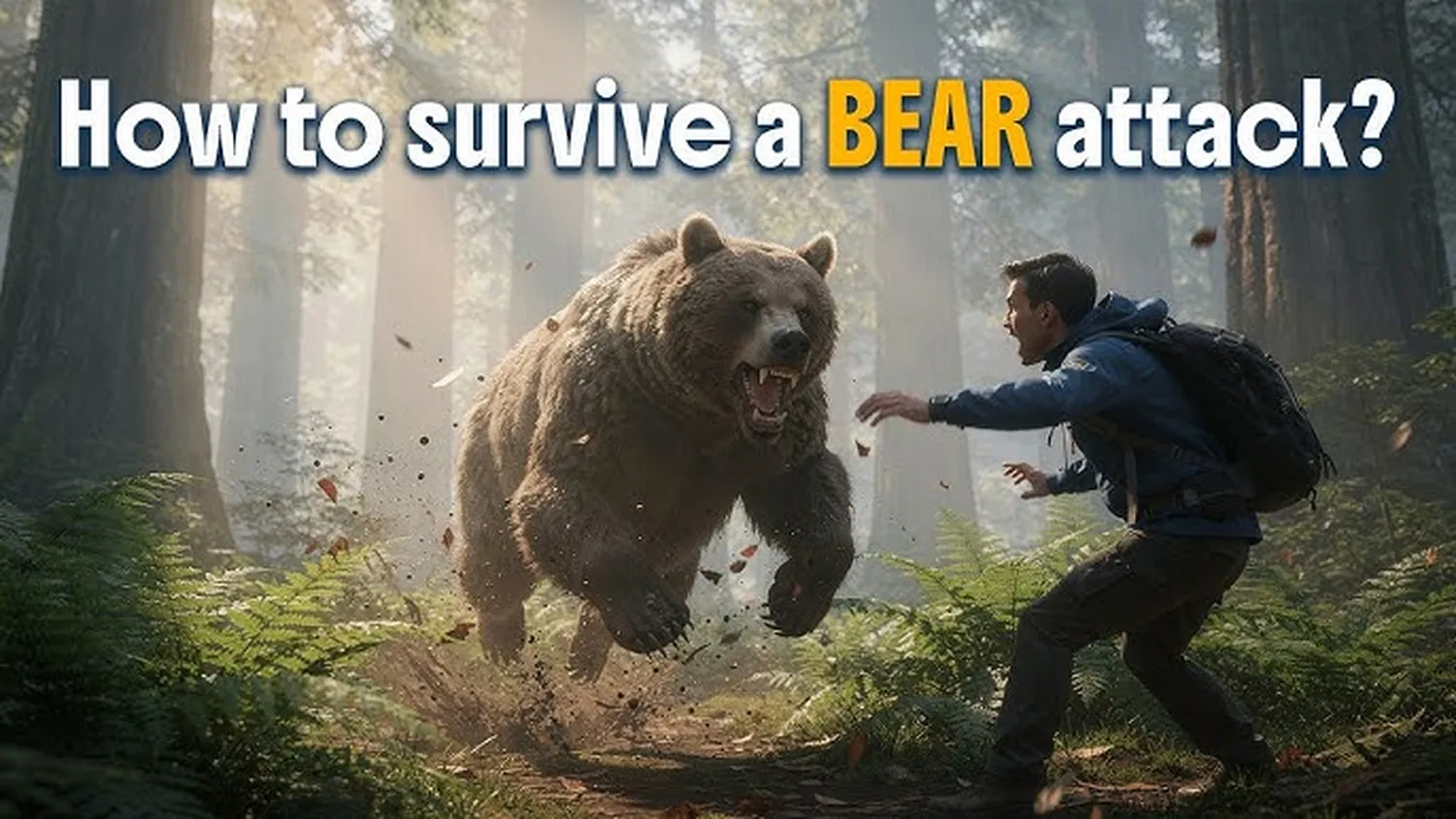
Stepping into deep backcountry trails brings unmatched peace, but it also means entering the raw domain of large apex predators. Knowing exactly how to survive a bear attack in the woods is a fundamental skill that separates a safe outdoor excursion from a fatal wilderness tragedy. Much like tracking paths to learn how to identify animal tracks in the snow, reading the environment and understanding behavioral adjustments protects your life when a sudden confrontation occurs.
Identify the Species: Grizzly vs. Black Bear
Your defense strategy depends completely on the type of bear standing in front of you. Misidentifying the animal can lead to incorrect defensive choices that increase the danger of physical harm. Color alone is unreliable because black bears can look blonde or brown, and grizzlies can have dark coats.
- Grizzly / Brown Bears: Look for a prominent, muscular shoulder hump on their upper back and a distinct dished, concave facial profile. Their claws are long and visible from a distance.
- Black Bears: These animals lack a shoulder hump altogether. They feature a straight, flat profile running from the forehead down to the nose, along with shorter, deeply curved claws built for climbing trees.
Understanding these body markers helps you choose the correct reaction if the encounter escalates into an active threat. Just as an outdoor owner looks for physical changes to see how to tell if your dog is in pain, backpackers must study apex predator anatomy to make split-second decisions.
Immediate Actions During a Close Encounter
If you round a trail bend and spot a bear within 50 feet, your initial movements are vital. Panic triggers predatory chase instincts. Review the core tactical response matrix below to keep yourself anchored during these tense moments.
| Action | Proper Execution | Why It Matters |
|---|---|---|
| Running | Strictly forbidden | Triggers predatory chase speed (up to 35 mph) |
| Vocal Tone | Low, calm monotone | Identifies you as human, not prey |
| Eye Contact | Averted, soft gaze | Direct staring is seen as a dominant challenge |
Slowly raise your arms above your head to make yourself look larger, and talk in a low, soothing voice. Step backward diagonally away from the bear's path, ensuring you keep your footing steady on mud or loose forest rocks.
Deploying Bear Spray with Precision
An EPA-approved canister of bear spray is your most reliable tool for stopping a charge. According to field statistics published by the National Park Service (NPS), bear spray successfully stops aggressive behavior in over 92% of close-range encounters. This makes it far more effective than traditional firearms, which require perfect accuracy under intense pressure.
Keep your canister holstered right on your hip or chest harness—never pack it inside a zipped backpack where it is out of reach. When a bear begins moving toward you, pull the safety clip, aim slightly downward to account for wind resistance, and deliver a sustained 3-to-4 second cloud of red pepper spray when the animal reaches a distance of 30 feet. The burning sensation inside their nose and eyes causes an immediate, non-lethal halt to their charge.
Tactical Defense: When to Play Dead vs. Fight Back
If physical contact happens, your survival strategy divides sharply by species. This is the moment where matching your physical defense to the bear's instincts saves your life.
Against a Grizzly Bear: Drop flat on your stomach immediately. Interlock your fingers securely behind your neck to protect your spine, and spread your elbows wide to make it difficult for the bear to flip you over. Keep your heavy backpack on to absorb the force of claws and teeth. Play dead and stay completely silent. Most grizzly charges are defensive reactions to protect cubs or food; if they realize you are no longer a threat, they will typically leave the area.
Against a Black Bear: Never play dead. Black bear attacks are almost always predatory. Fight back with everything you have. Concentrate your strikes, kicks, and blows directly on the bear's sensitive nose, eyes, and muzzle. Use sticks, rocks, or empty camera tripods to drive the animal away. If a bear approaches your campsite at night, they are hunting for food scraps. Keeping a clean camp prevents this entirely, which is a similar concept to learning how to keep raccoons out of your trash cans in suburban environments.
Frequently Asked Questions
Should you climb a tree to survive a bear attack?
No. Both black bears and grizzly bears are highly proficient climbers. Climbing a tree traps you vertically and removes your ability to deploy bear spray effectively.
Does bear spray work better than traditional firearms?
Statistical records show bear spray stops charging bears over 90% of the time, causing immediate swelling in their respiratory tract without leaving a wounded, angry animal.
Final Steps for Deep Woods Survival
The ultimate goal when learning how to survive a bear attack in the woods is avoiding the confrontation altogether. Make plenty of noise while hiking through thick brush by clapping your hands or calling out to warn wildlife of your presence. Pack out all food waste properly, stay alert to your surroundings, and carry your safety tools where you can grab them in a split second to ensure you return home safely from every backcountry adventure.