





Introduction: The Magic of Avian Journeys
Observing millions of feathered travelers navigating vast transcontinental flyways is one of nature's greatest spectacles. Knowing how to see bird migration on a 6 day safari is key to transforming a standard wildlife tour into an unforgettable, highly specialized ornithological adventure. Every year, hundreds of exotic species depart their nesting grounds in Europe and Central Asia, embarking on epic transcontinental journeys to settle in the fertile lands of East Africa. A meticulously planned 6-day itinerary allows you to explore multiple ecosystems, revealing majestic raptors, exceptionally colorful insect-eaters, and endless swirling clouds of shoreline birds. Ready to discover how to plan and execute the perfect trip?
1. Best Timing and Seasons for Bird Migration
The sky above East Africa is not just a blue canopy; it is a bustling, transcontinental superhighway. Every year, millions of avian travelers embark on one of the most perilous yet breathtaking journeys on Earth. To truly understand how to see bird migration on a 6 day safari, one must first master the intricate seasonal rhythms and ecological triggers that dictate when, where, and why these spectacular flocks arrive.
Understanding this natural calendar is the difference between witnessing a quiet savannah and standing beneath a swirling vortex of thousands of birds of prey, or walking along an alkaline shore shimmering with pink and white feathers. This comprehensive breakdown explores the precise meteorological factors, biological drivers, and chronological phases of this grand natural symphony.
The Palearctic-African Flyway: A Transcontinental Miracle
The migration of birds into East Africa is primarily governed by the Palearctic-African Flyway. As the harsh northern winter begins to freeze the nesting grounds of Europe, Scandinavia, Siberia, and Central Asia, food sources rapidly disappear. Insects die off, lakes freeze over, and the sun drops low on the horizon. For survival, over three hundred bird species must leave their northern homes behind.
Their journey is an incredible feat of endurance. Utilizing ancestral paths, these birds fly south, crossing major geographical barriers including the Mediterranean Sea, the vast sands of the Sahara Desert, and the towering peaks of the Ethiopian Highlands. They navigate using a complex combination of the Earth's magnetic field, the position of the sun and stars, and visual landmarks like rivers and Rift Valley scarps. By the time they arrive in the warm, nutrient-rich environments of Tanzania and Kenya, they are ready to feed, rest, and moult.
"The sheer willpower of a bird weighing less than twenty grams flying over the Sahara Desert without stopping is proof of nature's endless miracles. Witnessing their arrival in East Africa is a life-changing experience."
— PerfectInfos Avian Research Team
The Green Season: Why Rain is the Ultimate Catalyst
While many travelers prefer the dry season for viewing big mammals, birding enthusiasts know that the **"Green Season"** (the wet season running from November to April) is the absolute golden era. Rain in East Africa does not mean endless cold downpours; instead, it brings short, dramatic afternoon showers followed by brilliant sunshine. This moisture transforms the dry, dusty plains into a rich paradise of green grass and abundant life.
This rainfall triggers a dramatic biological chain reaction:
- Insect Explosions: Warm weather and moisture cause a massive boom in termites, beetles, caterpillars, and flying ants. This high-protein feast is exactly what tired, long-distance migratory birds need to rebuild their fat reserves.
- Vibrant Breeding Plumage: For resident species, the abundance of food signals the start of the breeding season. Birds like weavers, bishops, and sunbirds shed their dull winter feathers and grow incredibly bright, colorful plumage to attract mates.
- Filling of the Alkaline Lakes: The seasonal rains replenish critical Rift Valley lakes like Lake Manyara, Lake Natron, and Lake Eyasi. This fresh water balances the salinity, triggering blooms of microscopic algae and small crustaceans that attract vast flocks of migratory wading birds.
Month-by-Month Breakdown of the Migration Calendar
To help you structure your 6-day itinerary down to the exact week, here is an in-depth chronological guide to the migration cycle throughout the key months:
October: The Vanguard Arrivals
The very first scouts and fast-flying migrants start arriving in northern Tanzania. You will spot early arrivals of Barn Swallows, Northern Wheatears, and Willow Warblers darting through the acacia branches. The landscape is still dry, concentrating these early arrivals around permanent water sources like the Tarangire River.
November: The Raptor and Wader Influx
As the "short rains" begin, large numbers of Eurasian and Palearctic migrants sweep into the region. This is an exceptional time for raptor migration. Watch the skies for Steppe Eagles, Lesser Spotted Eagles, and Montagu's Harriers riding the warm wind currents along the Rift Valley wall. On the shorelines, Caspian Plovers and Little Stints begin filling the mudflats.
December to February: The Mid-Winter Peak
This is the absolute sweet spot for maximum bird variety. The rains have made the countryside incredibly lush. Colorful insect-eaters like the European Bee-eater, Blue-cheeked Bee-eater, and European Roller are everywhere, perched on dry branches searching for prey. Woodland areas are filled with different kinds of warblers, flycatchers, and shrikes.
March to April: Pre-Migration Feeding & Departures
As the "long rains" arrive, birds start preparing for their demanding northbound journey. They feed constantly to build up fat reserves, and many male migrants start singing their beautiful courtship songs and showing hints of their breeding colors. By late April, the skies are filled with large groups of storks, birds of prey, and waders gathering to fly north.
Raptor Thermals and the Great Rift Valley Funnel
One of the most thrilling sights on an avian safari is the migration of birds of prey (raptors). Unlike smaller birds that flap their wings constantly, large raptors like eagles, buzzards, and falcons rely on **thermals** (rising columns of warm air) to glide long distances with minimal effort.
The dramatic cliffs of the Great Rift Valley act as a natural funnel. As the sun warms the dark volcanic stone walls of the valley, powerful, steady thermals rise into the sky. Thousands of birds of prey gather along these ridges, rising high into the clouds before gliding effortlessly southward. On Day 3 and Day 5 of your safari (around Lake Manyara and the Ngorongoro highlands), keeping your eyes and binoculars pointed toward the sky can reward you with sights of dozens of eagles soaring together in these rising warm air currents.
2. The Ultimate 6-Day Birding Itinerary
A compact 6-day timeframe requires a highly optimized route to minimize travel fatigue and maximize time in the field. Below is a proven, high-yield route through Tanzania's northern circuit, structured specifically for passionate birding enthusiasts who want to balance big game sightings with specialized birdwatching.
| Day | Primary Destination | Key Migratory & Special Species | Why It Matters |
|---|---|---|---|
| Day 1 | Arusha National Park | European Bee-eaters, Narina Trogons, Maccoa Ducks | High-altitude montane forests and shallow alkaline crater lakes. |
| Day 2 | Tarangire National Park | Steppe Eagles, Amur Falcons, Red-necked Spurfowl | Massive baobab networks serving as major nesting centers. |
| Day 3 | Lake Manyara National Park | Lesser Flamingos, Caspian Plovers, Yellow-billed Storks | Ground-water forest meeting dramatic saline lake shores. |
| Day 4 | Serengeti (Central Plains) | White Storks, Montagu's Harriers, Secretary Birds | Endless short-grass plains ideal for tracking predatory raptors. |
| Day 5 | Ngorongoro Crater Floor | Rufous-tailed Scrub Robins, Northern Wheatears, Kestrels | An enclosed volcanic caldera acting as a natural sanctuary. |
| Day 6 | Return to Arusha / Departure | Raptor flyways, Martial Eagles | Final birding opportunities along the majestic Rift Valley wall. |
When selecting your travel planners, it is wise to check if a Tanzanian safari company is officially registered and licensed. This step ensures that your guide is professionally certified, highly knowledgeable in complex avian vocalizations, and capable of locating specialized micro-habitats.
3. Critical Habitats for Migratory Birds
The secret to recording an exceptionally high species count on a 6-day safari lies in understanding the concept of ecological transition zones, or ecotones. Northern Tanzania is one of the unique places on earth where high-altitude volcanic craters, deep alkaline rift lakes, dense groundwater forests, and dry acacia savannahs exist just a few miles from one another.
For a migrating bird that has just completed a grueling 5,000-mile flight across oceans and deserts, these diverse habitats act as vital refueling stations. If your itinerary only covers one type of landscape, you will miss out on entire families of birds. To help you plan your journey, let us explore the four critical habitats you must visit and the unique bird species that depend on them for survival.
1. Alkaline Lakes & Saline Wetlands: The Shoreline Waders
The Great Rift Valley is famous for its chain of unique saline and alkaline lakes, including Lake Manyara, Lake Natron, and the Momella Lakes in Arusha National Park. These waterbodies have high concentrations of dissolved sodium carbonate, creating a highly specific aquatic environment. While these conditions are too harsh for most fish, they are perfect for massive blooms of microscopic blue-green algae (Spirulina) and tiny brine crustaceans.
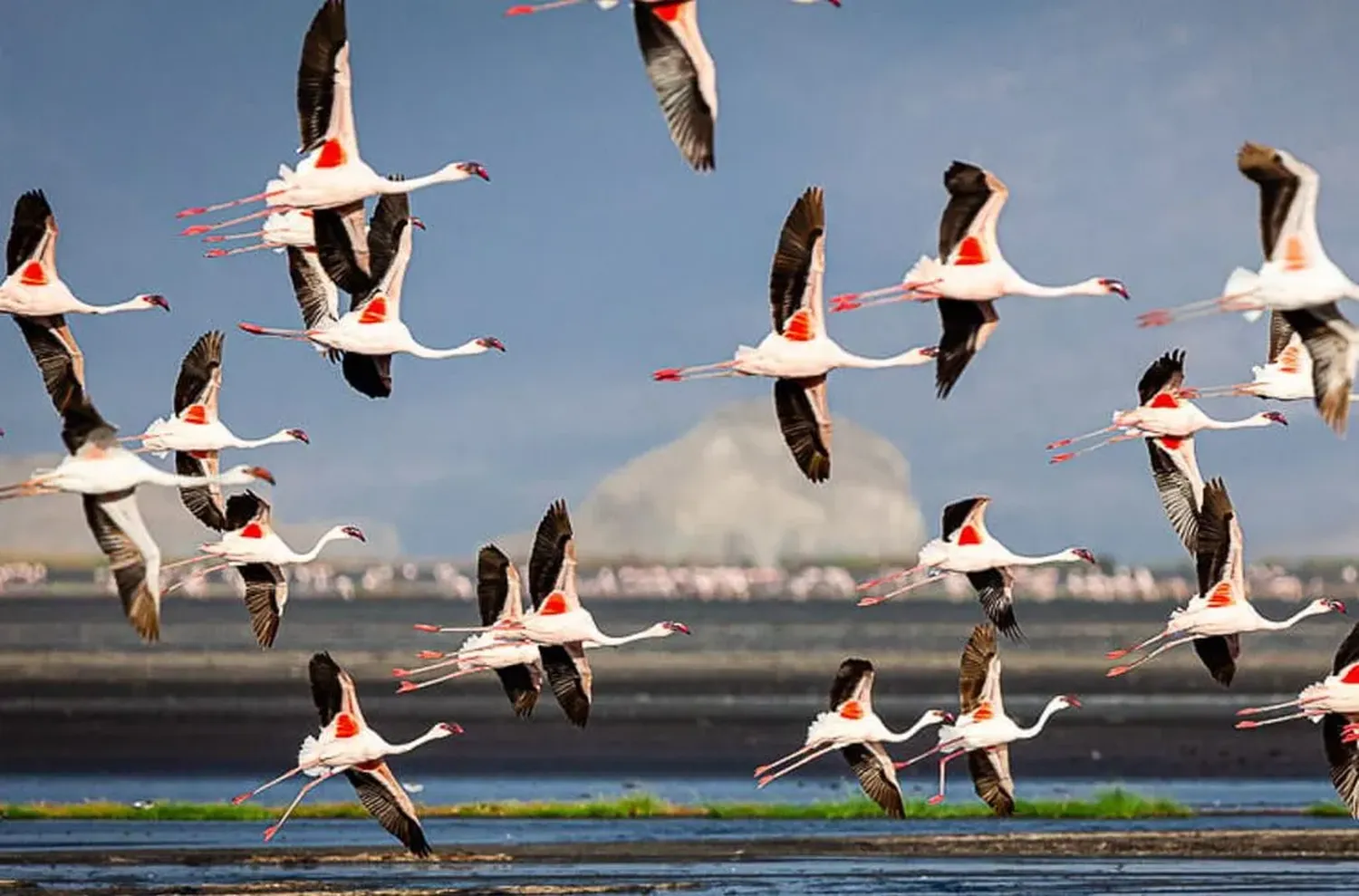
This rich biological soup attracts millions of wading birds. Here, you will witness massive, shimmering pink ribbons of Lesser and Greater Flamingos stretching across the horizons. Alongside them, migratory shorebirds from the Arctic tundra and Siberian plains—such as elegant Pied Avocets, Ruffs, Curlew Sandpipers, and Caspian Plovers—feed busily along the rich mudflats, stocking up on energy before their return flights north.
Want to know which photographic lenses work best for distant shoreline waders?
Read More on Lake Safari Setup →2. Acacia Woodlands & Riparian Canopy: The Passerine Haven
Stepping away from the water, the dry acacia woodlands of Tarangire National Park and the river valleys of the Serengeti provide a completely different birding experience. The mature umbrella acacias, baobab trees, and lush riverbank trees offer shade, nesting sites, and a safe refuge from larger birds of prey.
During the migration season, these woodland canopies come alive with color and birdsong. This is the prime habitat for stunning, insect-eating species escaping the cold European winters. Keep your binoculars ready to spot the brilliant turquoise of the European Roller, the flashing yellow-and-green of the European Bee-eater, and the complex markings of Woodchat Shrikes, Spotted Flycatchers, and Willow Warblers actively hunting through the leaves.
3. Open Grasslands & Short-Grass Plains: Raptor Hunting Grounds
The endless short-grass plains of the Serengeti and the open floor of the Ngorongoro Crater are world-famous for big predators, but they are equally vital for birds of prey. When the seasonal rains fall, these plains are filled with small rodents, reptiles, and insects, making them excellent hunting grounds for migrating raptors.
This is where you will see birds of prey in action. Look up to see Montagu's Harriers, Pallid Harriers, and Steppe Eagles soaring low over the grass, searching for small mammals. On the ground, you can find terrestrial birds like the Secretary Bird and the Kori Bustard marching across the plains.
To explore these vast plains comfortably and capture crisp, clear photographs of these swift birds, you need a high-quality, open-roof 4x4 vehicle that allows for steady, 360-degree camera work. Before booking your trip, it is highly recommended to learn how to determine the cost of a 6 day migration safari to ensure your package includes an experienced driver-guide and a vehicle tailored for professional wildlife photography.
4. Montane & Groundwater Forests: High-Altitude Gems
Often overlooked by fast-paced safari tours, the moist montane forests of the Ngorongoro Highlands and Arusha National Park host an entirely different ecosystem. Fed by heavy mist and volcanic soils, these dense, evergreen forests remain wet and green throughout the year, even when the surrounding plains are dry.
Here, the challenge is spotting birds amidst the thick green leaves, but the rewards are spectacular. Listen for the distinct calls of the shy Narina Trogon, watch for the colorful Hartlaub's Turaco flying between trees, and look for tiny, bright Bronze Sunbirds feeding on forest flowers. Adding a morning forest walk to your 6-day itinerary can quickly boost your total bird list with unique species you won't find on the savannah plains.
4. Gear and Packing Guide for Avian Safaris
Birdwatching is an incredibly detail-oriented activity. Having the proper equipment can make the absolute difference between identifying a rare lifer and missing the diagnostic markings entirely. Make sure your packing list is fully optimized for birding conditions:
- Optics (Binoculars & Scopes): High-quality, multi-coated 8x42 or 10x42 binoculars are the single most important tool for rapid field identification. A tripod-mounted spotting scope is highly beneficial for scanning distant shorelines on alkaline lakes.
- Superzoom Camera Systems: A camera lens with a focal length of at least 400mm (or a high-end bridge camera with optical zoom) is highly recommended to capture crisp details of nesting birds without disturbing them.
- Field Reference Books & Apps: The Birds of East Africa guide book or digital applications like eBird and Merlin Bird ID are invaluable for cross-referencing birdsong and plumage on-the-spot.
- Neutral, Lightweight Clothing: Muted shades of green, khaki, and brown help you blend into the natural environment. Avoid bright whites and yellows, which can startle shy birds and cause them to flush early.
- Protection Gear: Pack a high-SPF sunscreen, a wide-brimmed hat, and insect repellent containing DEET, as marshy environments are prone to insects.
5. Target Migratory Species Checklist
Keep a keen eye out for these prominent transcontinental travelers on your daily excursions. Crossing paths with them is a truly unforgettable highlight of any East African safari:
- European Roller (Coracias garrulus): Instantly recognizable by its striking turquoise, azure, and warm brown plumage, this bird travels thousands of miles from Europe to winter in East Africa’s savannahs.
- Amur Falcon (Falco amurensis): This remarkable raptor completes one of the longest and most demanding migratory crossings of any bird of prey, flying across the Indian Ocean all the way from East Asia.
- Caspian Plover (Charadrius asiaticus): A master of camouflage, easily spotted along the moist, sandy shorelines and short grasslands of northern Tanzania's lakes.
- Barn Swallow (Hirundo rustica): Often seen sweeping low over the open grasslands in massive, coordinated feeding flocks, showing incredible aerial agility.
- White Stork (Ciconia ciconia): Famous for forming giant, slow-gliding thermal flocks over savannah horizons as they scan the earth for locusts and small reptiles.
6. Frequently Asked Questions
What is the absolute best month to see bird migration in Tanzania?
January and February are considered the prime months. During this time, Palearctic migratory birds are present in peak numbers, and many resident species are displaying vibrant breeding plumage and active nesting behaviors.
Can I combine birding with general wildlife viewing on a 6-day safari?
Yes, absolutely. The habitats that attract migratory birds—such as marshes, lakes, and savannah woodlands—are also home to iconic African megafauna, including lions, elephants, leopards, and hippos.
Do I need a specialized birding guide?
While general safari guides are excellent at spotting mammals, a specialized birding guide possesses deep expertise in subtle calls, plumage variations, and specific avian behaviors, which greatly increases your species count.
7. Scientific References
Our research and itineraries are built upon credible, peer-reviewed conservation data:
- BirdLife International: East African flyways and global migratory bird conservation assessments.
- Tanzania Bird Atlas: Long-term distribution and seasonal presence data for resident and migratory bird species.
- IUCN Red List of Threatened Species: Monitoring vulnerable migratory raptors and wetland waders across the East African Rift System.
For more detailed planning information, explore our companion guides on choosing global migratory bird networks and managing your travel logistics efficiently.