





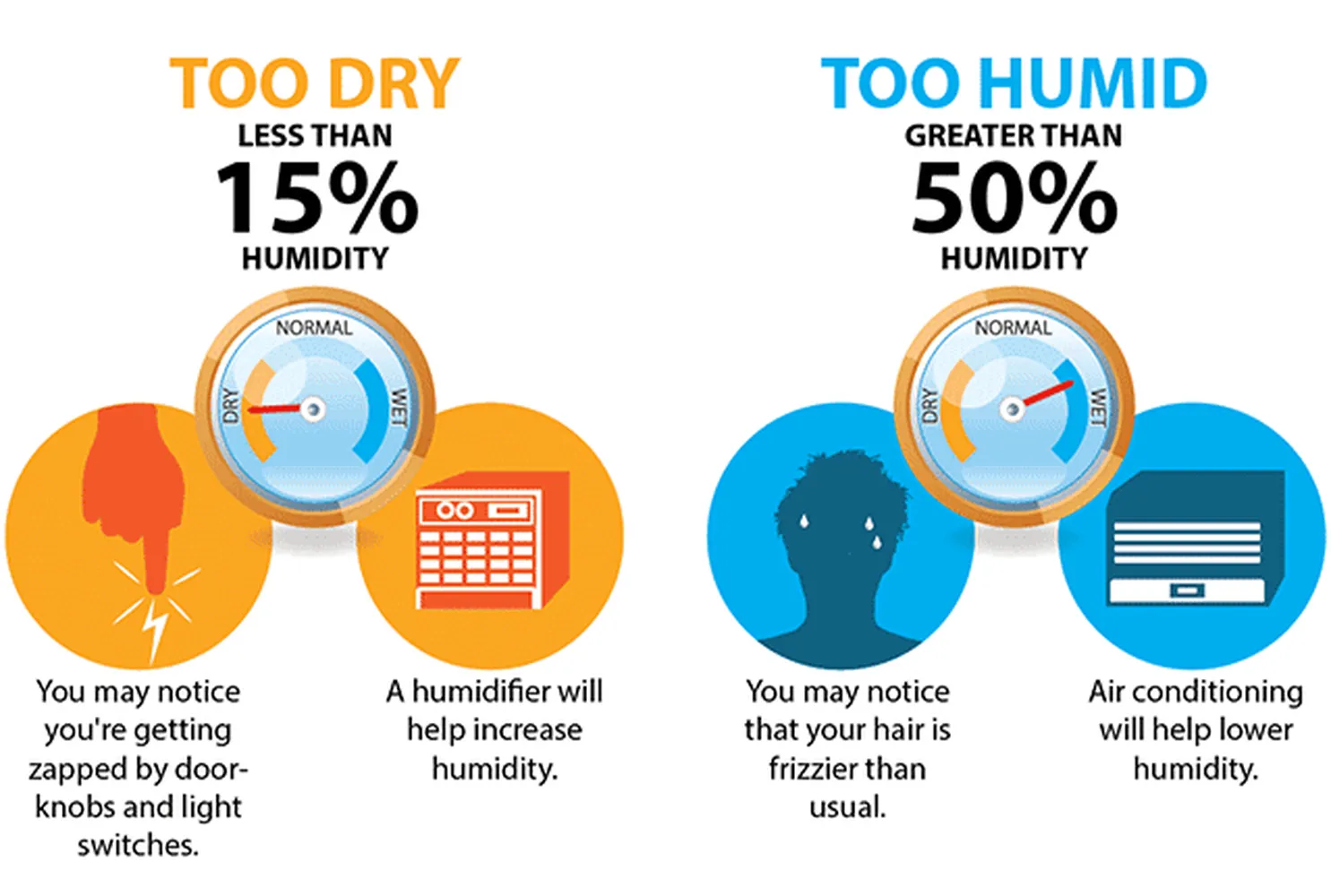
Learning how to measure humidity levels inside your house is a critical step toward securing optimal indoor air quality, maintaining physical comfort, and shielding your property from structural damage. Indoor air that holds too much water vapor invites mold colonies and dust mites, while overly dry air causes respiratory inflammation, static shocks, and wood shrinkage. Tracking internal ambient air properties helps you take data-backed steps to control your living climate.
By learning how to monitor relative humidity (RH) effectively, you can keep your home safe, comfortable, and efficient. This article covers the top professional tracking techniques, manual alternative diagnostics, and action matrices to control your interior air safely.
The Target Indoor Humidity Matrix
According to safety tracking metrics defined by the Environmental Protection Agency (EPA), standard residential air should hover within a tightly managed target span. If the numbers step out of these bounds, it is important to address the root cause immediately.
When you regularly track atmospheric readings, such as learning how to read a barometer to predict weather changes, you understand that external environments constantly shift internal parameters. Review the primary range targets below:
| RH Level | Air Assessment | Potential Property Impact |
|---|---|---|
| Below 30% | Too Dry | Chapped skin, respiratory dry spell, cracking wood |
| 30% to 50% | Ideal Range | Optimal human respiratory health and structural safety |
| Above 55% | Too Humid | Condensation, mold blooms, active dust mite nesting |
Using a Digital Hygrometer Properly
The fastest and most reliable way to monitor indoor air moisture is with a digital hygrometer. These small, affordable electronic tools track ambient moisture values and temperature in real time.
- Choose an Interior Placement Area: Set your digital monitor on a flat surface or secure it to an interior wall about 3 to 5 feet off the ground. This height reads the air at typical breathing zones.
- Keep Away from Source Interference: Do not place your device close to hot radiators, drafty windows, air conditioning vents, or areas with direct sunlight. These spots create skewed local spikes.
- Allow the Device to Calibrate: Leave the tool undisturbed for about 5 minutes to let its sensors balance out with the room's air. Document the relative humidity percentage shown on the digital display. Check multiple living spaces, including bedrooms and crawlspaces, to trace microclimates across your home.
Manual Home Testing Methods
If you do not have a dedicated electronic sensor on hand, you can use common kitchen items to run a simple qualitative check.
The Ice Cube Condensation Test
Place three ice cubes into a standard glass, fill it with fresh tap water, and drop the container onto a table in the center of an occupied living room. Leave the glass alone for exactly 3 minutes. If moisture drops bead up heavily along the outer walls of the glass, your relative ambient humidity is high. If no condensation forms at all, your indoor air is excessively dry.
The Wet-Bulb Thermometer Alternative
Take two identical mercury thermometers. Wrap the sensing bulb of one unit in a damp cotton cloth, keeping the other completely bare. Fan both tools vigorously for 2 minutes. Write down both temperatures and calculate the difference. A large gap means water evaporated quickly from the cloth, signaling dry indoor air. A tiny gap means the air is already saturated with moisture.
This hands-on physics calculation mirrors classic science labs, similar to building a project to how to make a DIY rain gauge for school projects or studying local storm clouds to how to predict rain by looking at cloud formations.
Managing Indoor Moisture Instabilities
Once you gather your internal environmental figures, you can take tailored steps to balance your indoor climate.
- If Air is Overly Humid: Turn on dedicated mechanical dehumidifiers, run kitchen and bathroom exhaust fans for 15 minutes during tasks, and check windows for condensation pools. Ensuring your home has balanced airflow helps prevent stale, damp pockets from settling inside.
- If Air is Overly Dry: Run a cool-mist ultrasonic humidifier in high-traffic spaces, add indoor houseplants to release natural moisture through transpiration, or place open water basins near safe heat vents to boost ambient evaporation.
By maintaining balanced air conditions, you reduce your reliance on heavy HVAC cycling, which helps you how to reduce your carbon footprint to fight climate change from your own home.
Frequently Asked Questions
Where is the best room to test for structural humidity anomalies?
Test the air in your basement, crawlspaces, or master bathrooms first. These low-lying and moisture-heavy spaces face the highest risk of dampness and show environmental warnings long before upper floors.
How often should a homeowner measure indoor moisture levels?
Check your readings at least twice a year—once during the peak summer cooling season and once during deep winter heating months. These seasonal shifts trigger the sharpest drops and spikes in indoor humidity.
Conclusion
Understanding how to measure humidity levels inside your house empowers you to take full control of your indoor climate. Whether you use a precise digital hygrometer or run a quick ice cube test, routine tracking keeps your home comfortable, energy-efficient, and structurally sound year-round.