





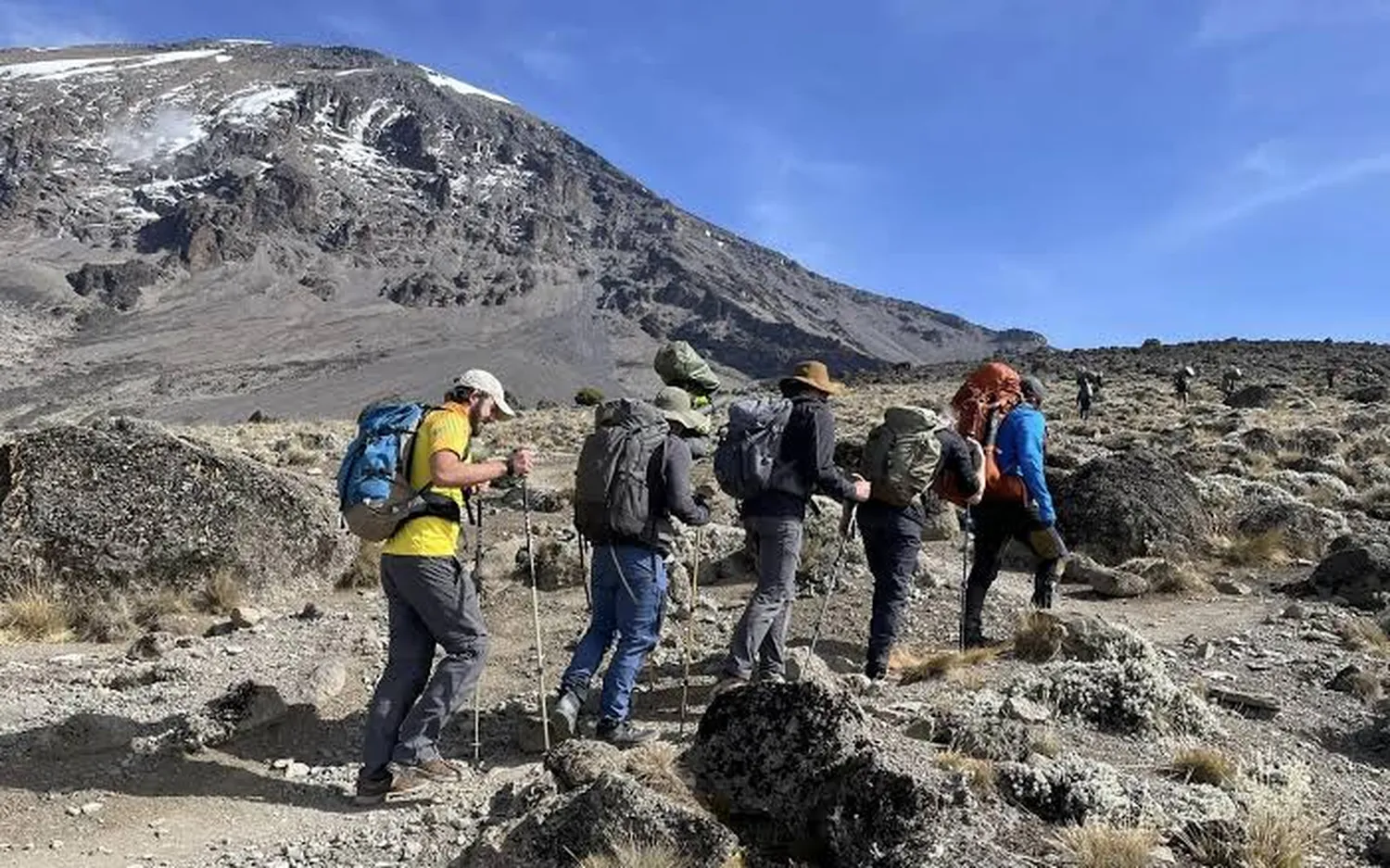
Reaching Uhuru Peak, the crown jewel of Mount Kilimanjaro and the highest freestanding mountain mass on earth at 5,895 meters (19,341 feet) above sea level, represents the absolute pinnacle of high-altitude trekking for adventurers globally. As a multi-climatic geological wonder, the trek forces human beings to traverse five distinct ecological zones—ranging from equatorial rain forests and heather-moorlands to alpine deserts and the final arctic summit zone—all within a matter of days. However, official regulatory data from the Kilimanjaro National Park (KINAPA) registries reveal a sobering, stark reality: while more than 30,000 international and domestic climbers attempt this grueling volcanic trek annually, the raw, mountain-wide individual summit success statistics consistently fluctuate between a mere 65% and 70%.
This means that nearly one-third of all trekkers who step onto the trail are forced to turn back, failing to achieve their lifetime dream due to debilitating physical exhaustion, extreme hypothermia, or acute high-altitude pathology. The critical, defining variable that determines whether you will successfully stand on the snow-capped rooftop of Africa or endure a premature, dangerous midnight evacuation is almost never your baseline physical fitness or the quality of your personal hiking boots; it is almost entirely dictated by your choice of expedition outfitter. In an overcrowded marketplace dominated by aggressive digital advertising, learning how to choose Mount Kilimanjaro climbing companies with high success rate requires looking far past superficial, self-proclaimed marketing promises. It demands a sophisticated, analytical approach to auditing authentic medical safety metrics, complex wilderness logistical systems, ethical supply chains, and expertly engineered, scientifically sound acclimatization itineraries.
1. Demystifying Summit Success Rate Claims
When researching how to choose Mount Kilimanjaro climbing companies with high success rate, the first marketing metric you will encounter is the omnipresent "99% summit success rate" banner. To an amateur trekker, this percentage projects absolute certainty. However, seasoned high-altitude mountaineers and wilderness medical experts view these figures with deep skepticism. In the unregulated arena of Kilimanjaro outfitting, success rates are frequently self-reported, unverified by independent audits, and statistically manipulated to mask high failure and evacuation rates.
The primary method of statistical manipulation relies on tracking group success rates versus individual client success rates. Low-budget operators routinely calculate success based on the group entity: if an outfitter deploys a group of twelve climbers, and only two exceptionally fit or heavily medicated individuals reach Uhuru Peak while the other ten are evacuated due to severe altitude sickness, the operator records that specific expedition as a "successful climb" in their marketing ledger. Conversely, premium operators maintain transparent, audited logs verified by organizations like the Kilimanjaro Porters Assistance Project (KPAP) or independent mountain registries. These ethical agencies track individual success, documenting the precise fraction of single human beings who safely step onto the rooftop of Africa relative to the total number who crossed the park gates.
Furthermore, budget companies often omit data from clients who drop out during the initial days of the trek. If a climber develops acute symptoms on day two or three and must descend immediately, their failure is frequently scrubbed from the final summit night metrics, allowing the company to advertise a near-perfect score based solely on the survival rate of the final camp. This structural lack of transparency obscures the operational safety deficits of low-cost outfits, including poorly trained guides who cannot accurately read early pathological markers of altitude illness.
When vetting potential operators, you must demand a clear, granular breakdown of their data over the preceding twenty-four months. A genuinely reliable company will willingly provide individual success rates segmented by specific route selections, seasons, and client age brackets. If you wish to understand how premium outfitters manage complex mountain logistics and client safety protocols across diverse terrains, you can explore our comprehensive analysis on how to select top rated local trekking companies for Mount Meru and Kilimanjaro to understand the universal operational benchmarks required for safe high-altitude guiding in Tanzania.
2. The Crucial Role of Itinerary Length and Routes
The absolute biological cornerstone of a successful Kilimanjaro expedition is human physiology, specifically the rate at which your body adapts to the decreasing partial pressure of oxygen at higher altitudes. As you ascend toward Uhuru Peak at 5,895 meters (19,341 feet), the atmospheric pressure drops significantly, resulting in roughly 49% fewer oxygen molecules per breath compared to sea level. The human body is capable of adapting to this extreme deficit through a complex cascade of physiological adjustments—including hyperventilation, increased heart rate, and the accelerated production of erythropoietin (EPO) to generate oxygen-carrying red blood cells—but this critical chemical transition requires one unyielding asset: time.
Short itineraries, most notoriously the 5-day variations of the Marangu (the "Coca-Cola" route) and the Machame route, run completely counter to high-altitude medicine guidelines. Statistical registries from Kilimanjaro National Park indicate that the individual success rate for climbers on a 5-day itinerary plunges below 50%. On these rapid ascents, the daily vertical gain exceeds safe alpine recommendations, forcing the body upward faster than it can acclimatize. This metabolic mismatch triggers an incredibly high incidence of Acute Mountain Sickness (AMS), which rapidly deteriorates into life-threatening emergencies like High Altitude Pulmonary Edema (HAPE) or High Altitude Cerebral Edema (HACE), forcing immediate, painful, and costly midnight evacuations.
To maximize your safety margins and summit potential, high-success operators actively discourage short durations, steering clients instead toward 7, 8, or 9-day expeditions. These extended timelines are meticulously designed around the classic mountaineering axiom: "climb high, sleep low." This tactical approach allows trekkers to hike to a high altitude during the afternoon to intentionally stress the hypoxic defense mechanisms of the body, before dropping back down to a lower base camp to sleep, rest, and recuperate in a more oxygen-rich environment.
The choice of trail architecture is tightly bound to these safety durations. The Lemosho Route (8 Days) and the Northern Circuit (9 Days) represent the absolute gold standards for acclimatization efficiency. The Lemosho route approaches the mountain from the fertile west, offering a gentle, progressive elevation profile over its initial three days, which allows the body to seamlessly initiate its internal acclimatization algorithms before encountering the steep volcanic walls of the upper mountain. The Northern Circuit extends this advantage even further by traversing the remote, wind-swept northern slopes of Kibo, circumventing the peak at an optimal altitude profile that produces verified individual success rates exceeding 95%.
While an extended itinerary requires a larger upfront investment due to additional park fees, crew wages, camping equipment wear, and nutritional supplies, it fundamentally alters your risk profile. Choosing a cheap, rushed climb frequently results in a failed attempt, meaning you lose your entire financial investment without ever seeing the summit. When balancing your expedition capital against your physical safety, evaluating your trip dynamics with historical pricing datasets is highly advantageous. For an exhaustive, itemized fiscal breakdown between different agency business structures, please consult our structural report on how to compare prices between local and international tour operators in East Africa.
Route vs. Individual Success Statistics
Official data indicates a direct correlation between trail selection, duration, and final achievement:
| Route & Duration | Est. Success Rate | Acclimatization Profile |
|---|---|---|
| Marangu (5 Days) | Less than 50% | Poor (Rapid Ascent) |
| Machame (7 Days) | 80% - 85% | Good (Climb High, Sleep Low) |
| Lemosho (8 Days) | 90% - 95% | Excellent (Gradual Profile) |
| Northern Circuit (9 Days) | Greater than 95% | Exceptional (Maximum Time) |
3. Safety Protocols of Premium Operators
A superior summit success rate on Mount Kilimanjaro is never a matter of luck or sheer physical endurance; it is the direct, predictable byproduct of a rigorous, institutionalized clinical safety framework. In the extreme hypoxic conditions of the upper camps—such as Barafu Camp at 4,673 meters or Kibo Hut at 4,720 meters—the margin between a safe alpine crossing and a catastrophic medical emergency is razor-thin. Premium, high-success outfitters operate not merely as tour agencies, but as specialized high-altitude wilderness medical teams. They understand that pushing an asymptomatic climber forward without objective biochemical data is a recipe for internal organ distress or systemic collapse.
To eliminate guesswork, elite operators mandate diagnostic diagnostic checkups twice daily—every morning before breaking camp and every evening before sleep. These examinations are anchored by a medical-grade pulse oximeter used to monitor peripheral blood oxygen saturation ($SpO_2$) alongside resting heart rate metrics. At sea level, a normal $SpO_2$ reading fluctuates between 95% and 100%. As atmospheric pressure drops on Kilimanjaro, these numbers naturally decline. A premium guide is trained to look for abnormal baseline deviations rather than just a fixed number. If a climber’s $SpO_2$ drops precipitously below their established acclimatization curve—for example, plunging into the 60s or low 70s accompanied by a soaring tachycardia resting heart rate above 110 beats per minute—it indicates a failure of the body's compensatory mechanisms.
These biometric data points are cross-referenced with the Lake Louise Scoring System (LLSS), the international clinical standard for evaluating Acute Mountain Sickness (AMS). Guides utilize an itemized questionnaire to grade the severity of self-reported and observed symptoms, including the intensity of cephalalgia (headache), gastrointestinal distress (nausea, vomiting, or absolute anorexia), persistent fatigue, peripheral dizziness, and sleep fragmentation. By assigning a precise numerical score to these symptoms, the guiding crew can diagnose early-stage AMS before it evolves into its fatal, advanced variants: High Altitude Pulmonary Edema (HAPE), where fluid accumulates in the pulmonary alveoli, or High Altitude Cerebral Edema (HACE), characterized by severe localized brain swelling and cognitive deterioration.
Furthermore, the physical inventory of emergency gear carried by the crew separates high-success operators from budget entities. Premium expeditions carry a mandatory cache of life-saving equipment on every single climb. This includes redundant cylinders of pressurized medical oxygen equipped with high-flow regulatory masks, which are used strictly as a stabilization bridge during emergency descents. They also carry a portable hyperbaric chamber, commonly known as a Gamow bag. This inflatable, pressurized cylinder allows a guide to manually simulate a rapid drop in altitude of over 1,500 vertical meters within minutes, reversing acute neurological or respiratory failure right on the trail. This is accompanied by heavy-duty, military-grade wheeled evacuation stretchers designed to navigate the jagged volcanic scree of the summit slopes. If you intend to complement your alpine trek with a wildlife expedition and want to ensure the same level of rigorous operational safety, you can consult our definitive guide on how to choose a reliable tour operator for Tanzania safari without getting scammed.
4. How Porter and Guide Welfare Drives Performance
There is an unbreakable, structural link between the ethical treatment of a mountain crew and the final success rate of the paying client. Mountaineering logistics are intensely labor-intensive; every kilo of fresh meat, automated medical gear, structural walk-in mess tents, and gas cylinders must be manually transported up steep vertical gains by a dedicated porter network. A demoralized, underpaid, underclothed, or systematically malnourished crew represents a massive operational liability. If the porters are suffering from hypothermia, lack proper footwear, or are limited to a single daily meal of pure starch, they cannot perform the grueling physical feats required to establish a secure, high-functioning camp before your arrival.
Conversely, an ethically managed crew acts as an extended safety net. When a guide is supported by strong, well-fed, and loyal assistants, the entire energy of the expedition shifts. On summit night, when temperatures drop to -15°C or -20°C and thin air causes severe mental fatigue, the ratio of supportive staff to clients dictates whether a struggling climber can safely continue. Premium companies hire guides who hold active Wilderness First Responder (WFR) certifications. This elite medical credential requires hundreds of hours of hands-on trauma and wilderness medicine training, and maintaining these professionals requires paying wages that far exceed the baseline minimums set by local park authorities.
To guarantee that your capital is supporting an ethical supply chain, you must cross-reference any prospective agency with the independent rosters of the Kilimanjaro Porters Assistance Project (KPAP). As an independent initiative of the International Mountain Explorers Connection (IMEC), KPAP deploys undercover monitors on climbs to verify that partner companies strictly adhere to crucial welfare metrics. These include enforcing a strict 20kg weight limit per porter, ensuring three high-calorie meals per day, providing insulated sleeping quarters with waterproof ground tarps, and paying fair, transparent wages directly into the crew's hands without administrative skimming. Operators aligned with these rigorous ethical frameworks experience virtually zero crew turnover, allowing them to retain the most experienced, loyal, and technically proficient mountain personnel on Kilimanjaro. To delve deeper into the economics of mountain ethics and how budget operators disguise crew exploitation to lower their retail prices, read our focused analysis on how to find the most ethical Kilimanjaro companies that treat porters fairly.
5. Key Comparison Framework for Kilimanjaro Outfitting
Navigating the saturated market of East African tour operators requires an objective, emotionless auditing framework. To filter out deceptive marketing claims and isolate the companies that mathematically maximize your chances of reaching Uhuru Peak safely, you must evaluate every prospective company through these four non-negotiable operational vectors:
- Comprehensive Medical Pre-Vetting: High-success operators do not simply accept a credit card payment and send an automated booking confirmation. They require every climber to submit a thorough medical history form signed by a licensed physician, detailing cardiovascular health, pulmonary function, and any history of high-altitude exposure. On the mountain, this screening transforms into mandatory, twice-daily clinical monitoring logs that track oxygenation curves and heart rate baselines.
- Asymmetric Guide-to-Client Ratios: On the final summit push from the base camp to Uhuru Peak, individual human attention is paramount. Budget operators often use a dangerous 1:5 or 1:6 guide-to-client ratio, leaving large groups vulnerable if multiple climbers experience simultaneous altitude crises. Premium operators enforce a strict ratio of at least one lead or assistant guide for every two to three climbers. This ensures that if you need to slow your pace or face a medical evacuation, a dedicated, highly trained professional can guide you down without compromising the safety or summit progress of the rest of the group.
- Verifiable Legal and Licensing Credentials: You must confirm that the operator is a fully registered entity holding a valid Tour Operator License (TALA) issued by the Tanzanian Ministry of Natural Resources and Tourism. Operating with an unlicensed middleman or an informal freelancer leaves you with zero legal recourse and no insurance coverage in the event of an aviation evacuation or medical emergency. For an explicit, step-by-step breakdown on how to audit these regulatory databases, refer to our operational resource on how to check if a Tanzanian safari company is officially registered and licensed.
- Advanced Nutritional and Caloric Infrastructure: At extreme altitudes, the human body suffers from rapid appetite suppression caused by metabolic shifts and hypoxia. To combat this, high-success operators employ professional mountain chefs who design menus focused on high-calorie, complex carbohydrates that are easily digestible. They avoid processed, low-sodium commercial meals, opting instead for fresh vegetables, lean proteins, hot soups, and electrolyte replacement solutions that maintain your glycogen reserves throughout the grueling multi-day trek.
By systematically aligning your expedition selection with these structural requirements, you insulate yourself from the high failure rates of the budget market. Investing in an operator that commands this level of medical oversight, ethical crew management, and logistical superiority gives you the highest statistical probability of safely standing on the snow-capped summit of Mount Kilimanjaro.
6. Frequently Asked Questions
What is the true average success rate on Mount Kilimanjaro?
The total mountain-wide average across all operators is roughly 65% to 70%. However, premium operators using 8-day profiles routinely post verified individual success rates over 92%.
Does paying a higher price guarantee a higher success rate?
Higher prices do not automatically guarantee success, but ultra-low budget operations under 1,800 USD frequently cut corners on safety equipment, fresh nutrition, and expert guide pay, lowering your success odds significantly.
Is oxygen used by guides to help clients summit?
No, medical oxygen on Kilimanjaro is strictly reserved for emergency descents during severe altitude illness. Using oxygen to force an ascent up the peak is highly dangerous.
References and Authority Resources
To cross-verify the safety protocols and success data presented in this guide, check these regulatory resources:
- Tanzania Tourist Board (TTB) - Official operator licensing and registration lookup portal.
- Tanzania National Parks (TANAPA) - Regulatory body governing route regulations and official park statistics.