





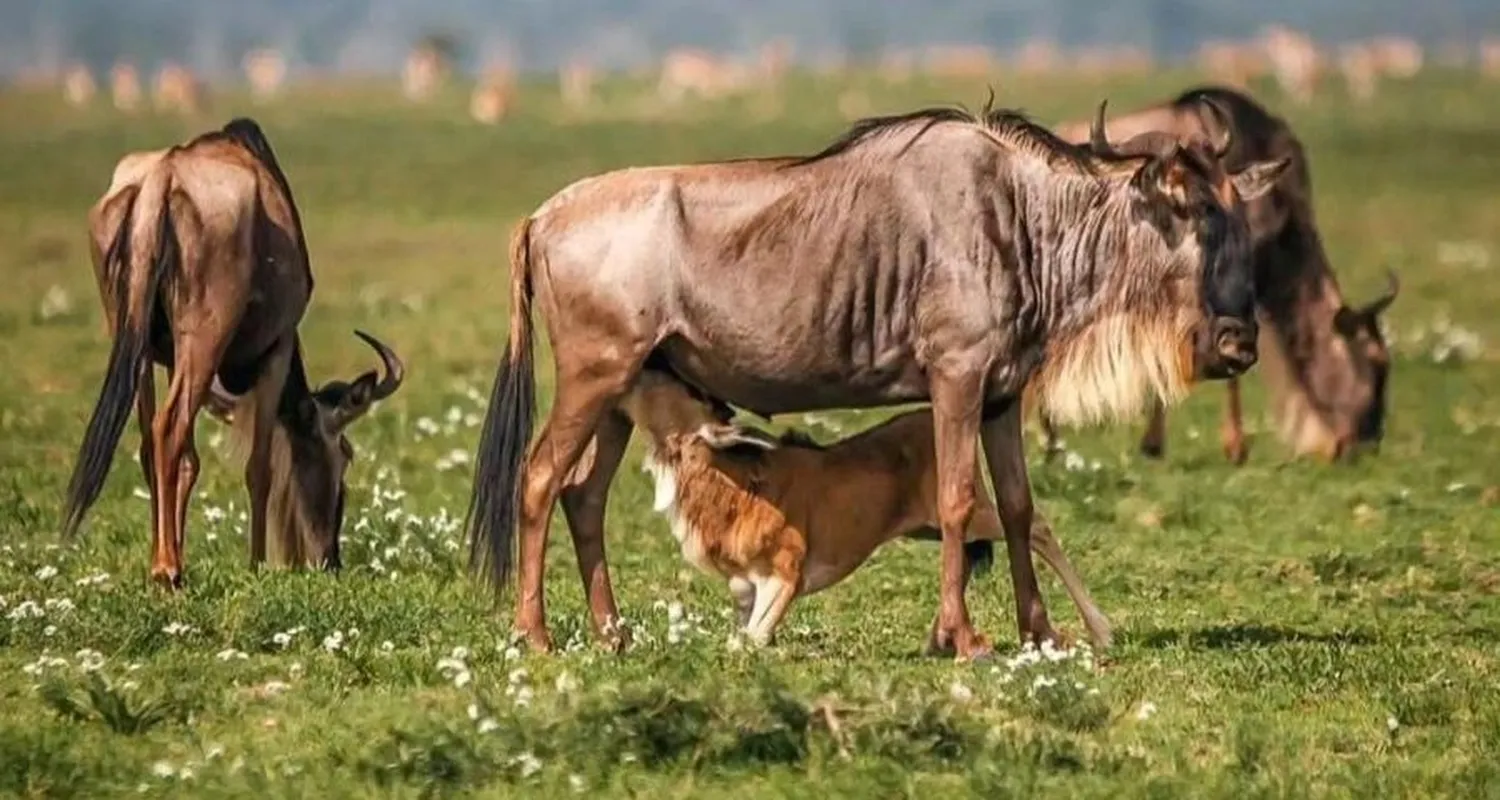
Planning an African safari requires balancing local weather conditions, animal patterns, and geographic terrain. If witnessing thousands of newborn calves running across vast horizons is high on your bucket list, mastering how to choose the best months for the Serengeti wildebeest calving season is critical. Every year, roughly 500,000 wildebeest calves are born during a tightly synchronized window on Tanzania's southern plains, drawing an intense concentration of apex predators. Choosing the right month determines whether you witness the height of this birthing phenomenon or navigate transitional herds moving away from the birthing fields.
Understanding the Serengeti Calving Phenomenon
The annual Wildebeest Migration does not follow a strict calendar; instead, it responds dynamically to seasonal rainfall. Between late December and early April, the migratory herds settle into the nutrient-rich, volcanic short-grass plains of the Southern Serengeti and the Ndutu region within the Ngorongoro Conservation Area. The soil here contains high levels of phosphorus, calcium, and magnesium, which are vital for lactating mothers and growing calves.
Witnessing this event contrasts sharply with other migration stages, such as the dangerous water crossings. If you want to compare these two highlights, learning how to time your Tanzania safari to witness the Great Wildebeest Migration river crossing shows how different the northern river hazards are compared to the vulnerable nurseries of the south. [Read More about River Crossings...]
The Role of Soil Chemistry and Rainfall Patterns
To fully grasp why these specific months hold such evolutionary significance, you must look at the unique geology of the Serengeti ecosystem. The southern plains lie downwind of the Ngorongoro highlands volcanic chain. Over millennia, volcanic ash deposits enriched this specific soil corridor with minerals that cannot be found in the northern or western woodlands. When the short rains fall in November and December, they trigger a rapid growth of specialized, shallow-rooted grasses that suck up these minerals with extreme efficiency.
Pregnant wildebeest require massive intake of calcium and phosphorus during their third trimester and throughout early lactation. Without these volcanic grazing grounds, the young calves would develop weaker bone structures and suffer higher natural mortality rates. Therefore, when you are evaluating how to choose the best months for the Serengeti wildebeest calving season, you are tracking a movement based entirely on maternal survival instincts.
Monthly Breakdown: January vs. February vs. March
To pinpoint your travel window, you must look at how herd behaviors shift across the early months of the year.
January: The Arrival and Anticipation
By early January, the herds complete their southward journey from the northern woodlands. They carpet the plains of Southern Seronera, Kusini, and Ndutu. While a few early births occur mid-month, January is characterized by heavily pregnant cows grazing intensely to build energy reserves. The landscape turns a vibrant emerald green following the short rains of November and December, offering clean air and excellent photographic backdrops.
February: The Peak Birthing Window
If you want the highest concentration of births, February is almost always the premier choice. During a two-to-three-week peak period, approximately 8,000 to 12,000 calves are dropped every single day. This mass synchronization is an evolutionary strategy known as predator satiation. By overwhelming lions, cheetahs, and hyenas with an abundance of easy prey, the overall survival rate of the herd increases. Calves can stand within 2 to 5 minutes of birth and keep pace with the herd shortly after.
March: Transitional Herds and Early Mobility
By March, the majority of calves are fully mobile and fast enough to outrun predators. The grasses start drying out or growing longer, signaling to the herds that resources are shifting. As the long rains begin toward the end of March, the herds gradually move westward toward the Serengeti's Western Corridor. March offers an incredible mix of nursery herd behavior and dramatic mass movements across the landscape.
Safari Performance Metrics by Month
To help you evaluate conditions quickly on mobile screens, this compact table simplifies the environmental shifts across the calving window:
| Month | Calving Activity | Predator Visibility | Rain Risk |
|---|---|---|---|
| January | Moderate / Early Drops | High (Open Plains) | Low (Short Showers) |
| February | Peak (Maximum Births) | Exceptional Action | Moderate (Intermittent) |
| March | Late Drops / Mobile Herds | High (Tactical Hunts) | High (Heavy Rains) |
Predator Dynamics During Calving Months
The calving fields draw predators from across the entire ecosystem, creating a dramatic theater of survival. Lions, spotted hyenas, leopards, cheetahs, and even black-backed jackals gather along the margins of the short-grass plains in anticipation of the birthing wave. Because young calves represent highly vulnerable targets, resident predators temporarily abandon their large territorial ranges and converge directly on the edges of the migratory path. This creates some of the most intense, raw wildlife viewing opportunities found anywhere in Africa, with large lion prides utilizing the clear sightlines of the plains to stalk their targets in broad daylight.
Cheetahs, in particular, thrive during these specific months. The short-grass plains around Ndutu offer the ideal flat terrain required for their high-speed pursuits. Unlike lions that rely on ambush cover, cheetahs utilize small volcanic mounds or termite mounds to spot isolated calves before launching explosive sprints. It is not uncommon to witness multiple hunts in a single morning, as mothers teach their older cubs tactical hunting skills on the abundant prey. [Read More about Predator Hunting Patterns...]
However, the sheer abundance of food also changes predator behavior. Spotted hyenas form massive, opportunistic clans that actively track the herds overnight, exploiting the darkness when wildebeest vision is poorest. This high concentration of competing carnivores leads to dramatic territorial clashes over kills, offering safari-goers an unfiltered look at the complex food web of the Serengeti. If you want to experience these primal interactions at their peak, positioning your vehicle near the woodland borders where the plains meet dense cover provides front-row access to the tactical shifts between apex predators.
If you prefer a quieter wilderness experience with lower booking prices, learning how to plan a budget-friendly Tanzania safari during the low (green) season will help you align your trip with April or May, right as the calving herds begin moving away into the interior. [Read More about Low Season Budgets...]
Safari Logistics and Practical Photography Strategies
Because the southern short-grass plains bridge two distinct administrative zones—the Serengeti National Park and the Ngorongoro Conservation Area—your safari routing requires flexible planning. The Ndutu region is particularly famous because it permits controlled off-road driving. This allows safari vehicles to track hunting large cats or birthing herds without being trapped on a permanent dirt road track.
For photographers trying to capture the raw speed of a cheetah chase or the fragile first steps of a newborn calf, February offers optimal lighting conditions between rain showers. The air is entirely clear of dust, making colors pop vividly. Bring a telephoto lens with a minimum reach of 400mm and a fast shutter speed setting to properly isolate moving wildlife against the vast, flat horizons.
How to Choose Your Perfect Calving Window
Selecting your exact travel dates requires a strategic approach rather than picking random days on a calendar. Because nature operates on its own schedule, your itinerary must remain dynamic enough to absorb shifts in animal movements while ensuring your general holiday expectations are fully met. When finalizing your travel plans, consider expanding your itinerary around these three comprehensive practical ground rules:
- Prioritize Mid-February for Pure Numbers and Mass Syncing: If your primary objective is to witness the absolute height of the birthing phenomenon, booking your safari between February 5th and February 25th is the golden standard. During this ultra-specific three-week window, the sheer volume of newborn calves transforms the plains into a massive, high-energy nursery. The high concentration of herds maximizes your chances of witnessing live births, maternal bonding, and immediate predator action. However, because this is considered the premium peak period, you should secure your lodge or mobile tented camp reservations at least 8 to 12 months in advance to avoid being locked out of prime sectors.
- Combine with Distinct Environments to Balance Crowds: Since the southern plains and the Ndutu region can get incredibly busy with safari vehicles during the February peak, it is highly recommended to balance your wildlife viewing with other iconic, distinct regions of Tanzania. Combining a dramatic savanna safari with a high-altitude mountain trekking adventure offers the ultimate contrast. Knowing how to pick the right season to climb Mount Kilimanjaro with clear skies allows you to link a clear, rewarding summit attempt in January or early February directly with your calving safari down below. This multi-environment planning breaks up the monotony of game drives and gives you a holistic taste of East Africa's diverse natural geography. [Read More about Kilimanjaro Seasons...]
- Plan Your Post-Safari Recovery to Escape the African Dust: The daily realities of a calving safari involve spending up to 8 hours a day traversing corrugated dirt tracks and wide-open volcanic plains. The conditions can be incredibly hot, dusty, and physically demanding, leaving travelers exhausted after a week in the bush. To properly recharge your batteries, always plan a beach escape at the end of your itinerary. Exploring how to choose the perfect season for a Zanzibar beach holiday after your safari ensures you can transition seamlessly from the dusty savanna directly to the sunny, turquoise waters of the spice islands. This strategic combination ensures your adventure ends with total relaxation rather than travel fatigue. [Read More about Zanzibar Beach Planning...]
Frequently Asked Questions
Can you guarantee the exact week the calving peak will start?
No, it is impossible to guarantee an exact calendar week because the migration relies entirely on unpredictable weather variables. While the peak almost always falls squarely in February, a significant delay or reduction in the November and December short rains can disrupt the growth of the nutrient-rich grasses on the southern plains. This ecological delay can push the peak calving window outward by 1 to 2 weeks, occasionally shifting the main birthing wave into late February or early March.
To maximize your chances of witnessing the peak, experienced safari operators recommend planning a flexible itinerary that spans at least 4 to 5 days in the southern Ndutu sector. This gives your guide the time needed to track the mobile herds across administrative boundaries if the rains have caused them to cluster earlier or later than usual. [Read More about Migration Weather Cycles...]
Are standard safari vehicles able to access calving areas?
Closed 4x4 safari vehicles (such as stretched Toyota Land Cruisers) equipped with heavy-duty pop-up roofs are the industry standard across Tanzania. These vehicles are fully capable of handling the main dirt tracks connecting the central Serengeti to the southern sectors. However, the open plains present entirely different structural challenges during the wet months of January, February, and March.
Because the southern short-grass plains consist of volcanic ash soil, the ground absorbs moisture rapidly and turns into deep, sticky black-cotton mud within minutes of a heavy downpour. During these specific muddy conditions, standard four-wheel drive is not enough. Safely navigating off-road sectors near the Ndutu marshlands or the Kusini plains requires an advanced four-wheel-drive system with diff-locks, heavy-duty mud-terrain tires, and—most importantly—a highly experienced professional safari guide who understands how to read the terrain to avoid getting deeply bogged down in remote wilderness areas.
Furthermore, different conservation rules apply depending on exactly where you are tracking the herds. If you are operating inside the Ngorongoro Conservation Area boundaries (which covers the Ndutu plains), controlled off-road driving is legally permitted, allowing vehicles to get closer to the birthing nurseries. However, once you cross the official boundary line into the Serengeti National Park proper, strict park regulations forbid any off-road driving under heavy financial penalties, meaning your vehicle must remain entirely on designated tracks regardless of where the calving herds move. [Read More about Safari Vehicle Requirements...]
Scientific References & Field Sources
Our migration timelines, weather analytics, and soil composition data are built entirely upon long-term field research, peer-reviewed wildlife biology journals, and official local conservation authority publications. Tracking half a million births across an open ecosystem requires continuous scientific observation. You can review the underlying ecological data, mammalian census statistics, and regional mapping parameters through the following authorized research bodies and field resources:
- Tanzania Tourist Board (TTB) – The official government portal providing updated seasonal travel advisories, infrastructural updates within the park corridors, public safety guidelines, and sector coordinates for authorized mobile camp positioning during the wet season.
- Tanzania Wildlife Research Institute (TAWIRI) – The primary scientific research institute in Tanzania that conducts the annual aerial mammalian census surveys, records real-time satellite tracking data of the wildebeest collared matrons, and publishes long-term studies on the predator-prey dynamics of the greater Serengeti-Mara ecosystem.
- The Serengeti Ecological Monitoring Programme (SEMP) – A continuous field monitoring project that tracks localized rainfall variations, grass growth dynamics, and water table changes across the southern short-grass plains to help predict herd movements.
- The Ngorongoro Conservation Area Authority (NCAA) Research Division – The regional administrative and research body responsible for managing the Ndutu plains sector, setting sustainable wildlife viewing regulations, and monitoring the impact of vehicular tracking on the vulnerable calving fields.
By studying these scientific records, wildlife researchers have confirmed that the timing of the calving season is one of the most stable yet environmentally dependent mammalian reproductive events on Earth. While individual herd movements adapt instantly to localized downpours, the biological urge that drives hundreds of thousands of pregnant wildebeest to converge on the southern volcanic soils during January, February, and March remains an unyielding law of the African savanna. [Read More about Serengeti Conservation Research...]