





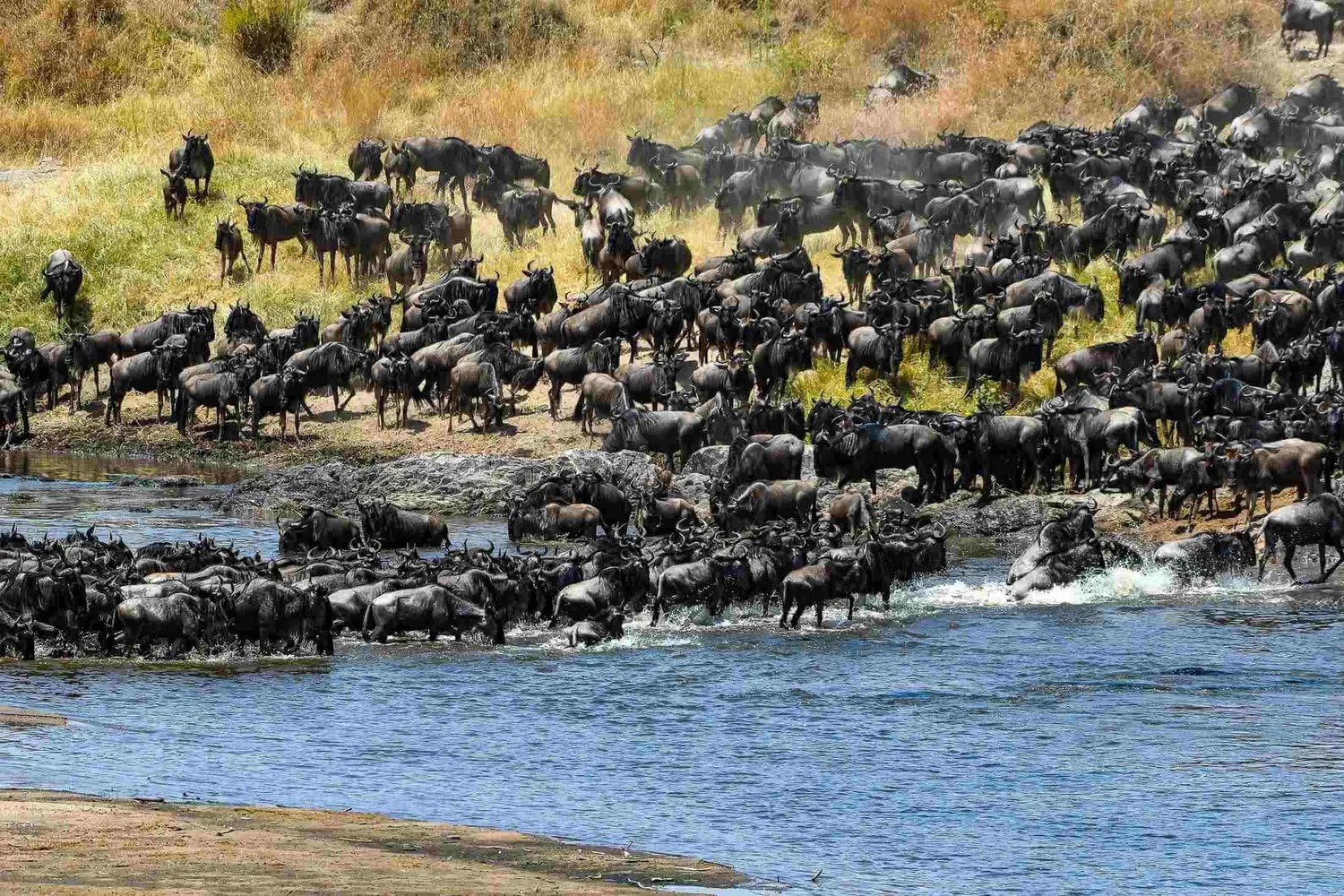
Understanding exactly how to time your Tanzania safari to witness the Great Wildebeest Migration river crossing is the ultimate goal for wildlife enthusiasts, professional photographers, and luxury travelers around the globe. Every year, over 1.5 million wildebeest, accompanied by roughly 200,000 zebras and 350,000 gazelles, make a continuous, clockwise circular journey across the vast Serengeti-Mara ecosystem. The most dramatic, adrenaline-pumping phase of this entire multi-month trek is the hazardous river crossings, where massive herds must brave fast-flowing currents, steep crumbling embankments, and enormous, opportunistic Nile crocodiles. This comprehensive guide details the precise months, exact geographic sectors, underlying animal psychology, and key planning steps required to successfully witness this raw natural phenomenon firsthand.
1. The Annual Migration Timeline & River Crossing Seasons
Wildebeest are driven entirely by seasonal rainfall patterns, soil mineral conditions, and the search for fresh, nutrient-rich grazing grass. While the entire herd is constantly on the move across the ecosystem, river crossings do not happen year-round. To secure a front-row seat to this spectacular display, you must plan your visit during two distinct dry season windows when the herds face natural water boundaries that block their path to survival.
The primary and most famous crossing window occurs when the herds push northward toward Kenya’s Masai Mara, forcing them to traverse the formidable Mara River. Driven by the depletion of grass on the central Serengeti plains, the vanguard of the migration reaches the northern banks around mid-July. Throughout August and September, the animals cross back and forth across the border river, responding to localized rain showers. If you miss this specific dry season window, you can also look into alternative seasons to experience the cycle of life, such as learning how to choose the best months for the Serengeti Wildebeest calving season which takes place earlier in the year on the southern plains (typically January to March), offering a completely different but equally beautiful perspective of new life and intense apex predator action. [Read More]
During the transitional months of June and July, the herd often splits due to different ecological cues and regional moisture levels. A significant portion moves toward the Western Corridor, facing the Grumeti River, while the vanguard pushes straight north through the central Serengeti. This complex movement creates dynamic opportunities along several water systems. This means that proper scheduling with a licensed operator like Jaynevy Tours and keeping an eye on real-time wildlife tracking reports is absolutely critical to avoid booking a trip that leaves you facing empty, dry plains.
2. Key Geographical Sectors to Target
To maximize your chances of seeing a herd take the plunge, you must base your safari operations in the correct geographic corridor of the Serengeti National Park at the right time. Positioning yourself too far south or central during the height of the dry season will mean missing the action entirely, as the vast plains can appear completely deserted once the herds migrate north.
- The Western Corridor (Grumeti River): Active primarily from late May through early July. This area features smaller, narrower, and shallower crossings compared to the north. However, it provides exceptionally intense predator action because the Grumeti River is home to some of Africa's largest Nile crocodiles, which have spent months fasting in anticipation of this specific influx of prey. The surrounding thick riverine forests also offer excellent camouflage for hidden lions, leopards, and hyenas waiting along the banks.
- The Northern Serengeti (Mara River): The undisputed holy grail of river crossings, active from mid-July through late October. This is where you see massive, thundering columns of thousands of animals accumulating on rocky ridges. They spend hours pacing back and forth before dropping down steep, dusty dirt banks into the swirling, deep waters below. The sheer volume of animals makes this sector the ultimate prize for wildlife filmmakers and photographers.
The northern sector around Kogatende and the Lamai Wedge offers multiple crossing points (often numbered 1 to 10 by local safari guides). Each crossing point has its own unique topography, ranging from flat sandy beaches to treacherous, sheer drop-offs. Having an experienced guide from Jaynevy Tours with a well-positioned 4x4 vehicle near these specific landmarks can mean the difference between watching a distant blur of dust through binoculars or seeing the water spray and hearing the frantic, haunting grunts of the animals firsthand.
3. Step-by-Step Guide to Planning Your Safari
Successfully tracking down a river crossing requires precise execution, strategic logistical choices, and realistic expectations. Use these core steps to guarantee your itinerary places you right at the edge of the action:
- Secure Your Bookings 8 to 12 Months in Advance: Lodges, permanent tented camps, and luxury mobile operations located near major crossing points like Kogatende have limited capacity. Booking early via Jaynevy Tours ensures you get the best locations without having to drive hours from peripheral areas each morning.
- Choose a Mobile Tented Camp Over a Permanent Lodge: Opting for properties that physically pack up and move with the herds throughout the year ensures you are situated as close to the active crossing points as possible each morning. If you are operating on tighter budget constraints, you can read about how to plan a budget-friendly Tanzania safari during the low (green) season as a comparative guide to pricing, logistics, and alternative wildlife viewing options. [Read More]
- Dedicate a Minimum of 3 to 4 Full Days to the Northern Sector: A single afternoon game drive is rarely enough to witness a full crossing. Crossings require hours of patient waiting. By spending multiple dedicated days with a specialized operator, you significantly increase your statistical probability of catching the exact moment they cross.
- Incorporate Regional Extensions Early in Your Itinerary: Many travelers choose to combine this wilderness experience with other iconic East African adventures. You can balance your dusty safari days by studying how to pick the right season to climb Mount Kilimanjaro with clear skies for a trekking adventure [Read More], or unwinding on white-sand tropical beaches by mastering how to choose the perfect season for a Zanzibar beach holiday after your safari. [Read More]
4. Comparing the Dry Season River Crossings with Other Migration Phases
The table below provides a quick, mobile-optimized breakdown of how the river crossing season directly compares with other key windows of the annual wildlife circuit in northern Tanzania.
| Migration Phase | Peak Months | Primary Location | Key Ecological Feature | Predator Dynamics |
|---|---|---|---|---|
| Grumeti River Crossings | June - July | Western Serengeti Corridor | Low water levels, narrower river channels, and denser bush terrain. | Highly concentrated crocodile ambush attacks and hidden riverine big cats. |
| Mara River Crossings | July - October | Northern Serengeti (Kogatende) | High-drama action, deep waters, steep cliff descents, massive herd formations, and open savannah backdrops. | Giant Nile crocodiles, pride lions waiting on banks, and heavy vulture activity. |
| Calving Season | January - March | Southern Plains / Ndutu Area | Over 8,000 newborns daily, highly active big cat hunting, and lush green volcanic soils. | Highly active cheetah, hyena, and nomadic lion hunting on open short-grass plains. |
5. Wildebeest Psychology: What Triggers a Crossing?
One of the most fascinating aspects of tracking the migration is observing herd behavior at the water’s edge. Thousands of animals will congregate on the embankments, moving back and forth in a state of visible anxiety. They are acutely aware of the dangers lurking beneath the surface, having caught the scent of crocodiles or spotted lions waiting in the bushes across the river.
The actual crossing is triggered by intense collective pack pressure. As more and more animals arrive from behind, the space at the front decreases, and the dust kicks up, reducing visibility. Eventually, a single wildebeest—often dubbed the 'brave pioneer'—breaks from the tension and leaps into the current. Instantly, the herd dynamic shifts from hesitation to absolute chaos. Thousands of animals follow the leader in a frantic, unyielding rush for survival, creating a spectacular wall of noise, splashing water, and flying dust.
6. Professional Tips for Catching a River Crossing
Patience is the ultimate virtue on a migration safari. Herds can approach the water line, look ready to jump, smell the danger of predators, and retreat back into the bush multiple times before making their final move. It is highly recommended to book with an expert agency like Jaynevy Tours whose guides understand the subtle behavioral cues of the herds, such as distinct low grunting calling noises and swift panic movements that signal a crossing is imminent.
Furthermore, ensure your vehicle keeps a respectful distance and remains quiet when the animals are gathering. If safari vehicles park too close to the riverbank or block the entry paths, they can easily spook the lead animals. This can cause the entire herd to flee back into the plains, inadvertently ruining a crossing opportunity for everyone.
7. Frequently Asked Questions (FAQs)
What is the absolute best month to see the Mara River crossing?
August and September are historically the most reliable months to witness large-scale, dramatic river crossings along the northern border of the Serengeti, as the dry season forces the herds to move constantly in search of water and greener pastures.
Can you guarantee seeing a river crossing on a short safari?
No, wildlife movements are completely dictated by natural elements, rainfall patterns, and herd psychology. To maximize your statistical probability, you should avoid short trips and spend at least 3 to 4 dedicated days parked along the active river corridors.
Do river crossings happen on both sides of the border?
Yes, the herds cross back and forth over the Mara River separating Tanzania's Serengeti National Park and Kenya's Masai Mara National Reserve multiple times throughout the dry season, depending on where local rain showers fall.
How can I book a tailor-made Migration Safari?
You can book a fully customized, premium safari package directly through Jaynevy Tours official website to secure expert guides, reliable 4x4 vehicles, and top-tier mobile tented camps.
8. Verified Wildlife Authorities & References
For live conservation reports, seasonal wildlife status updates, and strictly managed park regulations, always consult official resource channels like the Tanzania National Parks Authority (TANAPA), Serengeti park wardens, and plan your ethical journey with professional operators like Jaynevy Tours to ensure sustainable travel practices.