





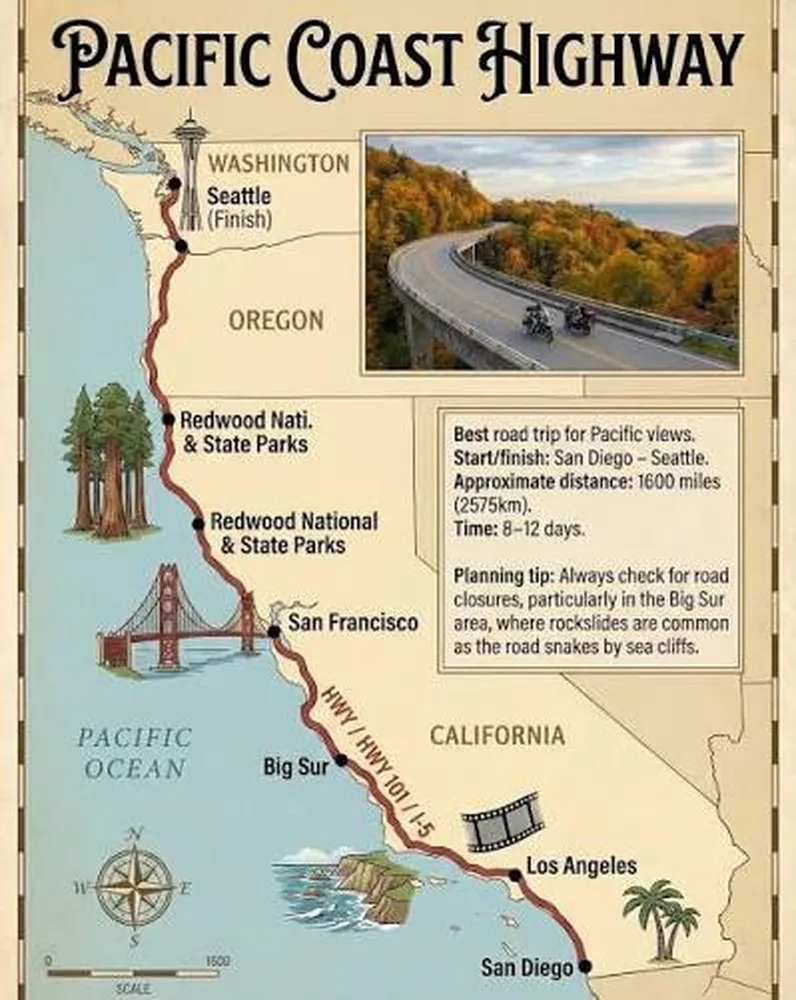
Crafting the ultimate road trip itinerary through California requires balancing geographic diversity, driving durations, and seasonal weather patterns. From the rugged cliffs of the Pacific Coast Highway to the towering peaks of the Sierra Nevada mountains, the Golden State offers unmatched highway routes. This practical guide covers structural itinerary building, budget calculations, essential stops, and hidden regional detours to ensure a flawless journey.
Selecting Your Driving Route Theme
California is too vast to experience completely in a single week. Successful planners categorize their approach into targeted thematic corridors based on travel preferences. If your primary goal is to admire dramatic seaside cliffs, classic surf towns, and marine wildlife, focus on a coastal highway itinerary using State Route 1.
For travelers interested in dramatic landscapes and hiking challenges, an inland alpine route connecting Yosemite, Sequoia, and Death Valley is ideal. If you have more time, you can combine elements of both paths into a grand loop. Those planning an extended global tour might also enjoy our guide on how to travel solo through Europe to compare distinct rail and road planning styles across different continents.
Structuring Daily Driving Windows
A common mistake when planning an ultimate road trip itinerary through California is overestimating how much distance you can comfortably cover in a single day. Coastal switchbacks, mountainous topography, and metropolitan traffic jams can easily double your expected driving times.
- Metropolitan Centers: Cap your active transit at 60 miles per day to accommodate urban traffic delays in areas like Los Angeles or San Francisco.
- Pacific Coast Highway (PCH): Limit daily driving to 120 miles. This leaves enough daylight for scenic pullouts, state park hikes, and spontaneous photography stops.
- Inland Highways & Interstates: Long stretches through the Central Valley or Mojave Desert allow for 200–250 miles daily. Be sure to check fuel levels regularly in isolated desert regions.
When building an itinerary with multiple stops, consider scheduling a multi-day break at a premium destination. For instance, learning how to find and book the best luxury resorts in the Caribbean demonstrates the value of setting aside dedicated rest days during highly active vacation schedules.
Budget Tracking and Cost Allocation
An accurate financial blueprint prevents unexpected expenses on the road. Your primary cost categories include vehicle rentals, fuel, overnight lodging, national park entrance permits, and dining. Fuel prices in California are historically higher than the United States national average, making fuel economy a priority when picking a vehicle.
| Expense Category | Daily Estimate (USD) | Cost Control Strategy |
|---|---|---|
| Vehicle & Fuel | $85 - $140 | Use fuel tracking apps; opt for hybrid vehicle rentals. |
| Accommodations | $130 - $280 | Mix state park cabins with mid-tier highway motels. |
| Food & Dining | $50 - $110 | Pack a cooler for lunches; purchase regional grocery staples. |
| Permits & Entry | $15 - $35 | Purchase the annual America the Beautiful park pass. |
If you need to keep expenses low, balancing premium locations with affordable transit strategies is an excellent approach. You can discover additional cost-saving methods in our strategic guide on how to travel to top 10 budget-friendly destinations worldwide.
Critical Booking Milestones
Spontaneity is a fun part of road tripping, but California's popular destinations require advance planning due to strict preservation caps. Yosemite National Park uses seasonal driving reservation systems during peak summer periods, and campsites along Big Sur regularly book out exactly six months ahead.
Review road conditions before departing via official transit tools like the California Department of Transportation (Caltrans) portal to spot winter mountain closures or coastal rockslide detours early. Align your planning window with the milestones outlined below:
- 6 Months Out: Reserve national park campgrounds and lodging inside Yosemite Valley or Joshua Tree.
- 3 Months Out: Secure rental car rates and book specialized regional tours, such as ferries to Alcatraz Island.
- 1 Month Out: Confirm seasonal wilderness permits and double-check your vehicle's mechanical status.
Following a structured preparation schedule ensures you won't miss out on top highlights, whether you are coordinating a west coast drive or looking for how to find family-friendly vacation ideas in the US that span multiple states.
Frequently Asked Questions
How many days do you need for a full California road trip?
A comprehensive classic coastal route requires 7 to 10 days. Expanding the route to include major inland national parks like Yosemite requires a minimum of 14 days.
What is the best month to complete a California road trip?
September and October offer the finest balance: mild weather conditions, minimal summer crowds, and clear, fog-free coastal views along the Pacific Coast Highway.
Should I drive from North to South or South to North?
Driving North to South (San Francisco to Los Angeles) is highly recommended for coastal routes, as you pull into the lane closest to the ocean, offering the best views and easiest access to roadside turnouts.
Conclusion
Building the perfect road trip across California comes down to smart spacing, early permit booking, and setting a comfortable daily driving pace. By choosing a clear route theme, tracking your seasonal highway updates, and managing your budget effectively, you will experience the absolute best of the Golden State's historic roads and scenic landscapes.