





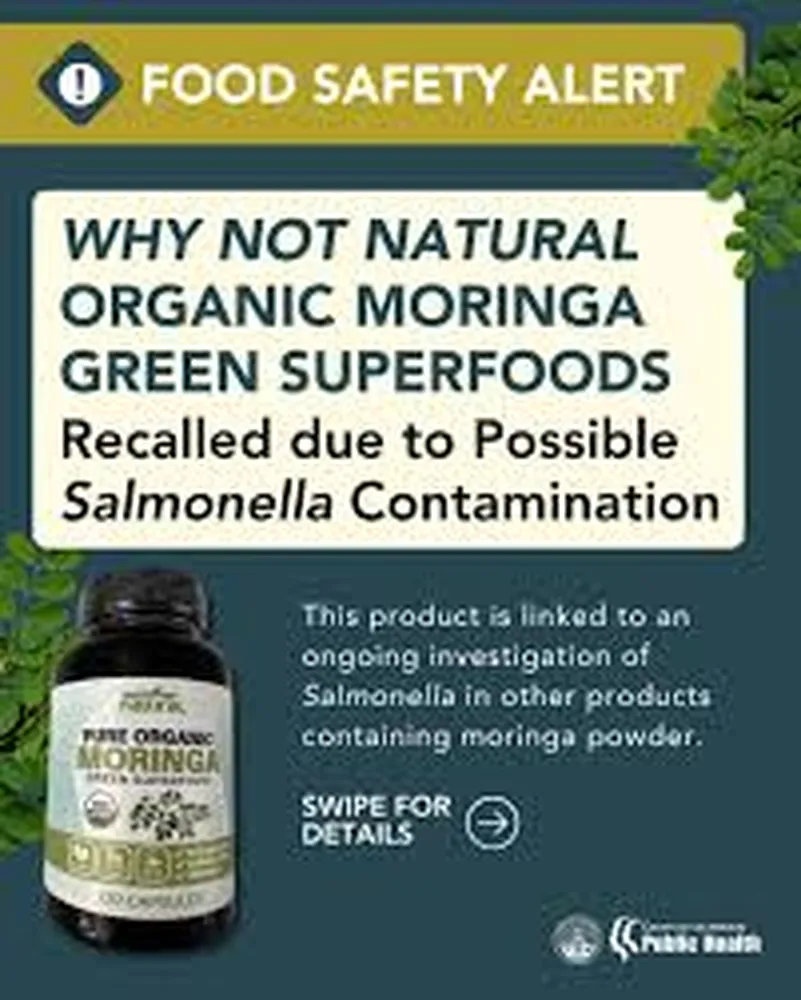
Moringa oleifera is celebrated worldwide as a "miracle tree" due to its dense nutritional profile. However, in 2026, food safety reports have highlighted an increase in bacterial contamination in organic supplements. Understanding how to wash moringa powder to avoid Salmonella is no longer just a suggestion—it is a health necessity.
Why Salmonella is a Threat to Moringa
Salmonella is a hardy bacterium that typically originates from contaminated irrigation water, animal manure used as fertilizer, or poor hygiene during the drying process. Because moringa is often air-dried in tropical climates, the warm and humid environment is a breeding ground for pathogens. If you have already started feeling unwell after consumption, it is vital to identify drug-resistant Salmonella symptoms immediately.
The Multi-Stage Sanitization Protocol
It is a common misconception that you can "wash" the finished green powder. In reality, the decontamination must happen before the leaves are ground. Here is the professional 3-step washing method:
1. The Initial Debris Cleanse
Submerge fresh moringa branches in a large vat of filtered water. Agitate the branches gently for 2 minutes. This removes physical contaminants like bird droppings, dust, and insects which carry primary bacteria.
2. The Chemical Barrier (Food-Grade)
To effectively kill Salmonella without using harsh chemicals, use an organic acid solution. $$pH = -\log[H^+]$$ A solution with a pH between 3.0 and 4.0 is ideal for disrupting bacterial cell walls. You can achieve this using:
- Citric Acid: 10g per liter of water.
- White Vinegar: 50ml per liter of water.
- Sodium Hypochlorite (Food Grade): Only if following strict industrial ppm guidelines.
3. Thermal Kill Step
After washing, the drying phase must act as a "kill step." Salmonella is killed at temperatures above 55°C (131°F) over a sustained period. Use the table below to choose your drying method safely:
| Method | Temperature | Salmonella Risk |
|---|---|---|
| Shade Drying | 25°C - 30°C | Very High |
| Solar Dehydrator | 45°C - 50°C | Moderate |
| Electric Dehydrator | 55°C - 60°C | Negligible (Safe) |
Preventing Re-Contamination
Washing the leaves is useless if your equipment is dirty. If you are preparing this for a family member who is already ill, perhaps trying to treat acute watery diarrhea in toddlers, your hygiene must be surgical. Always:
- Sterilize your grinder with 70% isopropyl alcohol before use.
- Wear gloves when handling dried leaves.
- Store the final powder in UV-protected glass jars.
Frequently Asked Questions
Can I "wash" store-bought powder?
No. If you suspect your store-bought powder is contaminated, the only way to make it safe is to cook it. Incorporate the powder into soups or stews that reach a boil ($100^{\circ}C$).
What are the signs of "bad" moringa powder?
While Salmonella is invisible, a fermented smell or a change from bright green to dark brown indicates high moisture levels, which favor bacterial growth.
Final Recommendation
To stay safe, always source moringa from suppliers who provide lab-tested results for pathogens. If you are processing it yourself, remember that how to wash moringa powder to avoid Salmonella is a process of heat and acidity. For more tips on maintaining a sterile environment, see our guide on how to disinfect a room after a viral infection.