





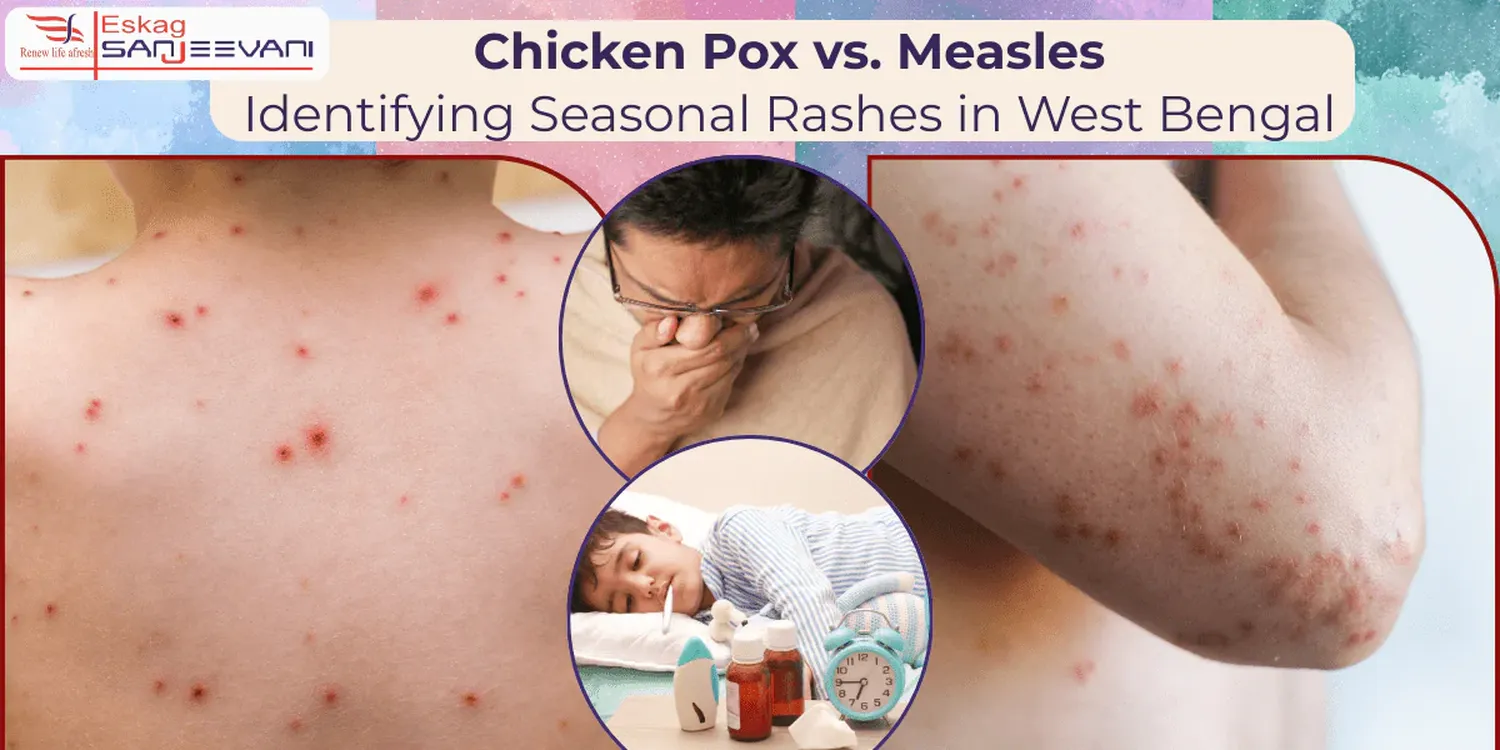
In 2026, distinguishing between a harmless skin irritation and a highly contagious viral infection is more critical than ever. Many parents find themselves asking how to tell the difference between measles and a heat rash when they notice red spots on their child during hot summer months. While both cause red marks, they are fundamentally different in cause, severity, and treatment.
Measles is a serious respiratory virus that can lead to hospitalization, whereas a heat rash (miliaria) is simply the result of blocked sweat ducts. Identifying the right one early can help you decide whether to disinfect your home or simply turn up the air conditioning.
Visual Differences: How They Look and Feel
The primary way to identify the condition is by observing the pattern of spread and the texture of the spots.
Measles Appearance
The measles rash usually appears 3 to 5 days after initial symptoms like a high fever. It starts at the hairline and behind the ears, then moves downward to the neck, trunk, and limbs. The spots are typically flat, red, and blotchy. Crucially, measles spots often "join together" as they spread, creating large red patches. If you are also dealing with other infections, you might need to know how to identify drug-resistant Salmonella symptoms during the same season.
Heat Rash Appearance
Heat rash, or "prickly heat," consists of tiny, clear or red pimple-like bumps. These appear in areas where sweat is trapped, such as the neck, armpits, elbow creases, and the diaper area. Unlike measles, heat rash does not follow a specific "top-to-bottom" spread; it stays where the skin is hot and damp.
At-a-Glance: Measles vs Heat Rash
Use this table to quickly evaluate the symptoms you or your child are experiencing.
| Feature | Measles | Heat Rash |
|---|---|---|
| Itchiness | Rarely itchy | Very itchy/Prickly |
| Fever | High (up to 104°F) | None |
| Location | Starts at head | Skin folds |
| Other Signs | Cough, Red eyes | None |
The Role of Fever and Respiratory Symptoms
One of the most definitive ways in how to tell the difference between measles and a heat rash is the presence of the "Three Cs": Cough, Coryza (runny nose), and Conjunctivitis (red eyes).
If the person has a high fever and looks "miserable" before the rash appears, it is likely viral. In contrast, a child with heat rash usually acts perfectly normal, lacks a fever, and only complains of the "prickly" sensation. If you suspect a virus, knowing how long a viral fever is contagious is essential for protecting your community.
Note: Check the inside of the mouth. Measles often produces Koplik spots—tiny white lesions that look like grains of salt—2 to 3 days before the skin rash breaks out. If digestive issues occur alongside a rash, check how to treat acute watery diarrhea in toddlers for safe recovery steps.
Care and When to See a Doctor
Management depends entirely on your findings. For a heat rash, the goal is cooling the skin. For measles, medical intervention is mandatory to prevent complications like pneumonia or encephalitis. Always ensure water safety by learning how to test for cholera at home if you live in high-risk areas.
- For Heat Rash: Move to a cool area and wear loose clothing.
- For Measles: Isolate immediately and contact a doctor via phone.
- Warning: If a rash does not turn white when pressed, seek emergency care immediately.
Conclusion
Learning how to tell the difference between measles and a heat rash boils down to looking for the "miserable" factor. If the rash is accompanied by a heavy cough and high fever, take it seriously. If it’s just itchy red bumps in the skin folds on a hot day, it’s likely just the heat. Always consult a medical professional if you are unsure.