





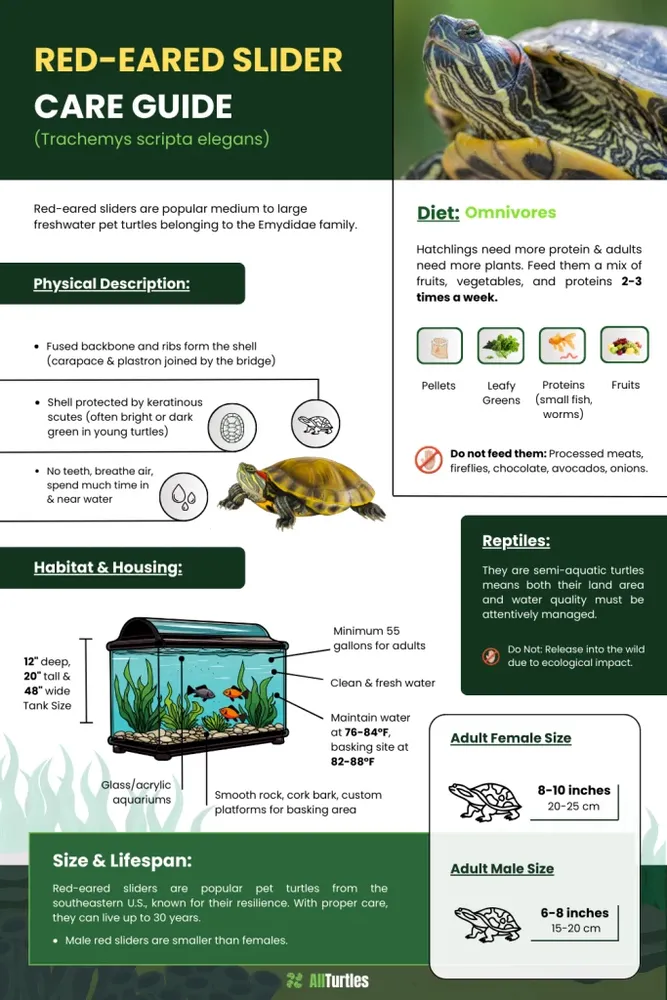
Learning how to take care of a baby red-eared slider turtle requires a functional mix of specific temperature controls, intense water filtration, and a disciplined dietary schedule. Hatchling semi-aquatic reptiles are remarkably delicate during their first year of life. Minor mistakes in water parameters or light spectrums can quickly compromise their fragile shells. By mastering these foundational husbandry requirements, you can transform a tiny hatchling into a resilient companion that can thrive for decades.
Just like understanding environmental parameters when you learn how to set up a bearded dragon tank for beginners, organizing a baby turtle tank hinges entirely on building a balanced habitat that accurately mirrors the natural world.
Enclosure Sizing and Essential Water Metrics
Baby red-eared sliders require ample swimming volume despite their small initial sizes. Start with a baseline minimum of a 20-gallon glass enclosure to allow room for essential plumbing, docks, and swimming paths. The water depth should be roughly 1.5 to 2 times the total length of your turtle's shell, giving them enough room to turn over comfortably if they happen to flip upside down. Always utilize a reliable submersible heater to prevent sudden environmental drops, which can trigger dangerous respiratory infections.
| Habitat Parameter | Target Metric |
|---|---|
| Water Temperature | 78°F - 82°F |
| Basking Surface | 90°F - 95°F |
| Ambient Air | 80°F - 85°F |
The Rules of Basking, UVB, and Heat Management
A dry basking area is absolutely critical for shell health and overall survival. Red-eared sliders rely entirely on external heat sources to regulate their internal metabolisms. You must set up a dual-lamp fixture directly over a floating or anchored basking platform. The setup needs a high-quality UVB bulb to help synthesize Vitamin D3, alongside a separate incandescent bulb to provide targeted heat. Without constant UVB radiation, growing hatchlings cannot process calcium correctly, leading to a fatal softening of the shell.
Properly managing specialized animal setups takes a great deal of patience. For instance, while managing aquatic setups calls for deep filtration, learning how to clean a dog's ears safely at home demands a steady, gentle hand to preserve delicate physical structures.
Daily Nutritional Parameters for Hatchlings
Young sliders are heavily carnivorous during their rapid growth phases. They need a steady diet rich in protein to build structural bone mass and shell density. Feed your hatchling once a day with commercial pellets specifically formulated for baby turtles, limiting the portions to a volume that would easily fit inside their empty head cavity. Supplement this primary diet twice a week with small gut-loaded live insects, micro-earthworms, or tiny pieces of freeze-dried shrimp.
As your pet grows older, their dietary preferences will naturally shift toward plant matter. According to clinical nutritional profiles maintained by the Association of Reptile and Amphibian Veterinarians (ARAV), an adult slider's daily food intake should ideally consist of nearly 75% leafy green vegetation to prevent severe liver and kidney damage over time.
Preventative Health Practices and Waste Control
Aquatic turtles produce an immense amount of organic waste compared to fish of an equal mass. Leftover food particles and fecal matter can quickly degrade water quality, causing eye swelling and bacterial shell rot. Install an external canister filter rated for at least double the actual volume of your tank. Perform a disciplined 25% water change every week, and always treat raw tap water with a reptile-safe dechlorinating agent to neutralise harmful heavy metals.
Enclosure cleanliness is just as vital for other household pets to prevent behavioral issues. For example, maintaining clean spaces can reduce anxiety in mammals, much like discovering how to stop a cat from scratching furniture depends heavily on providing appealing, fresh scratching posts away from their resting zones. Similarly, managing clean habitats helps when figuring out how to get a cat to drink more water, as sensitive animals will always reject stale or fouled resources.
Frequently Asked Questions
Why is my baby red-eared slider turtle refusing to eat pellets?
This is almost always caused by low water temperatures. If the water drops below 75 degrees Fahrenheit, a turtle's digestive system slows down drastically, causing them to lose their appetite entirely.
How long should I leave the UVB and heat lamps on each day?
Run both the UVB and heat bulbs for 10 to 12 hours during the daytime, then switch them off completely at night to establish a natural day and night cycle for your pet.
Can I handle my baby red-eared slider turtle frequently?
Handling should be kept to an absolute minimum. Excessive movement causes significant stress for a hatchling, and all reptiles carry natural salmonella bacteria, making thorough hand washing essential after any contact.