





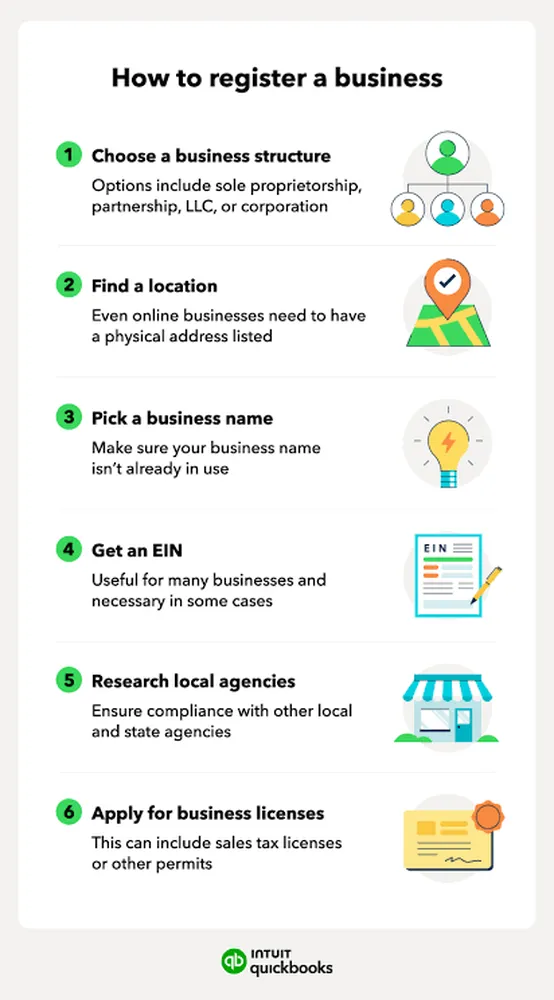
Establishing a commercial enterprise demands a strategic transition from an abstract conceptual framework to a fully compliant corporate structure. Learning how to register a new business and obtain necessary licenses acts as your defensive perimeter against operational disruptions, financial penalties, and asset liability risks. Following systematic filing steps protects your personal finances, builds institutional credibility, and sets up your operation for future expansion.
Whether your goal is to launch a local store or learn how to write a professional business plan for a tech startup, completing your corporate framework configuration correctly ensures regulatory compliance right from day one.
1. Evaluating Legal Business Structures
The structural format you select shapes your operational parameters, tax obligations, personal liability, and daily workflow tracking. Business owners typically pick one of four core corporate models based on their capitalization requirements and risk profiles:
- Sole Proprietorship: Simple configuration with absolute managerial control, though it offers no isolation between personal assets and commercial liabilities.
- Partnership: A joint structure where two or more individuals divide ownership stakes, operating outlays, and legal exposures.
- Limited Liability Company (LLC): A popular structure that isolates personal real estate and personal cash accounts from corporate debts while providing flexible tax treatments.
- Corporation (C-Corp or S-Corp): A completely separate legal entity owned by shareholders, built for complex capital structures and public investment readiness.
If you intend to scale operations smoothly across multiple jurisdictions, you must pick a structure capable of handling advanced tools, such as discovering how to manage multiple business branches from one dashboard without triggering internal regulatory issues.
2. Securing a Unique Corporate Identity
Your corporate moniker must clear extensive national and regional availability verifications before you file any official registration paperwork. A conflicting or deceptive trade name can result in trademark infringement lawsuits or immediate application rejections by state registers.
To safeguard your brand presence, perform a search on national trademark databases like the United States Patent and Trademark Office (USPTO) alongside regional corporate division index systems. If you plan to operate under a creative marketing moniker separate from your primary corporate entity, you must file a formal Doing Business As (DBA) certificate with your county or municipal clerk's department.
3. Filing Statutory Government Documentation
Formalizing an LLC or corporation requires submitting formal organizing documents to your regional Secretary of State or equivalent commercial regulatory authority. These legal submissions clearly outline your underlying governance systems, operational goals, and financial structures.
| Structure Type | Primary Document | Processing Time |
|---|---|---|
| LLC | Articles of Organization | 3 - 10 Days |
| Corporation | Articles of Incorporation | 5 - 14 Days |
| Sole Proprietor | DBA / Trade Certificate | 1 - 2 Days |
During this stage, your business must designate a registered agent with a physical street address open during regular business hours to receive official legal notices and service of process. As administrative tasks scale up, many modern founders learn how to automate business operations using custom software to handle high-volume structural documentation, tracking workflows, and corporate records automatically.
4. Applying for Tax Identification Numbers
An Employer Identification Number (EIN) acts as a unique federal identifier for your corporate entity, much like a personal security code. This number is mandatory for opening commercial checking accounts, onboarding employees, and fulfilling business tax obligations.
You can secure an EIN instantly and free of charge via online revenue agency portals. Once federal processing wraps up, you must complete state revenue department registrations to manage local sales taxes, employer withholding requirements, and payroll distributions. This operational setup is essential if you plan to launch platforms for digital tracking, or integrate a smooth workflow to how to track daily sales and inventory in a retail store without running into compliance bottlenecks.
5. Acquiring Mandatory Permits and Licenses
The final phase of figuring out how to register a new business and obtain necessary licenses requires winning operational clearance across federal, state, and municipal layers. Operational mandates vary wildly based on your geographic location and your specific industry sector.
Federal Licensing Requirements
Enterprises engaged in highly regulated environments—such as aviation, firearms, commercial logistics, maritime freight, or agriculture—must secure explicit authorization from corresponding national oversight agencies.
State and Municipal Compliance Vectors
Most conventional business models fall under regional or municipal oversight domains. To avoid sudden shutdown notices, you must verify your status across these common categories:
- General Business Licenses: An annual municipal operational tax certificate required to conduct business inside local city or county borders.
- Zoning and Land Use Permits: Verifications confirming your commercial space conforms to local environmental, parking, and construction codes.
- Occupational and Professional Licenses: Legal certifications mandatory for specialized service providers, including legal counsel, medical professionals, real estate brokers, and technical trade contractors.
- Environmental and Health Permits: Safety approvals from health departments required for food service providers, beauty salons, or any business managing hazardous raw materials.
Setting up your corporate baseline properly simplifies future digital adjustments, such as adopting a paperless workflow or learning how to integrate a digital receipt system for a small business to cut overhead expenses.
6. Administrative Compliance Timeline
Review this step-by-step timeline detailing estimated durations and actions required to move your project from initial structure selection to legal launch readiness:
- Week 1: Structural Choice & Name Clearing – Run extensive checks across corporate databases and secure matching digital domain names.
- Week 2: Filing State Entity Paperwork – Submit your Articles of Organization or Incorporation and pay your regional processing fees.
- Week 3: Revenue Registration – Secure your EIN online instantly and register for regional sales and corporate tax accounts.
- Weeks 4-5: Permit Acquisition – Submit site plan applications, request occupational reviews, and clear any local fire or health safety inspections.
Frequently Asked Questions
What are the core steps to register a new business?
The core process requires choosing a business structure, performing name availability searches, submitting formal organizing documents to your state registration office, applying for tax identification numbers, and securing local permits required for your industry.
How long does it take to secure basic operational permits?
Tax identifiers are issued online almost instantly. Basic state registrations take between 3 and 14 business days, while specialized local licensing, health clearances, or zoning permits can take 30 to 60 days depending on local agency workloads.
Can I operate a business from home without special licensing?
Most local municipalities require a home occupation permit or local tax certificate for home-based operations, even if the business is purely digital and has no physical inventory or foot traffic.
Conclusion: Laying a Compliant Operational Foundation
Mastering how to register a new business and obtain necessary licenses provides a rock-solid foundation for long-term commercial success. Resolving these regulatory requirements systematically minimizes legal risks and builds trust with institutional lenders, vendors, and clients. Maintaining active local tax certifications and keeping your business permits up to date protects your commercial investments, letting you shift your focus toward long-term revenue growth and operational scaling.