





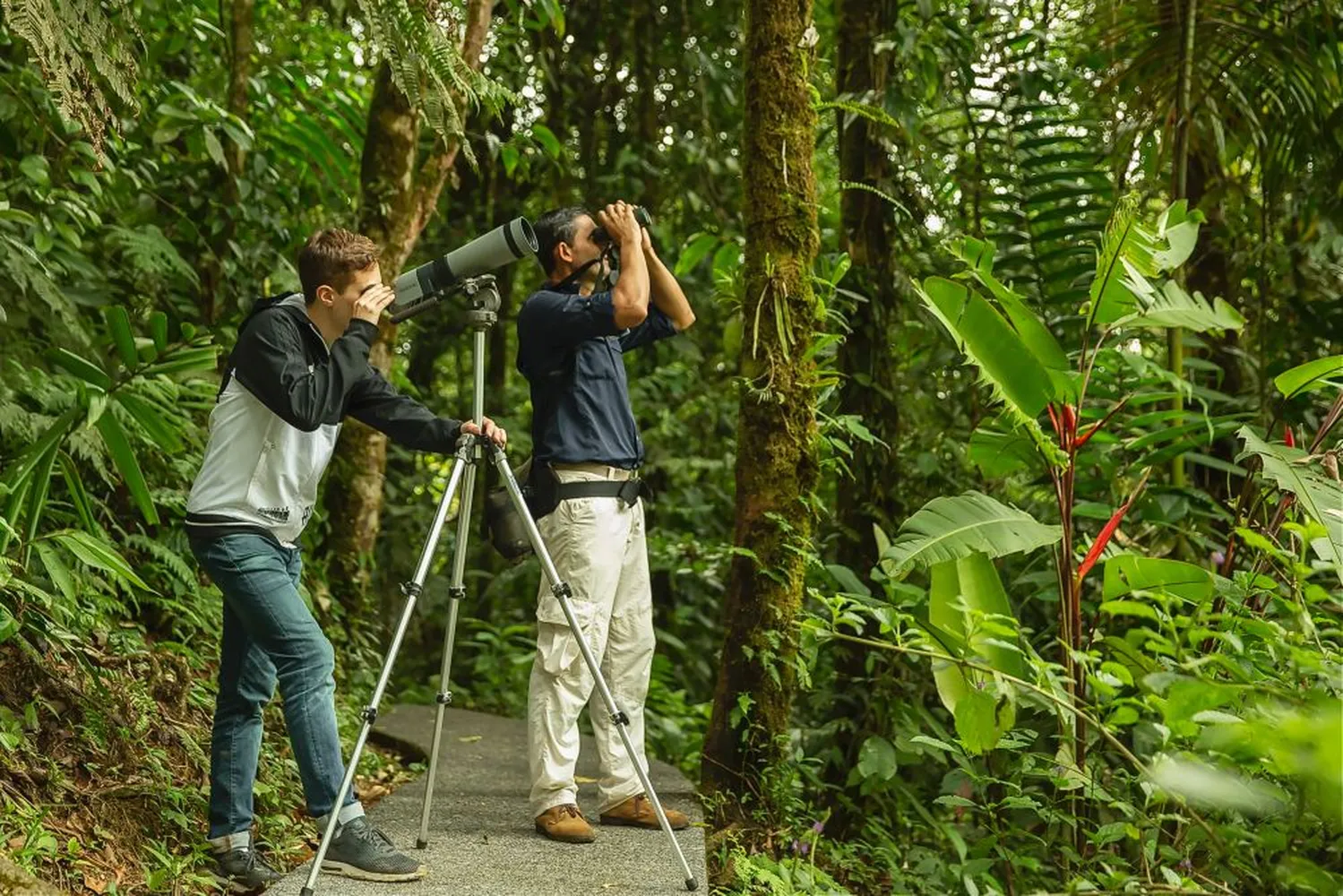
Learning how to go birdwatching in Costa Rica opens the door to one of the most biodiverse places on Earth. Packed with over 920 documented bird species across a compact geographic landmass, this Central American nation represents roughly 10% of the entire world's total avian diversity. Whether you are aiming to track down the emerald-shimmering Resplendent Quetzal in a misty montane cloud forest or catch a flock of vibrant Scarlet Macaws coastal cruising, a successful journey demands strategic ecological planning, the right equipment, and accurate regional timing.
Why Costa Rica is a Premier Birding Destination
Costa Rica acts as a biological land bridge connecting North and South American ecosystems. This unique geographical positioning gives rise to 12 distinct life zones, each supporting specialized endemic species. If you want to see wildlife in the best places of South Africa, your focus is primarily on large mammals; however, Costa Rica serves as the ultimate paradise for concentrated avian exploration. You can transition from Pacific dry lowland woods to dense Caribbean rainforest slopes within a mere four-hour drive, picking up completely unique bird families along the way.
Best Seasons and Migration Windows
Timing is critical when structuring your trip. The country features two core seasons: the dry season (known locally as Verano) running from December to April, and the green/rainy season running from May to November. For peak species tallies, the ideal strategy is to target the crossover months when northern migratory species descend south for the winter season.
According to data tracked by the official Costa Rica Tourism Board (ICT), millions of migratory birds arrive between October and March, pushing the single-day observation potential significantly higher for active birders.
| Season Window | Weather Profile | Avian Highlights |
|---|---|---|
| Jan – Apr | Predominantly Dry | Resident breeding behaviors; clear canopy views |
| May – Aug | Afternoon Showers | Local altitudinal migrations; nesting periods |
| Sep – Dec | Heavy Rain (peaks Oct) | Massive influx of North American migratory waves |
Top Regional Hotspots and Ecosystems
To maximize your itinerary, focus your efforts around specific target zones that sample contrasting microclimates:
- The Highlands (San Gerardo de Dota & Monteverde): Cloud forest zones hanging around 6,000 to 9,000 feet up. This is the top zone for spotting the Resplendent Quetzal, Three-wattled Bellbirds, and over 30 distinct species of hummingbirds.
- Caribbean Lowlands (Sarapiquí & Tortuguero): Draped in rich tropical wet forests, these regions hold the legendary La Selva Biological Station. Expect to observe Great Green Macaws, Keel-billed Toucans, and stealthy Rufous Motmots.
- South Pacific Lowlands (Corcovado National Park): Boasting the country's largest pristine expanse of lowland rainforest. This remote outpost is excellent for viewing massive concentrations of Scarlet Macaws and the formidable Harpy Eagle.
If you are trying to figure out how to explore the best places in Asia for adventure seekers, you know that extreme terrain requires thorough localized logistics. Similarly, navigating Costa Rica's distinct wilderness tracts demands careful preparation before setting out.
Step-by-Step Preparation Plan
- Establish Your Master Target List: Determine whether you want to chase endemic species or capture wide variety, then align your route with the corresponding life zones.
- Secure Local Eco-Lodges Early: Reserve stays at dedicated wilderness properties that preserve private rainforest reserves. Many top-tier locations feature active fruit feeders right off the main balconies.
- Engage a Certified Guide: Hire a professional local spotter licensed by the ICT. Local guides bring top-of-the-line spotting scopes and possess specialized audio tracking skills to locate elusive canopy dwellers.
- Pace Your Trails Chronologically: Avian activity reaches its highest intensity between 5:00 AM and 8:30 AM. Plan to hit the forest floor right at dawn for the best viewing opportunities.
If you have previously learned how to backpack through Thailand, you already understand how critical it is to match your technical packing setup with fluctuating wilderness microclimates.
Essential Birding Gear Checklist
When entering dense tropical environments, your gear choices will make or break your trip. Keep your gear light, high-performance, and fully weather-proofed against unexpected rainforest downpours.
- Binoculars (8x42 or 10x42): Look for options with multi-coated lenses and solid water/fog protection to handle high humidity levels without fogging up internally.
- Digital Field Tools: Download the Cornell Lab's Merlin Bird ID app along with the regional Costa Rica packs for instant photo and audio identification out on the trails.
- Field Clothing: Stick to lightweight, quick-dry, long-sleeved options in neutral colors like olive green, tan, or gray to blend seamlessly into the forest background.
- Optical Protection: Carry durable dry bags, microfiber cleaning cloths, and silica gel packs to safeguard your cameras and lenses from heavy humidity.
Just as travelers studying how to take scenic drives in the Canadian Rockies must prepare for shifting mountain weather, birdwatchers in Central America need to be ready for sudden tropical rain loops.
Frequently Asked Questions (FAQs)
What is the single best location to spot a Resplendent Quetzal?
The high-altitude valley of San Gerardo de Dota offers your absolute highest probability window, particularly from February through April when the wild avocado trees bear fruit.
Can beginners easily birdwatch independently throughout Costa Rica?
Yes, many national parks feature exceptionally well-maintained loop systems. However, investing in a local guide for your first few days will drastically improve your tracking and spotting skills.
Are birds easily viewable along the popular coastal resort beaches?
Absolutely. Coastal strips regularly attract diverse marine species, including Brown Pelicans, Magnificent Frigatebirds, and massive coastal populations of Scarlet Macaws.
Conclusion: Your Ultimate Avian Adventure Awaits
Figuring out how to go birdwatching in Costa Rica comes down to immersing yourself in the country's diverse natural rhythms. By matching your travel window with the seasonal migration paths, choosing contrasting eco-zones, and stepping out onto the trails right at daybreak, you will guarantee an incredible birding journey. Grab your binoculars, secure your local spotter, and get ready to experience one of the planet's premier wild spaces firsthand.