





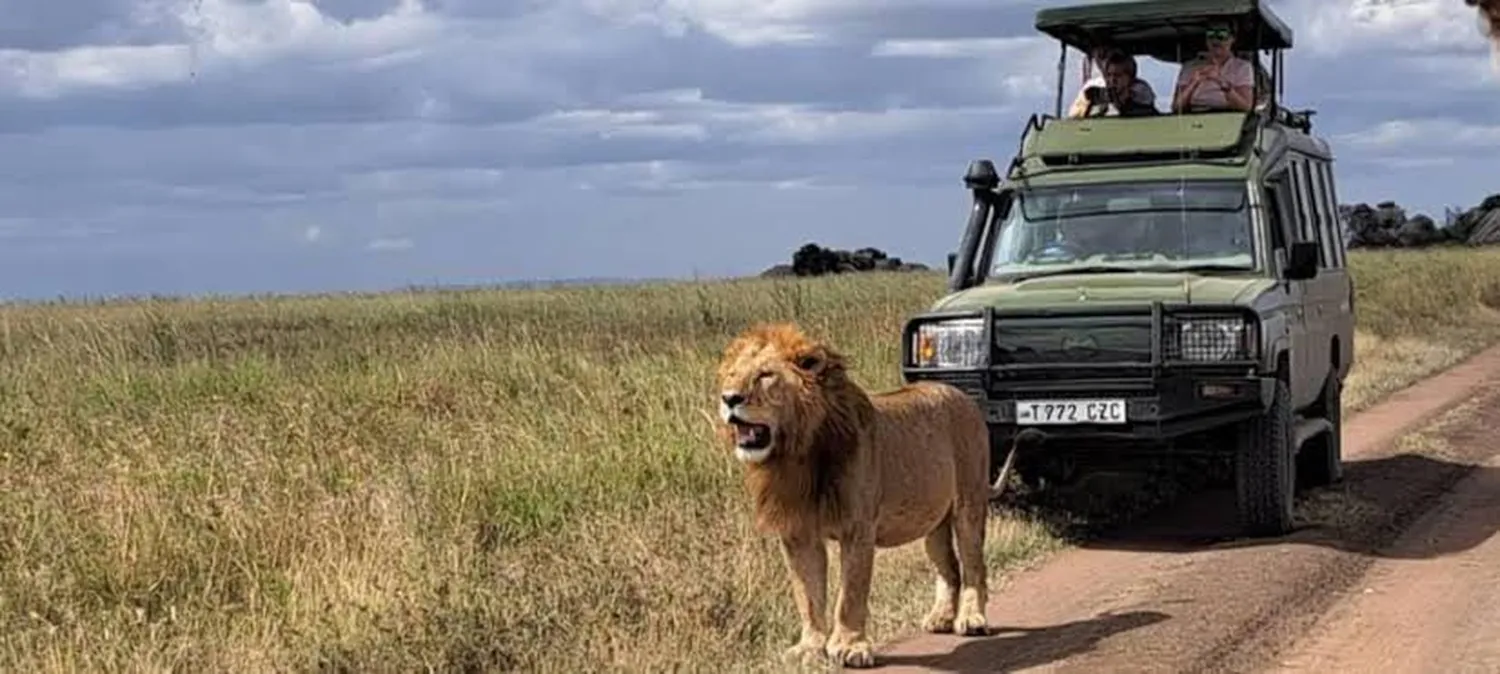
Introduction: Understanding the Serengeti Dry Season
Knowing how to experience the dry season in a 7 day serengeti tour requires an in-depth understanding of northern Tanzania's distinct ecological rhythm. From late June through October, rain cloud cover disappears, sun-baked earth replaces lush greenery, and temporary waterholes completely evaporate across the vast savannah. This intense dry spell triggers a dramatic, survival-driven transformation in animal behavior. Over 1.5 million wildebeest, 200,000 zebras, and tens of thousands of Thomson's gazelles are forced to move continuously toward permanent water arteries—primarily the Seronera River in the central valley, the Grumeti River in the west, and the formidable Mara River along the northern border with Kenya.
For first-time travelers and returning safari enthusiasts alike, this dry season offers an unprecedented opportunity to view wildlife without the obstacle of tall grasses or deep black-cotton mud. As rainfall ceases, photographic clarity and the ease of spotting Africa's Big Five (Lion, Leopard, Elephant, Buffalo, and Rhinoceros) increase exponentially. Every single day on the savannah unfolds with gripping nature spectacles: from early morning lion and cheetah hunts, to massive wildebeest herds congregating anxiously along the riverbanks of the Mara before making their heroic leap into crocodile-filled waters.
Why the Dry Season Transforms Wildlife Viewing Dynamics
As the dense green vegetation thins down to short golden stubble, stealthy predators like lions, leopards, cheetahs, and spotted hyenas lose much of their natural camouflage. However, they compensate for this loss by anchoring themselves strategically around the few remaining drying watering holes and river basins where herbivores are forced to drink daily. Survival in the Serengeti during these months becomes a high-stakes ecological chess game. Lions gather near rocky outcrops to scout the horizon, while leopards hang their fresh kills high in yellow-fever acacia branches away from scavengers.
A 7-day timeframe represents the ideal sweet spot for an immersive Tanzania northern circuit safari. It provides ample time to cross diverse micro-climates, track the Great Wildebeest Migration across regional borders, explore iconic granite kopjes, and descend into the world-famous Ngorongoro Crater without exhausting drive schedules or rushing between national park gates.
Unlocking Key Regions During the 7-Day Journey
Exploring Serengeti National Park is not merely about traversing wide open grasslands; it involves navigating a dynamic mosaic of distinct ecosystems that dramatically shift throughout the year. To guarantee an exceptional experience during the dry season (late June through October), your 7-day itinerary must focus on three primary wildlife hubs that anchor the survival of the northern circuit ecosystem:
- Central Serengeti (Seronera Valley): Serving as the permanent heartland for resident wildlife, the Seronera River provides a vital year-round water supply. This valley hosts exceptionally high densities of leopards lounging in yellow-fever acacia branches, territorial lion prides defending their hunting grounds, and hippos tightly packed into rapidly evaporating river pools.
- Northern Serengeti (Kogatende & Mara River): From July through October, this northern frontier becomes the stage for nature’s most iconic drama. Here, hundreds of thousands of wildebeest gather along the steep banks of the Mara River, building tension before plunging into crocodile-infested waters during the world-famous Great Migration river crossings.
- Ngorongoro Crater Bowl: Enclosed by dramatic 600-meter volcanic walls, this UNESCO World Heritage site harbors over 25,000 large mammals on its fertile floor. It offers one of the most reliable places on Earth to spot the critically endangered Black Rhinoceros alongside massive elephant bulls and dense hyena clans.
During the dry months, wildlife does not disperse randomly across the vast plains as it does during the rainy season. Instead, animals concentrate in massive numbers around remaining permanent water basins and natural springs. This predictable animal behavior allows expert driver-guides to track predator-prey interactions efficiently without losing precious hours traversing empty territory.
Strategic Game Viewing & Micro-Climate Navigation
Maximizing a 7-day Serengeti safari during the dry season requires precise daily timing and seasonal micro-climate navigation. Early morning game drives starting at dawn (around 06:00 AM) are crucial, as big cats and scavengers are at their most active before the intense equatorial heat settles over the open savannah. As daytime temperatures rise, predators retreat to the cool shade beneath sausage trees or position themselves on elevated granite kopjes to scan the horizon for grazing herds.
A well-structured route allocates the first two days to exploring the Central Serengeti before tracking northward toward the Mara River basin. This strategic progression gives travelers exposure to a rich variety of landscapes—from iconic flat savannahs to wooded riverbanks—while dramatically increasing the probability of witnessing action-packed hunts and river crossings.
Licensing, Safety, and Tour Operator Selection
To ensure your journey runs smoothly from your arrival at Kilimanjaro International Airport (JRO) or Arusha Airport (ARK) to your final departure flight, discovering how to check if a Tanzanian safari company is officially registered and licensed is a critical first step. Partnering with verified local operators guarantees customized 4x4 pop-top Land Cruisers, certified professional driver-guides, long-range HF radio communications, and valid park permits issued by the Tanzania National Parks Authority (TANAPA).
Always verify an operator's official TALA (Tanzania Tourism License) credentials and carefully evaluate price quotes prior to sending any deposit payments. This ensures you avoid unlicensed middlemen while securing transparent pricing, high safety standards, and top-tier service on the ground.
Furthermore, ensure your chosen tour provider equips safari vehicles with onboard first aid kits, unlimited clean drinking water, dust protection gear, and comprehensive wildlife guidebooks to enrich your educational and visual experience throughout the 7-day expedition.
Why the Dry Season Is Unmatched for Serengeti Safaris
The months of July, August, September, and October are universally recognized as the prime safari window in East Africa. The physical advantages of touring during this season directly translate into higher-quality wildlife sightings and better photographic opportunities:
- Unrivaled Line-of-Sight Visibility: With knee-high grasses grazed down or dried up, wildlife cannot hide easily. Leopards draped over acacia branches and cheetahs crouching on termite mounds become visible from hundreds of meters away.
- High Animal Concentration around Water: Rather than dispersing across thousands of square kilometers of rain-fed plains, animals cluster tightly around remaining rivers and permanent springs.
- Comfortable Weather & Clear Skies: Humidity is minimal, daytime temperatures remain pleasant (20°C to 28°C), and rain virtually never interrupts game drives.
- Minimal Mosquito Activity: The lack of standing water dramatically reduces mosquito populations, making evening bush dinners and tented camp stays far more comfortable.
If you are planning your adventure specifically around mid-year holiday schedules, understanding how to arrange a 7 day tanzania safari in july and august will help you secure prime lodge bookings well before peak season availability runs out.
Optimized 7-Day Dry Season Serengeti Itinerary
To maximize every single hour in the field, your route must balance transit times with deep game drives. Here is a field-tested 7-day northern circuit route designed specifically for the dry months:
Day 1: Arusha to Tarangire National Park
Depart early from Arusha or Kilimanjaro Airport toward Tarangire National Park. During the dry season, Tarangire acts as a magnet for massive elephant herds—often numbering up to 300 individuals per group—clustering along the drying Tarangire Riverbed. Learn how to see giant elephants in tarangire on a 7 day safari to make the most of your first game drive among iconic baobab trees.
Day 2: Lake Manyara Escarpment to Central Serengeti (Seronera)
Ascend the Great Rift Valley escarpment and cross through the cool highlands of the Ngorongoro Conservation Area, dropping down onto the dry, sun-drenched plains of Central Serengeti. Your afternoon game drive centers on the Seronera River valley, home to resident big cats, hippos packed in shrinking pools, and resident herbivores.
Day 3: Full Day Exploration of Central Serengeti & Kopjes
Dedicate a full 12 hours to exploring the granite kopjes (such as Simba Kopjes and Maasai Kopjes) that rise out of the flat plains like islands. These rock formations act as ideal lookout towers for lions and leopards scanning for grazing gazelles.
Day 4: Journey North to the Mara River (Kogatende Region)
Drive northward through dry woodland corridors toward the Kogatende sector of Northern Serengeti. As you approach the Mara River basin, the landscape grows more rugged, and vast wildebeest herds cover the plains in dense, dust-shrouded ribbons.
Day 5: Mara River Wildebeest Crossing Tracking
Spend the day stationed along key river crossing points (Crossing Points 1 through 10). Watch herds assemble along steep riverbanks, weighing the danger of territorial Nile crocodiles against their instinct to cross into green grazing grounds.
Day 6: Northern Serengeti to Ngorongoro Crater Rim
Enjoy a final morning game drive along the Mara River before embarking on a scenic drive south toward the Ngorongoro Crater rim. Arrive at your crater-view lodge in time for a spectacular sunset over the caldera floor.
Day 7: Ngorongoro Crater Floor Tour & Return to Arusha
Descend 600 meters into the crater bowl at dawn for a dense game viewing session. The crater floor shelters over 25,000 large mammals year-round, offering exceptional chances to spot the endangered black rhinoceros alongside lions, hyenas, and flamingos. Return to Arusha by late afternoon.
For travelers interested in combining luxury wilderness experiences with coastal relaxation, learning how to plan a 7 day luxury bush and beach package provides key insights into seamless flight connections between Serengeti airstrips and Zanzibar.
Wildlife Movements & Waterhole Dynamics
Wildlife movement during the dry season follows predictable ecological pressures. As smaller seasonal streams dry out, animals shift according to regional micro-climates. The qualitative insights in the table below show where wildlife concentrations peak throughout the dry season months:
| Month Window | Key Region | Primary Wildlife Focus |
|---|---|---|
| June – July | Grumeti & Western Corridor | Herds crossing Grumeti River; large lion prides on dry plains |
| August – September | Northern Serengeti (Kogatende) | Dramatic Mara River crossings; massive crocodile activity |
| October | Central & Northern Borders | Herds moving toward Kenya; concentrated waterhole action |
Travelers who want higher comfort, private concessions, and chartered flight options can explore how to book top rated luxury safari operators for serengeti and ngorongoro to craft an elevated, tailormade itinerary.
Budget & Fee Breakdown (TANAPA Tariffs)
Planning a 7-day safari budget requires understanding mandatory park conservation fees regulated by the Tanzania National Parks Authority (TANAPA) and the Ngorongoro Conservation Area Authority (NCAA). Dry season tariffs reflect peak operating season rates across all parks:
- Serengeti Conservation Fee: $70 USD + 18% VAT ($82.60 USD total) per adult per 24-hour cycle.
- Ngorongoro Conservation Area Fee: $70.80 USD per adult per 24 hours.
- Ngorongoro Crater Vehicle Descent Fee: $295 USD per safari vehicle per entry.
- Tarangire Conservation Fee: $59 USD per adult per 24 hours during peak dry months.
- 4x4 Safari Land Cruiser Hire: $250 to $350 USD per day including driver-guide and unlimited fuel.
To evaluate operator quotes effectively and ensure there are no hidden costs, read how to compare prices for a 7 day tanzania tour package before making wire transfers or deposit payments.
Practical Packing & Preparation Tips
Ensuring comfort during long dusty game drives requires thoughtful preparation. Keep these essential tips in mind while packing for a dry season tour:
- Dust Protection Gear: Fine black-dust particles generated by dried cotton-soil roads can affect camera lenses and optics. Bring padded camera covers, air blowers, lens cleaning cloths, and breathable cotton neck gaiters.
- Layered Clothing Strategy: Mornings on the crater rim and central plains start crisp (around 10°C to 12°C). Pack a warm fleece or windbreaker jacket over light, short-sleeved cotton shirts that you can layer off as temperatures rise to 28°C by noon.
- Neutral Color Palette: Wear khaki, tan, beige, and olive green clothing. Tsetse flies are naturally drawn to dark blue and black fabrics, while bright whites and neon colors startle wildlife.
- Sun & Eye Protection: High UV radiation during dry months requires wide-brimmed hats, polarized sunglasses, and broad-spectrum sunscreen (SPF 50+).
Frequently Asked Questions
Which month is best to experience the dry season in a 7 day Serengeti tour?
July and August offer prime weather conditions alongside the dramatic Mara River wildebeest crossings. September and October provide slightly quieter park traffic with exceptional predator concentration around remaining water sources.
How much does a 7 day dry season Serengeti safari cost?
Budget road safaris generally start around $2,100 per person sharing. Mid-range lodge safaris run between $3,200 and $4,500 per person, while high-end luxury fly-in tours range from $5,500 to $9,000+ per person depending on camp exclusivity.
Are insects bad in the Serengeti during the dry season?
Mosquito activity drops significantly due to lack of standing rainwater. However, localized pockets of tsetse flies persist in wooded areas, making light-colored neutral clothing vital during game drives.
Can you see the Big Five on a 7 day dry season Serengeti trip?
Yes. Combining Serengeti game drives with a descent into the nearby Ngorongoro Crater gives travelers over 95% statistical likelihood of spotting lions, leopards, elephants, buffaloes, and black rhinos in a single itinerary.
Conclusion: Mastering Your Dry Season Safari Journey
Mastering how to experience the dry season in a 7 day serengeti tour comes down to a deliberate combination of precise seasonal timing, strategic regional routing, and working closely with fully accredited local safari experts. By aligning your travel dates (late June through October) with wildlife movements near permanent water basins like the Mara and Seronera Rivers, securing an extended 4x4 pop-top Land Cruiser with experienced driver-guides, and properly preparing for dusty savannah conditions, you guarantee an extraordinary, bucket-list East African adventure.
For any traveler seeking an uncompromised wilderness experience, the dry season offers the ultimate vantage point. As surface water evaporates and dense vegetation dries into golden stubble, the Serengeti transforms into an open stage where predator-prey dynamics and Big Five sightings unfold with unmatched clarity. A 7-day itinerary strikes the perfect balance: it provides sufficient depth to explore multiple ecosystems without feeling rushed or burdened by exhausting travel schedules.
Final Takeaways for an Unforgettable Serengeti Expedition
To maximize every single moment on safari and ensure seamless execution from arrival at Kilimanjaro International Airport (JRO) to your final departure flight, keep these fundamental planning pillars in mind:
- Advance Booking & Accommodation Strategy: Dry season lodges and tented camps in high-demand sectors like Kogatende (Northern Serengeti) and Central Seronera fill up 6 to 12 months in advance. Booking early secures prime lodge placements directly along active migration corridors.
- Prioritize Verified Local Operators: Always verify that your tour operator holds an active TALA license and provides customized 4x4 Land Cruisers equipped with pop-up roofs, long-range HF radio communications, and unlimited daily mileage for comprehensive game viewing.
- Pack for Sharp Climate Contrast & Dust: Bring high-SPF sunblock, polarized sunglasses, neck gaiters for fine dust, and neutral-colored, layerable clothing (khaki, tan, and olive) to comfortably adapt to cold crater mornings (10°C) and warm afternoon savannah sun (28°C).
- Respect Wildlife & Park Regulations: Adhere strictly to Tanzania National Parks Authority (TANAPA) guidelines by remaining inside vehicles during game drives, avoiding off-road driving in restricted zones, and keeping noise levels low near active animal groups.
Ultimately, the success of your expedition relies on thoughtful preparation and partnering with an operator dedicated to safety, sustainability, and authentic hospitality. By following this guide, your 7-day dry season safari will deliver lifelong memories and incredible value for your journey.
References & Official Travel Resources
- Tanzania Tourist Board (TTB) Official Portal - Official destination information and accredited tour operator directories.
- Tanzania National Parks Authority (TANAPA) - Conservation updates, park entry fees, and regulations.
- World Health Organization International Travel Guidelines - Official health recommendations and yellow fever requirements for East Africa.