





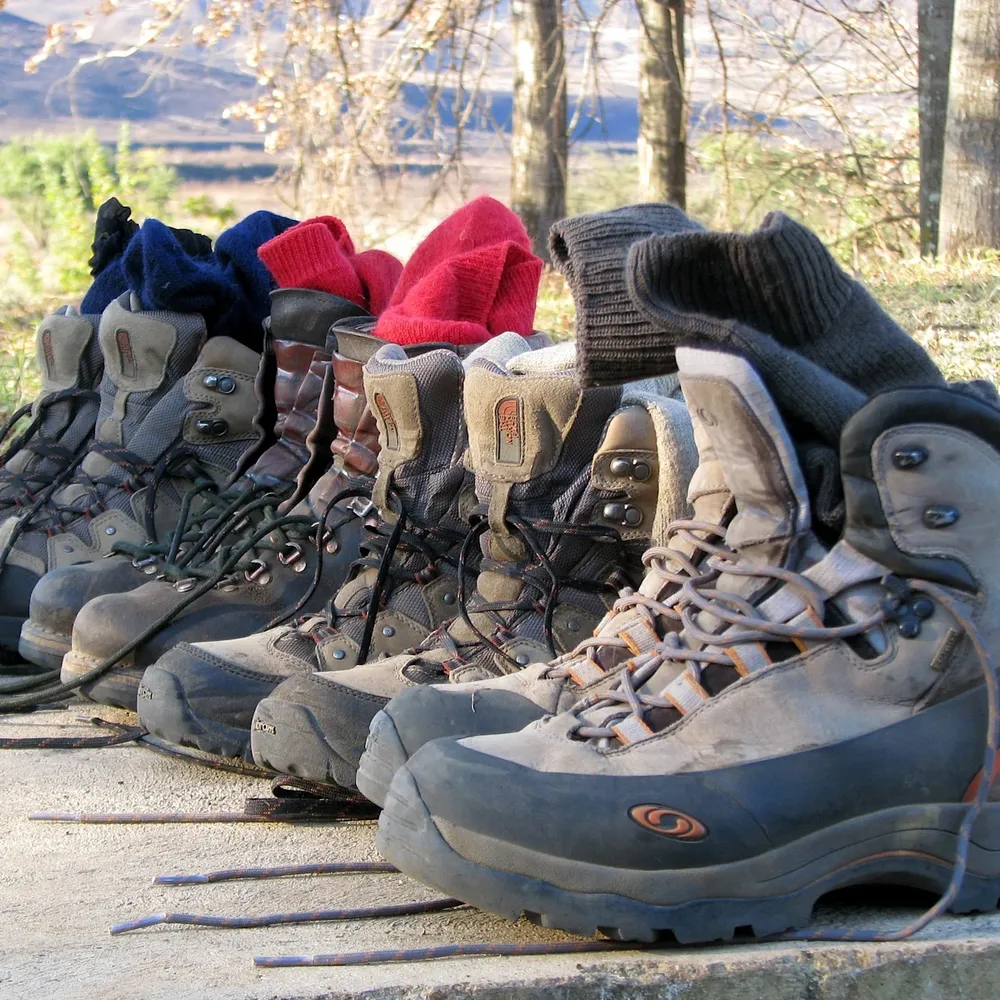
Climbing Africa's highest point requires meticulous physical, logistical, and material preparation. Standing at 5,895 meters above sea level, the trek crosses five distinct ecological zones, ranging from humid rainforests to freezing arctic deserts. Understanding how to choose the best hiking boots for Mount Kilimanjaro Uhuru Peak is arguably the most critical gear decision you will make, as improper footwear remains a leading cause of preventable trail failures, chronic joint pain, and early descents.
| Boot Material Category | Core Structural Advantages | Primary Disadvantages | Break-In Period Required | Best Suited For (Kilimanjaro Fit) |
|---|---|---|---|---|
| Full-Grain Leather Boots (Traditional Premium Nubuck / Smooth Leather) |
Extreme, unmatched abrasion resistance against sharp volcanic rocks. Incredible natural water shedding when treated. Conforms perfectly to the unique shape of the user's foot over time, providing a custom-like anatomical fit and elite durability. | Noticeably heavier per pair, which increases energy consumption over long days. Poor natural breathability in hot lower zones. Highly susceptible to severe stiffening in extreme arctic temperatures if the leather absorbs ambient moisture. | High (50 - 80+ Kilometers) Requires extensive pre-trip trail conditioning to avoid severe heel blisters. |
Trekker seeking maximum ankle stability, heavy foot protection, and a long-term investment that will last for multiple high-altitude expeditions beyond Kilimanjaro. |
| Synthetic Fabrics (Nylon, Cordura, & Polyester Blends) |
Significantly lighter weight, reducing leg fatigue during steep ascents. Excellent natural flexibility out of the box. Superior breathability and airflow in warm environments, allowing sweat and moisture to evaporate rapidly. | Lower long-term durability; vulnerable to scuffing and tearing when dragged across jagged scree fields. Soft structures provide less ultimate lateral support for the ankles when carrying heavy multi-day backpacks. | Minimal (10 - 20 Kilometers) Lighter materials soften very quickly, though sock-testing is still essential. |
Fast, agile hikers who prioritize lightweight gear, suffer from hot feet, or have limited preparation time to break in stiff boots before departing for Tanzania. |
| Hybrid / Leather-Synthetic Mix (Split-Grain Leather with Mesh Insets) |
Strikes an optimal balance between structural rigidity and weight savings. Leather overlays protect high-wear zones (toe box and heel) while synthetic panels permit flexible articulation and enhanced thermal ventilation. | The numerous seams connecting the contrasting leather and synthetic panels create potential structural failure points and are harder to fully waterproof over prolonged downpours. | Moderate (30 - 40 Kilometers) Requires a few dedicated weekend hill hikes to loosen up structural stitch points. |
The average Kilimanjaro climber looking for a versatile, all-around performer that safely balances stability, comfort, and breathability across all 5 ecological zones. |
For additional details regarding specialized high-altitude gear checklists or environmental protection tips, you can review the technical updates hosted on the official Tanzania Tourist Board Website.
3. Strategic Sizing and Layering Techniques
A catastrophic but remarkably common error when figuring out how to choose the best hiking boots for Mount Kilimanjaro Uhuru Peak is purchasing footwear that matches your exact standard everyday street shoe size. High-altitude trekking introduces biological and physical variables that completely alter the volumetric requirements of your feet. When you spend six to twelve hours walking across rugged terrains, gravity, constant impact, and changes in atmospheric pressure cause your peripheral vascular system to pool blood and fluids in your lower extremities. This natural physiological phenomenon results in significant foot swelling, expanding your feet both in width and overall length.
Furthermore, during the grueling, knee-punishing daily descents from high-altitude camps—and most notably during the final, thousands-of-meters drop from Uhuru Peak back to Barafu or Mweka camps—your feet will continuously slide forward inside your boots with every single step. If your footwear features a tight or exact-fitting toe box, your longest toes will relentlessly hammer against the rigid front wall of the boot shell. This micro-trauma, repeated over tens of thousands of strides, cuts off blood circulation beneath the nail matrix, leading to subungual hematomas (bruised, blackened toenails), completely detached toenails, or agonizing deep-tissue friction blisters that can render it physically impossible to take another step.
To safely mitigate this risk, high-altitude mountaineering doctrine dictates that you must scale up your boot choice by a minimum of a half size (0.5) or a full size (1.0) larger than your standard measurement. This essential volumetric surplus ensures that your toes maintain a safe spatial clearance—often referred to as the 'thumb's width rule'—from the front casing, even when walking down the steepest gradients of the Machame or Lemosho routes. It also guarantees that the sides of your feet are not compressed, preserving optimal lateral capillary blood circulation which is your body's primary biological mechanism for transferring metabolic heat to your extremities.
Crucially, this deliberate increase in internal boot volume accommodates a highly specialized, multi-layered physiological sock system. Rather than relying on a single pair of socks, successful Kilimanjaro summit climbers deploy a dual-layer strategy designed to manage friction and thermal dynamics separately:
- The Primary Layer (Thin Synthetic Liner Sock): This base layer sits directly against the epidermis. Typically knitted from ultra-fine, hydrophobic synthetic filaments such as polypropylene, polyester, or CoolMax fabrics, its sole engineering objective is moisture management. Through capillary action, the liner sock aggressively wicks sweat away from the surface of your skin, transferring it to the secondary layer. By keeping the skin dry, it prevents the maceration (softening) of tissue that makes the foot highly susceptible to tearing. Furthermore, it absorbs the kinetic friction generated by your stride, ensuring that the movement occurs between the two sock layers rather than between the boot fabric and your bare skin.
- The Secondary Layer (Heavy-Duty Merino Wool Trekking Sock): Worn directly over the liner, this thick, high-density sock is constructed from premium Merino wool fibers, often reinforced with nylon webs for longevity. Merino wool possesses an extraordinary structural crimp that creates millions of microscopic air pockets. These pockets trap body heat, providing an elite thermal barrier during the freezing, sub-zero summit night when temperatures regularly plummet well below -15 degrees Celsius. Unlike traditional cotton, which collapses structurally and retains freezing water when wet, Merino wool can absorb up to thirty percent of its dry weight in moisture while maintaining its structural loft and insulative warmth, providing critical cushioning for the heel and metatarsal zones.
By executing this strategic layering method inside an up-sized boot casing, you construct an dynamic defensive system that simultaneously addresses moisture accumulation, kinetic friction, mechanical impact, and extreme environmental cold. Read more about preventing trail blisters...
4. Pre-Expedition Breaking-In Protocol
Never, under any circumstances, take a brand-new pair of heavy-duty hiking boots directly out of the retail box and onto a Tanzanian wilderness trail. A technical trekking boot designed to withstand the rocky expanses of Mount Kilimanjaro is built with an intentionally rigid architecture. The thick leather hides, reinforced synthetic matrices, internal stability shanks, and dense rubber outsoles are engineered to resist high torsional forces. Straight from the factory, these materials are stiff and unyielding; they will not conform to the unique, multi-dimensional contours of your feet. Attempting to force your body to adapt to the unyielding boot on the mountain will result in deep, systemic friction wounds within the first forty-eight hours of your expedition.
Achieving a successful summit bid without debilitating podiatric injuries requires a strict, non-negotiable minimum of 50 to 80 kilometers of highly disciplined, pre-trip conditioning walks. This mandatory breaking-in process serves a dual structural and biological purpose. Mechanically, the repeated flexing of the boot under your body weight creates deliberate, localized micro-weaknesses in the leather or synthetic matrix, causing the boot to develop natural hinge points that align perfectly with the anatomical flexion of your metatarsophalangeal joints. It allows the internal memory foam or padding systems to compress and permanently mold around your unique heel shape and malleolus bones, creating a locked-in pocket that eliminates heel slippage.
Biologically, this pre-expedition training initiates a vital process known as skin hardening or hyper-keratinization. As your feet encounter predictable, controlled pressure hotspots during training, the epidermis responds by accelerating cellular division and producing thickened layers of protective keratin—commonly known as calluses. This structural adaptation hardens your skin against the real-world shear stresses it will inevitably face during consecutive long days on the trail. To maximize the effectiveness of this protocol, you must adhere to a progressive training matrix:
| Training Phase | Target Mileage & Terrain | Biomechanical Focus & Objective |
|---|---|---|
| Phase 1: Domestic Acclimatization | 10 - 15 Kilometers Flat indoor surfaces, urban pathways, asphalt |
Initiates initial flexibility in the upper materials; detects immediate pressure points or lacing binding flaws early. |
| Phase 2: Off-Road Loading | 20 - 35 Kilometers Gravel park trails, unpaved paths, soft dirt hills |
Forces the internal midsole shank to flex; begins molding the internal foam layer to the heel counter. |
| Phase 3: Real-World Simulation | 30 - 40+ Kilometers Steep mountain inclines, jagged rock steps, loose scree slopes |
Tests ankle support stability under load; conditions the toes for long descents while wearing a weighted expedition pack. |
It is vital that during every single kilometer of these preparatory conditioning walks, you utilize the exact boot, liner sock, and heavy-duty Merino wool sock combination that you have designated for your actual Kilimanjaro climb. This ensures the spatial relationship inside the boot remains identical. Furthermore, you must consciously focus your advanced training walks on steep inclines, sharp declines, and highly uneven terrain. This deliberate exposure replicates the precise structural and shear pressures your ankles and soles will encounter when navigating historic pathways like the steep Barranco Wall on the Machame Route or the long, twisting volcanic ridges of the Lemosho Route, ensuring that your gear and your body operate as a single, harmonious unit before you arrive at Kilimanjaro International Airport.
5. Footwear Performance Across 5 Ecological Zones
To fully grasp how profoundly your footwear choice impacts your physical safety and overall climb metrics, you must analyze your boots not as static apparel, but as an adaptive environmental interface. Mount Kilimanjaro is a global ecological anomaly; ascending this massive stratovolcano is meteorologically equivalent to walking from the warm equator to the icy waste of the high Arctic circle in a span of less than a week. Your boots are the only piece of gear that must continuously perform across five distinct, radical transitions in climate, temperature, and geology, demanding unparalleled versatile performance:
- Cultivated Zone (800m - 1,800m): Warm, arid, and highly dusty. As you traverse lower farmlands and sub-montane scrub, the ambient temperatures are elevated. Under these conditions, your boots must offer highly efficient thermal dissipation and internal vapor breathability. If your footwear traps heat, your feet will suffer from premature, excessive sweating, creating a humid internal microclimate that rapidly dissolves skin oils, leaving the epidermis incredibly soft, vulnerable, and prone to immediate friction hot spots before the true climb even commences.
- Rainforest Zone (1,800m - 2,800m): High relative humidity, dense canopy condensation, and deep, saturated mud lanes. This zone presents a relentless, multi-hour assault on the chemical and structural integrity of your boot's waterproof membranes and outer DWR (Durable Water Repellent) treatments. The outer leather or synthetic matrix must dynamically repel external water molecules, preventing the boot from absorbing water weight—which can add up to a kilogram of dragging force per foot—while the internal Gore-Tex membrane works overtime to transport sweat vapor outward into the damp environment. Deep outer sole lugs are critical here to maintain traction on slick clay slopes.
- Heath and Moorland (2,800m - 4,000m): Open, exposed rocky pathways, low alpine winds, and rapidly declining baseline temperatures. Here, the soft mud gives way to highly abrasive heather roots and fields of sharp, broken black basalt and granite stones. This zone tests the structural integrity of your boot's midsole and rand protection. Rigid, high-density polyurethane midsoles are vital in this zone to absorb the localized upward pressure of jagged stones, shielding the tender soles of your feet from deep bone bruising during the long, bone-jarring hours of ascent.
- Alpine Desert (4,000m - 5,000m): Arid atmospheres, extreme solar radiation, heavy loose volcanic gravel (scree), and freezing high-altitude nights. The terrain here consists of vast, barren expanses coated in fine, highly abrasive volcanic dust and shifting gravel. Your boot's lacing layout and gusseted tongue systems must form a completely impenetrable, hermetic seal against the exterior elements. This prevents microscopic, razor-sharp volcanic dust particles from filtering through the eyelets into the boot interior, where they would act like sandpaper against your socks and skin.
- Arctic Zone (5,000m - 5,895m): Sub-zero glacial winds, solid blue ice sheets, and deep, unyielding glacial snow fields. On the freezing night push to Uhuru Peak, the ambient temperatures can effortlessly drop to -20°C or lower. In this extreme environment, the spatial volume you smartly preserved by sizing up your boots becomes your absolute primary defense against catastrophic frostbite. This critical air layer, insulated by your multi-layered Merino wool socks, prevents the rapid conductive transfer of freezing cold from the frozen volcanic ground through the rubber sole into your feet, keeping your blood flowing and your toes safe from tissue necrosis.
Understanding these radical, unforgiving environmental shifts clearly highlights why standard athletic running footwear, flexible cross-trainers, or soft lifestyle gym shoes are fundamentally dangerous choices that will fail completely long before you ever reach the upper high-altitude base camps. They lack the structural rigidity to protect against jagged rock bruising, the membrane engineering to handle continuous rainforest mud, and the thermal volume required to save your extremities from frostbite in the Arctic zone. Read more about Kilimanjaro's climate shifts...
Understanding these distinct shifts highlights why simple running footwear or soft gym shoes fail completely before ever reaching the upper base camps. Read more about Kilimanjaro's climate shifts...
6. Holistic Safety, Medical, and Tour Logistics
Acquiring pristine footwear is only one phase of the safety puzzle. Even with flawless boots, extreme altitude can affect your health. Trekkers should learn how to prevent altitude sickness and AMS while climbing Mount Kilimanjaro by opting for slower ascent rates and drinking ample fluids daily. Many mountain guides recommend working closely with a physician to understand how to manage Diamox dosage and understand its side effects during a Kilimanjaro climb safely.
Furthermore, safety is heavily dictated by your ground support team. Trekkers should know how to find the best KPAP certified Kilimanjaro tour operators and read authentic reviews to ensure their crew follows fair treatment laws and possesses high-altitude rescue experience. It is equally important to know how to handle medical emergencies and understand the evacuation protocol if you get sick on Mount Kilimanjaro before flying out. Many adventurers choose to finish their journey by discovering how to combine wildlife and wellness on a Tanzania mindfulness safari to recover fully in the serene wilderness.
7. Frequently Asked Questions
Are heavy mountaineering boots with crampon rands required for Kilimanjaro?
No, technical plastic or double mountaineering boots are not required unless climbing via a highly technical glacier route. A sturdy, premium, high-cut B1/B2 graded backpacking boot is perfect for the standard paths.
Can I complete the Kilimanjaro trek using trail running shoes?
While low-cut trail runners may feel comfortable in the initial lower rainforest stages, they do not provide the necessary ankle stabilization, warmth, or water protection required for the scree slopes and freezing temperatures near Uhuru Peak.
How long does it take to break in leather boots for high altitude treks?
Full-grain leather options typically require between 6 to 8 weeks of consistent use on varied inclines to soften adequately and match your natural stride configuration.
Conclusion: Final Footwear Verdict
Mastering how to choose the best hiking boots for Mount Kilimanjaro Uhuru Peak involves balancing waterproofing, a rigid sole structure, and ankle protection. Treat your boots as an investment in your safety and comfort. By prioritizing premium materials, choosing a slightly larger size, and breaking them in early, you guarantee your feet can confidently carry you all the way to the roof of Africa.
Why Choose PerfectInfos?
At PerfectInfos, we deliver deeply researched, practical guides designed to help you prepare for complex outdoor adventures. Our data-backed gear analysis eliminates the guesswork, helping you pick reliable equipment and stay safe on challenging expeditions. Read More about our research practices...