1. Introduction to Fly-In Safaris
Planning a 6-day wildlife expedition across East Africa’s iconic landscapes requires one critical factor: maximizing time on the ground. In a standard driving safari, traversing the distance between major hubs like Arusha or Dar es Salaam and remote outposts like the Northern Serengeti or Ruaha National Park can take up to two full days of bumpy, exhausting road travel. By understanding how to book Coastal Aviation for 6 days safari, you completely eliminate these transit days, trading dusty highways for breathtaking aerial views of the Great Rift Valley.
Fly-in safaris represent the pinnacle of luxury and efficiency in African travel. Instead of spending ten hours in a 4x4 vehicle to reach your lodge, a sleek bush plane drops you directly onto an unpaved airstrip inside the park, often just minutes away from grazing herds of elephants and zebras. If you want to make sure every single hour of your short vacation counts, learning how to plan a 6 day fly-in safari to serengeti alongside proper air connections ensures a seamless, stress-free luxury adventure.
2. Why Choose Coastal Aviation for 6 Days?
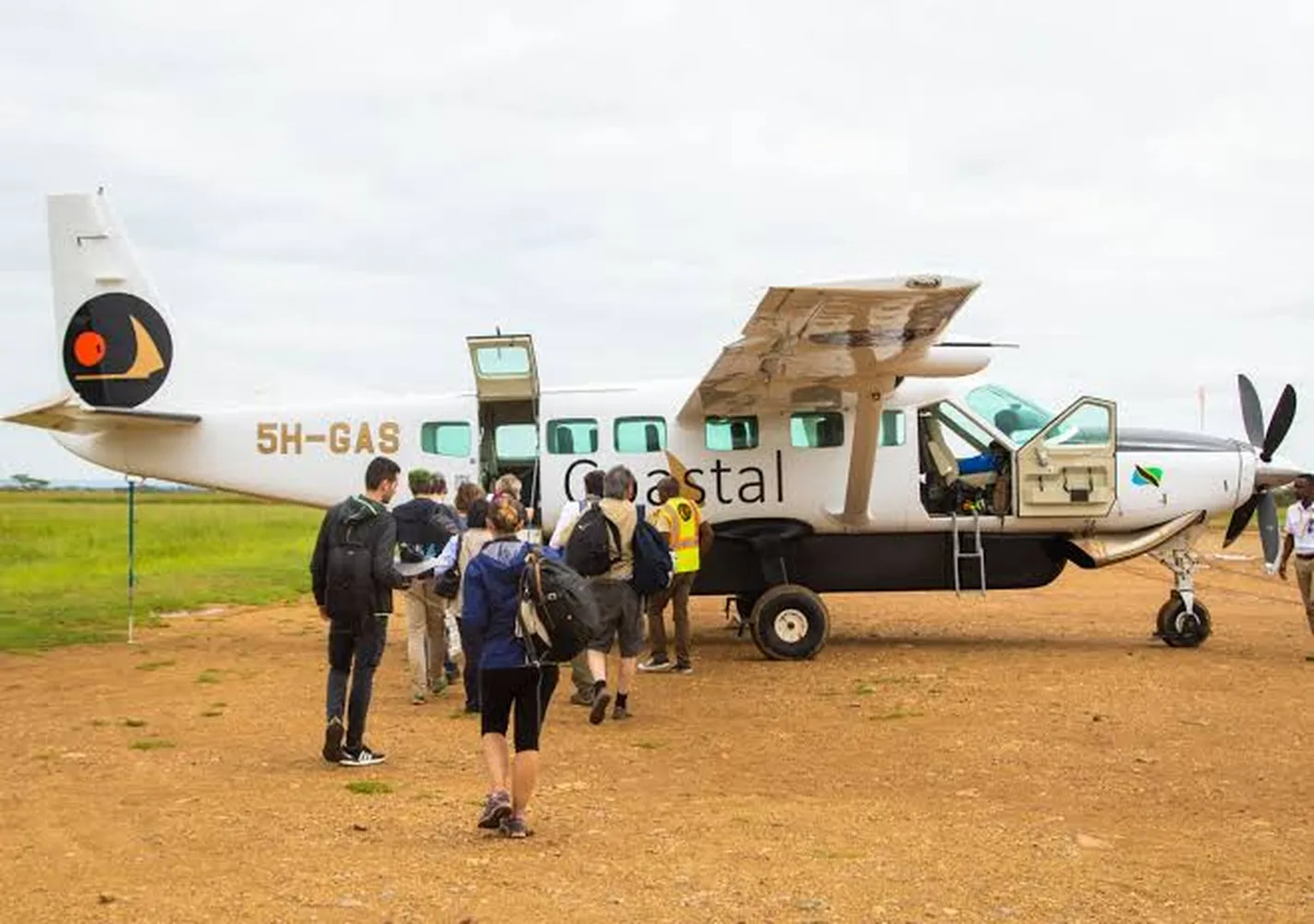
When you only have six days available, any flight delay or cancellation can completely disrupt your itinerary. This is why seasoned tour operators rely on Coastal Aviation, affectionately dubbed the "Safari Airline" of East Africa. Operating for decades, they possess an extensive, highly specialized fleet that features rugged Cessna Grand Caravans (C208B) and fast, pressurized Pilatus PC-12 aircraft. These specific models are engineered to handle short, unpaved dirt and gravel runways safely under diverse weather conditions.
Key Safety Insight: Coastal Aviation maintains a dedicated maintenance facility at the Julius Nyerere International Airport (JNIA) in Dar es Salaam and Arusha, adhering to strict international civil aviation safety standards.
Furthermore, their extensive network means they run regular daily scheduled routes. If one area experiences severe weather, their dispatch matrix can quickly reroute planes, ensuring you are never stranded in the bush. Matching these bush schedules with your premium lodge bookings requires an experienced eye; reviewing our comprehensive framework on how to choose a reliable 6 day safari company will help you align your landing times with your afternoon game drives.
3. Step-by-Step Booking Guide
Booking a bush flight is fundamentally different from purchasing a standard commercial airliner ticket between capital cities. The airstrips are isolated, seats are highly limited, and flight paths are dynamic. Follow this precise protocol to secure your seats:
Step 1: Map Your Specific Park Airstrips
Never book a ticket simply to "Serengeti National Park." The Serengeti spans nearly 15,000 square kilometers and features over half a dozen operational airstrips. Booking a flight to Seronera (Central Serengeti) when your luxury tented camp is located near Kogatende (Northern Serengeti) will result in a costly, exhausting 5-hour drive across the park. Always ask your lodge management team for their exact preferred landing strip before opening the booking portal.
Step 2: Check Availability and Connect Flight Legs
Navigate directly to the official Coastal Aviation Online Portal. Their digital booking system allows you to build multi-stop itineraries. Input your origin point (e.g., Arusha Airport - ARK or Kilimanjaro International Airport - JRO) and your target airstrip. Pay close attention to the morning vs. afternoon departures; missing an early flight could mean waiting until the next calendar day.
Step 3: Establish Ground Support Transfers
Unlike international airports, bush airstrips do not have taxi ranks or rideshare options. There are no terminals—only an open dirt strip and occasionally a small wooden shelter. Your safari guide must be waiting for you when the plane touches down. Understanding how to travel between lodges on a 6 day safari ensures your ground transportation is perfectly synced with your flight arrivals.
4. Luggage Limits & Packing Rules
The single biggest issue travelers face when checking in for a Coastal Aviation flight is luggage compliance. Bush planes utilize narrow belly pods to store bags. Hard-shell suitcases, metal frames, and rigid suitcases with built-in spinner wheels simply will not physically fit into these tight spaces, regardless of how much they weigh.
| Rule Type | Maximum Allowance | Strict Structural Mandate |
|---|---|---|
| Total Weight | 15 kg / 33 lbs | Combined weight of checked baggage and personal hand-carry packs. |
| Bag Geometry | Soft-Sided Only | Duffel style made of canvas, nylon, or soft leather. No hard internal frames. |
| Dimensions | 60cm x 45cm x 33cm | Bags must be malleable enough to be manually squeezed into airplane pods. |
If you arrive at the counter with non-compliant luggage, you will be forced to purchase a soft duffel bag on-site, repack your belongings, and pay expensive storage fees to leave your hard suitcases behind at the terminal. To ensure you don't encounter any surprises at the gate, check out our checklist on how to prepare for fly-in luggage limits on a 6 day safari.
5. Popular 6-Day Safari Flight Paths
To make the most of a 6-day timeline, you need a highly optimized route. Coastal Aviation services two main tracks in Tanzania: the Northern Circuit and the Southern Circuit. Below is an ideal 6-day itinerary optimized for minimal air time and maximum wildlife viewing:
- Day 1: Fly from Arusha (ARK) to Manyara Airstrip. Short drive to Ngorongoro Crater rim.
- Day 2: Full-day game drive in Ngorongoro Crater.
- Day 3: Morning transfer back to Manyara Airstrip; fly out to Seronera Airstrip (Central Serengeti).
- Day 4: Track large carnivores across the central savannah plains.
- Day 5: Catch an internal hopper flight up to Kogatende Airstrip to observe the river crossings.
- Day 6: Mid-day flight from Kogatende straight back to Arusha or Kilimanjaro for your flight home.
For a detailed breakdown of the leg from Arusha into the heart of the savannah, including check-in protocols and views to look out for on the left side of the aircraft, read our detailed guide on how to fly from arusha to serengeti on a 6 day tour.
6. Class Fares & Cost Management
Coastal Aviation offers various fare tiers designed for different levels of flexibility. Understanding these tiers can save you hundreds of dollars in change fees:
- Super Saver Fares: The most economical option, but completely non-refundable and unchangeable. Ideal only if your international flights are 100% locked in.
- Flexi Fares: Allows date modifications up to 48 hours before departure. Highly recommended for multi-destination safaris where weather variations might require tracking animal herds elsewhere.
- Freight / Extra Luggage Seat: If you are a professional photographer traveling with heavy telephoto lenses and tripods that exceed the 15 kg threshold, you can purchase an "Additional Luggage Seat." This increases your total weight limit to 75 kg, allowing you to bring your specialized gear right into the cabin beside you.
7. Frequently Asked Questions
What happens if my heavy camera gear pushes me past the 15kg limit?
You have two options: either pre-book an additional freight seat allowance online which grants you up to 75kg of capacity, or pay a per-kilogram excess fee at check-in if the plane has remaining weight capacity. However, the extra space is never guaranteed on fully booked flights.
Do these light aircraft have onboard restrooms?
No. The Cessna Caravans used for standard bush hopping do not feature onboard toilets. Because most flight legs last between 30 to 90 minutes, passengers are strongly advised to use the terminal facilities before boarding.
Are the flight times fixed, or do they change depending on demand?
While departure windows are scheduled, bush flights function like a bus service. The plane may stop at one or two intermediate airstrips to drop off or pick up other safari travelers before reaching your final destination.
References & Industry Citations
All flight policies, technical specifications, and weight thresholds detailed in this guide reflect current 2026 East African aviation standards. For official updates on immigration requirements, national park entry concessions, and regional flight safety directives, visit the official Tanzania Tourist Board Website or consult the civil aviation manuals via the regional aviation boards.