





Climbing Mount Kilimanjaro is a dream expedition for adventurers worldwide, culminating at the spectacular Uhuru Peak at 5,895 meters (19,341 feet) above sea level. However, the rapid ascent through extreme elevation profiles introduces a significant physiological barrier: Acute Mountain Sickness (AMS). Understanding how to prevent altitude sickness and AMS while climbing Mount Kilimanjaro is the single most critical factor determining whether you reach the summit safely or require emergency descent. This comprehensive medical and technical guide details the proven operational strategies, acclimatization protocols, and preparatory timelines necessary to protect your health during your climb.
Understanding Altitude Sickness and AMS Dynamics
Altitude sickness occurs because atmospheric pressure drops as you ascend, leaving air molecules more widely dispersed. Though the air composition remains 21% oxygen throughout your journey, the reduced barometric pressure means each breath delivers fewer oxygen molecules to your lungs. This lack of oxygen results in arterial hypoxia. Without a gradual profile to adjust, your body suffers intense physiological strain, forcing your heart and lungs to work exponentially harder to maintain cellular equilibrium.
Acute Mountain Sickness is categorized into three stages, each requiring precise management to avoid catastrophic outcomes:
- Mild to Moderate AMS: Manifests as an altitude headache, mild fatigue, dizziness, loss of appetite, or transient sleep disruption. These symptoms are common warnings that require stabilization rather than immediate evacuation.
- High Altitude Pulmonary Edema (HAPE): An advanced condition marked by fluid buildup within the lungs. Symptoms include a persistent wet cough, breathlessness while resting, cyanosis, and intense chest constriction.
- High Altitude Cerebral Edema (HACE): A life-threatening emergency caused by brain tissue swelling due to hypoxia. Signs include ataxia (loss of balance), severe confusion, slurred speech, hallucinations, and eventual coma.
Read More:
Want a deep dive into the physiological differences between mild mountain fatigue and life-threatening medical conditions on the trail?
Read More: Comprehensive Guide on AMS, HAPE, and HACE Stages →Route Choice and Acclimatization Profiles
The primary tactical choice you make occurs long before arriving in Tanzania: selecting your route itinerary. Shorter, compressed schedules suffer significantly higher failure rates because they do not offer adequate time for acclimatization. Opting for a 7 to 9-day itinerary exponentially increases your natural tolerance profile. Routes like Lemosho, Machame, and the Northern Circuit offer built-in geographic advantages that maximize success.
Longer routes leverage the classic mountaineering strategy: "Walk high, sleep low." By trekking to higher vantage points during the day (such as the Lava Tower at 4,630 meters) and descending to lower, sheltered camps to sleep (like Barranco Camp at 3,976 meters), you stimulate red blood cell production without over-stressing your organs during rest periods. This approach keeps your arterial blood oxygen saturated.
| Itinerary Length | Average Success Rate | AMS Risk Evaluation |
|---|---|---|
| 5 to 6 Days | Less than 50% | High risk profile |
| 7 Days | Around 75% - 85% | Moderate risk profile |
| 8 to 9 Days | Greater than 92% | Low, controlled risk |
To ensure your itinerary is executed safely under strict safety compliance, it is vital to learn how to find the best KPAP certified Kilimanjaro tour operators and read authentic reviews. Certified operators follow evidence-based protocols and carry emergency equipment like bottled oxygen and hyperbaric bags on every route.
Read More:
Are you comparing routes? Discover which specific trails offer the best physiological 'walk high, sleep low' layout for optimal safety.
Read More: Evaluating the Best Kilimanjaro Routes for High Success Rates →Pacing, Hydration, and Field Rules
Once you step foot on the trail, your daily physical habits directly control your acclimatization speed. Your guides will constantly remind you of the phrase "Pole, Pole" (Swahili for slowly, slowly). Maintaining an incredibly slow, rhythmic pace keeps your heart rate down and prevents oxygen consumption from outstripping supply. Your energy conservation early in the trek dictates your summit capacity. Pushing too hard on day one or two will catch up with you at higher altitudes.
Hydration plays an equally critical role. The respiratory rate accelerates at high altitudes, and the dry, cold air causes significant moisture loss through exhalation and sweating. You must consume 4 to 5 liters of fluid daily. Supplementing your water with electrolyte mixtures helps maintain essential plasma volumes, balances cellular health, and prevents dangerous fluid imbalances that mimic or worsen mountain sickness.
Your physical gear selection also influences structural comfort and energy consumption during these long, slow marches. Ensure you review how to choose the best hiking boots for Mount Kilimanjaro to guarantee proper stability, warmth, and joint protection across changing climate zones.
Read More:
Managing water delivery systems in freezing weather can be difficult. Learn how to prevent bladder hoses from freezing on summit night.
Read More: Expert Gear Tips for Pacing and Hydration Systems at Sub-Zero Temps →Dietary Habits and Nutritional Support
At high elevations, the human body changes its metabolic demands. Your digestive system operates under minor hypoxic stress, often suppressing your natural appetite. However, skipping meals is dangerous. Carbohydrates are the preferred fuel source at high altitudes because they require less oxygen to metabolize per unit of energy compared to fats or proteins.
Focus on consuming warm, carb-heavy meals provided by your crew, such as porridges, soups, pasta, and rice. Avoid heavy, fatty meats that take longer to digest and can lead to gastrointestinal distress on the trail. Snacks like energy bars, nuts, and dried fruit should be eaten consistently during trekking intervals to keep your glycogen levels stabilized.
Medical Interventions and Prevention Tools
While natural acclimatization forms the foundation of a safe climb, medical prophylaxis can offer an essential extra layer of safety. The most widely proven clinical medication for altitude management is Acetazolamide, commonly known as Diamox. This carbonic anhydrase inhibitor slightly acidifies the blood, stimulating your brain's respiratory center to increase inhalation depth and frequency, even while asleep, effectively preventing nocturnal hypoxemia.
Using medication requires careful management. Climbers should study how to manage Diamox dosage and understand its side effects during a Kilimanjaro climb to avoid misinterpreting common side effects, like mild tingling in the fingers and toes or increased urination, as more serious medical emergencies.
Avoid taking heavy sedatives, sleeping pills, or strong narcotics while at altitude. These substances act as respiratory depressants, dangerously lowering your blood oxygen levels during sleep and masking early indicators of HACE or severe AMS, creating a blind spot for you and your guiding crew.
Read More:
Unsure about what should go inside your personal wilderness first-aid kit? Check out our professional medical checklist.
Read More: Building the Ultimate High-Altitude First-Aid Kit →Pre-Climb Physical Preparation Realities
It is important to understand that physical fitness does not prevent altitude sickness; top athletes can succumb to AMS just as easily as recreational hikers if they ascend too quickly. However, excellent cardiovascular conditioning reduces the overall baseline stress on your body, meaning your heart and lungs can manage the hypoxic environment with less overall wear and tear.
Focus your training on low-intensity steady-state (LISS) cardio, such as long incline treadmill walks, stair climbing, and multi-hour weekend hikes with a weighted backpack. Building strong leg muscles and core stability ensures your body remains efficient, preventing premature physical exhaustion that could compound high-altitude vulnerabilities.
Symptom Tracking and Emergency Protocols
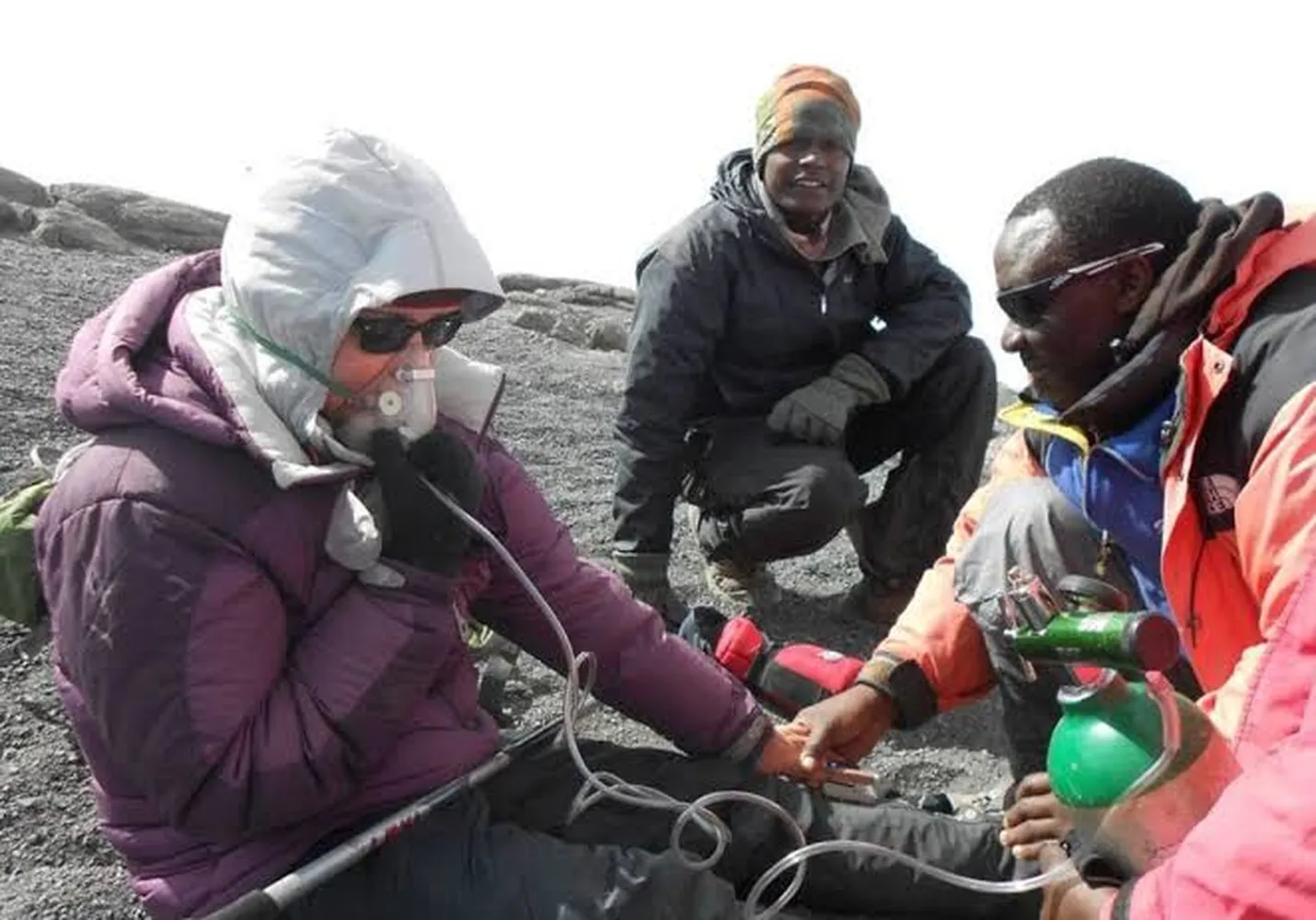
Consistently monitoring your health metrics allows you to catch mild symptoms before they escalate into dangerous territory. Experienced mountain crews conduct mandatory health screenings every morning and evening. These checkups evaluate your resting heart rate and arterial oxygen saturation levels (SpO2) using portable pulse oximeters, cross-referenced with standard tracking indexes like the Lake Louise Score system.
If severe symptoms develop, the golden rule of high-altitude medicine applies immediately: Descend at once. A rapid drop of 500 to 1,000 meters can quickly reverse early HAPE or HACE symptoms and save a life. Because situations can change rapidly during summit night, it is crucial to understand how to handle medical emergencies and understand the evacuation protocol if you get sick on Mount Kilimanjaro, including helicopter evacuation logistics, stretcher operations, and local clinical resources.
For travelers interested in a balanced approach to high-altitude challenges, you can combine your climb with alternative travel styles. See our guide on how to combine wildlife and wellness on a Tanzania mindfulness safari to learn about incorporating post-climb physical recovery, mental rejuvenation, and conservation travel into your itinerary.
Read More:
Do you know how emergency mountain evacuations work in remote national parks? Get the breakdown on helicopter rescue insurance requirements.
Read More: Evacuation Insurance & Helicopter Safety Standards on Kilimanjaro →Frequently Asked Questions
What is the best way to prevent altitude sickness on Kilimanjaro?
The most effective method is choosing a longer trek route (7 to 9 days) to allow your body to adapt naturally, hiking at a slow 'pole pole' pace, staying hydrated, and using prophylactic medications like Diamox under medical supervision.
Can you climb Kilimanjaro without getting AMS?
While over 70% of climbers experience mild altitude symptoms, serious AMS can be averted by following structured acclimatization patterns, monitoring oxygen saturation levels daily, and adjusting trek profiles.
How much water should I drink to prevent altitude sickness?
Climbers are advised to consume between 4 and 5 liters of water daily. Proper hydration maintains blood volume and assists cellular respiration under hypoxic conditions.
Does physical fitness protect you from getting altitude sickness?
No, physical fitness does not protect against altitude sickness. AMS is determined by genetic factors and the rate of ascent. However, fitness helps reduce general physical fatigue on the trail.
References and Medical Resources
This medical guide is compiled based on established high-altitude safety guidelines and mountain medicine research. For additional reference data and clinical standards on altitude sickness prevention, review the official recommendations provided by the Wilderness Medical Society.