





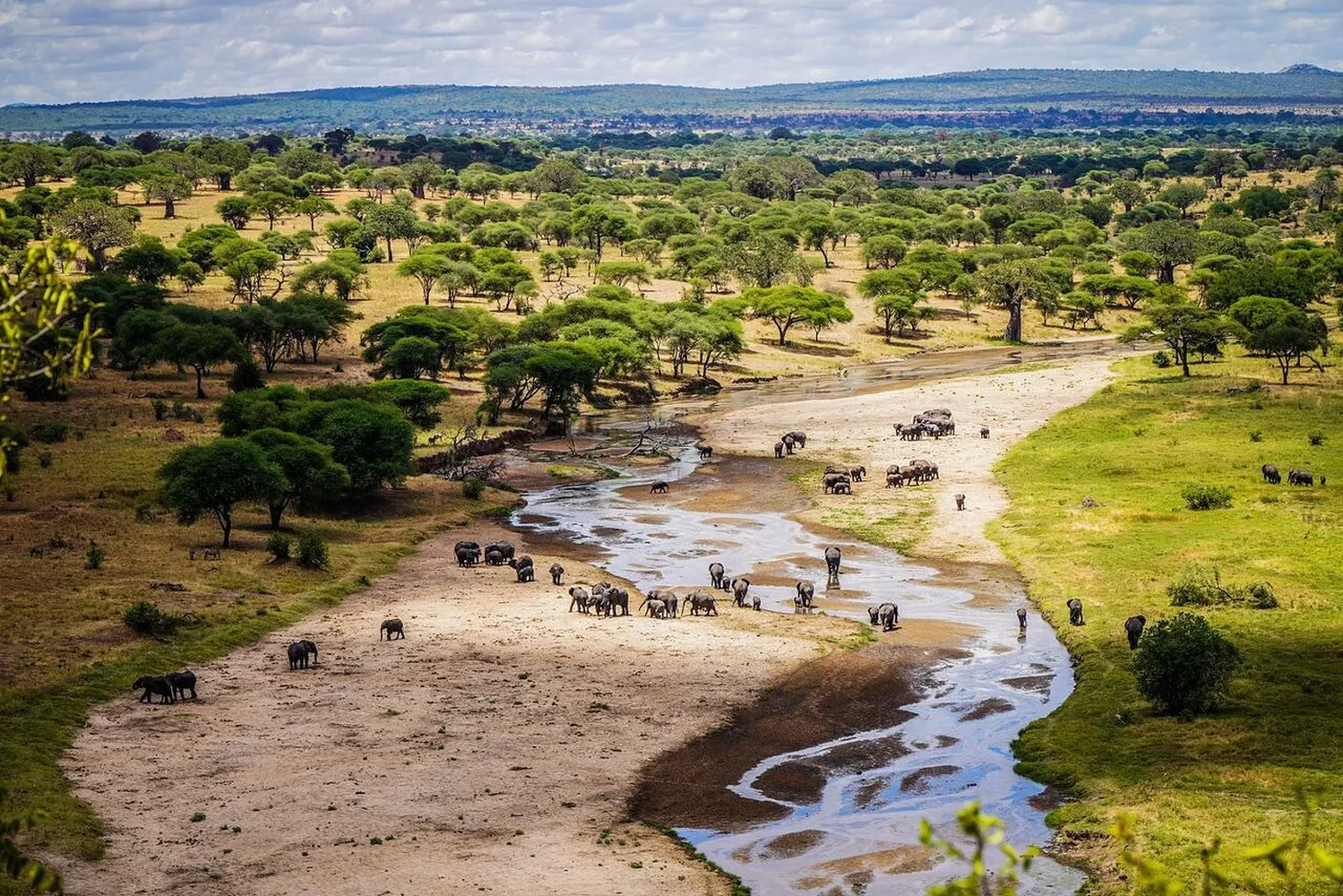
Planning a safari to Tarangire National Park requires a deep understanding of hydrological shifts and migratory corridors. When you discover how to maximize wildlife spotting in Tarangire during the peak dry season, you transform a standard drive into an extraordinary front-row view of apex predator hunts, massive elephant gatherings, and dense multi-species congregations. From July to October, Tarangire undergoes a dramatic ecological transformation, shifting from a sprawling green wilderness into a vital, life-saving refuge for thousands of animals tracking the last remnants of fresh surface water.
1. Tarangire’s Hydrological Dynamics: The Core Driving Force
The secret to locating animals in Tarangire between July and late October lies completely in its water distribution. Unlike the Serengeti, where wildlife moves over vast plains following rainfall patterns, Tarangire experiences a localized, compressed migration pattern. As the surrounding Maasai Steppe dries up, seasonal waterholes vanish completely. This forces over 250,000 animals to retreat inward, converging directly on the permanent waters of the Tarangire River and the expansive, deep-green Silale Swamp system.
To master tracking, you must understand that the park becomes an open-air theater of survival. Predators know precisely where their prey must drink. While learning how to choose your travel season for the best photography lighting in Tanzania helps capture stunning visual textures, tracking during peak dry months ensures that your camera lens is filled continuously with raw wildlife action. Massive elephant family herds, numbering up to 300 individuals, gather along dry riverbeds, using their feet and trunks to dig deep wells into the sand to reach pristine, naturally filtered underground currents.
2. High-Yield Spotting Zones: Mapping Rivers and Swamps
Maximizing your wildlife tracking encounters requires focusing your daily routes on three primary geographical sectors within the park:
- The Central Tarangire River Loops: Focus your morning drives around the Kuro and Matete loops. These areas feature high riverbanks and sandy shores where lions and leopards use dense riverine vegetation as perfect camouflage to ambush thirsty zebras, wildebeests, and waterbucks.
- The Silale Swamp: This massive 30-square-kilometer wetland acts like a giant sponge. During the peak dry months, it turns into a lush green oasis in the middle of a parched brown landscape. It attracts thousands of buffaloes and elephants, which in turn brings out resident lion prides that specialize in big-game hunting.
- Kitibong and Gursi Wetlands: Located further south, these locations provide a quieter, more remote wilderness experience. They are highly recommended for spotting specialized arid-dwelling plains game, such as the elegant fringe-eared oryx and the long-necked gerenuk browsing on thorny acacia branches.
When coordinates are planned efficiently, matching your travel style to the environment becomes simple. If you are exploring broader options across East Africa, learning how to select the safest and most comfortable travel months for a Tanzania family safari provides an excellent structural foundation for building a balanced, crowd-free, and comfortable itinerary.
3. Diurnal Tracking Strategy: Timing Your Game Drives
To capture the ultimate predator action and massive herd arrivals, timing your movements around animal behavior is critical. Wildlife spotting during the dry season follows a strict, temperature-dependent daily schedule:
Early Morning (06:30 AM – 09:30 AM): This is prime time for big cat tracking. Lions, leopards, and cheetahs take advantage of the cool morning air to patrol their territories or feed on kills made overnight. Check the lower branches of old sausage trees and baobabs along the riverbank loops, where leopards frequently store their prey away from hyenas.
Mid-Day to Early Afternoon (11:00 AM – 03:00 PM): While standard safaris head back to camp for lunch, staying in the field during these hot hours yields incredible rewards. This is when the great elephant march happens. Driven by intense heat, massive herds emerge from the dense acacia woodlands and march in long, dust-kicking lines down to the Tarangire River to drink, bathe, and socialize.
Late Afternoon (03:30 PM – 06:30 PM): As temperatures begin to drop, mixed herds of wildebeests, zebras, and impalas cautiously approach water sources for a final drink before nightfall. Predators position themselves downwind in the tall elephant grass, creating highly dramatic moments for safari onlookers.
4. Tactical Tracking Secrets from Professional Guides
Beyond knowing where to drive, seasoned safari trackers utilize subtle environmental indicators to pinpoint cryptic species. During the dry season, the landscape plays to your advantage if you know what to look and listen for.
First, pay close attention to avian warning systems. The sudden, frantic chattering of superb starlings or the harsh barking calls of yellow-bellied greenbuls almost always indicate a moving leopard or a concealed lion pride. Second, leverage baobab tree ecology. Elephants scratch and gouge the soft, moisture-rich bark of these ancient giants during peak dry cycles; fresh, wet gashes indicate a herd is nearby in the immediate terminal brush.
Lastly, always park patiently downwind at high-bank viewpoints overlooking river bottlenecks. Animals are hyper-cautious before descending to drink due to the extreme danger of crocodile and lion ambush. By remaining stationary for 20 to 30 minutes, you allow herd leaders to overcome their hesitation, triggering spectacular mass descents right before your eyes.
5. Peak Dry Season Ecological Key Data
To highlight the incredible concentration of wildlife inside Tarangire National Park during these months, review the real ecological census data and tracking metrics detailed below:
| Wildlife Species | Peak Dry Season Density Zone | Optimal Observation Hour |
|---|---|---|
| African Elephant | Silale Swamp & River Loops | 12:00 PM – 03:00 PM |
| Lion Prides | Riverine Forest Edges | 06:30 AM – 08:30 AM |
| Migratory Herbivores | Central Tarangire Riverbeds | 10:00 AM – 02:00 PM |
| Leopard | Matete Baobab Woodlands | 04:30 PM – 06:30 PM |
While tracking big game is the main draw, don't overlook the incredible birdlife. Tarangire boasts over 550 recorded avian species. For bird enthusiasts, understanding how to catch the spectacular bird migration season in Tanzania’s Great Rift Valley offers an elite perspective on timing your safari to witness both massive mammal gatherings and incredible global avian arrivals.
6. Strategic Planning for Tanzania Safaris
For travelers who want to escape the more crowded Northern Circuit parks, combining Tarangire with a southern wilderness creates an unmatched itinerary. Discovering how to plan a remote safari to Ruaha and Nyerere National Park during the dry season allows you to experience the full scale of Tanzania's rawest ecosystems during their absolute peak wildlife viewing windows.
To ensure total reliability and factual depth, our tracking guidelines are built in coordination with regional conservation frameworks and official park data provided by the Tanzania National Parks Authority (TANAPA), ensuring your wild journeys are safe, highly successful, and perfectly timed.
7. Frequently Asked Questions (FAQs)
Why is the peak dry season considered the absolute best time for Tarangire?
Because natural water sources throughout the surrounding Maasai Steppe dry up completely, forcing wildlife to move into the park and gather along the permanent Tarangire River corridor.
Can I easily see the famous tree-climbing lions in Tarangire?
Yes, during the dry season, Tarangire's lions frequently climb large baobab and sausage trees to catch cooling cross-breezes and escape biting flies on the ground.
What vehicle type is recommended to maximize spotting success?
A closed 4x4 safari vehicle equipped with a pop-up roof is highly recommended. It provides protection during dusty drives while allowing clear, 360-degree views for spotting predators and tall herds.
Conclusion: Master Your Tarangire Peak Dry Season Expedition
Maximizing wildlife encounters in Tarangire during the peak dry season comes down to understanding the park's natural water patterns and planning your drives accordingly. By focusing your tracking along the central river loops, positioning your vehicle near the Silale Swamp during the heat of midday, and following animal schedules, you will experience unmatched views of Africa's great wildlife. Pack quality binoculars, head out for early morning drives, and prepare to witness the spectacular, raw beauty of Tanzania's premier dry season sanctuary.