





Climbing to the roof of Africa is a life-changing adventure, but the immense altitude presents severe physiological risks. When undertaking this expedition, learning how to handle medical emergencies and understand the evacuation protocol if you get sick on Mount Kilimanjaro is an absolute prerequisite for survival. Over 30,000 trekkers attempt to reach the summit annually; however, significant percentages suffer from varying degrees of altitude-related illnesses. Managing these unexpected health crises efficiently requires a deep understanding of standard mountain rescue mechanisms, physiological warning signs, and local logistical frameworks.
Primary Medical Risks on Kilimanjaro
The transition from the lower rain forests to the sub-zero arctic zone near Uhuru Peak places extraordinary stress on the human body. The air pressure drops significantly as you ascend, resulting in fewer oxygen molecules per breath. The most critical medical threats encountered are acute altitude illnesses, which escalate rapidly if ignored.
- Acute Mountain Sickness (AMS): Characterized by headaches, fatigue, nausea, and dizziness. It affects roughly 50% of climbers who ascend too quickly. Proper preparation involves understanding how to prevent altitude sickness and AMS while climbing Mount Kilimanjaro.
- High Altitude Pulmonary Edema (HAPE): A life-threatening buildup of fluid in the lungs. Symptoms include a persistent cough, severe breathlessness even while resting, cyanosis (blue lips/fingernails), and extreme lethargy.
- High Altitude Cerebral Edema (HACE): Fluid accumulation in the brain. It manifests through ataxia (loss of physical coordination), confusion, severe hallucinations, and slurred speech. This is an immediate, grade-one medical emergency that can lead to a coma within hours.
- Hypothermia and Trauma: Severe environmental exposure caused by rapid drops in temperature, or physical injuries resulting from falls along steep terrains, particularly on loose volcanic scree during summit night.
Safety Note: Never attempt to conceal symptoms from your guides. Minor symptoms can turn into critical, life-threatening conditions within an ascent of just a few hundred meters.
To mitigate these physiological risks before stepping foot on the trail, choosing reputable operators is essential. Trekkers should research how to find the best KPAP certified Kilimanjaro tour operators and read authentic reviews to ensure their crew is rigorously trained in medical emergency mitigation.
Expanded Reading on Altitude Illnesses
Want a deep dive into the biological mechanisms of HAPE and HACE on the mountain? Read our complete physiological analysis.
Read More: Altitude Sickness Prevention GuideImmediate Action: How to Handle Medical Emergencies
If a climber displays clinical signs of severe illness or trauma, immediate and structured stabilization protocols must be executed by the guiding team. The primary rule of high-altitude medicine is straightforward: descend immediately. Altitude-induced conditions cannot be resolved by remaining at the same elevation or attempting to "sleep it off."
Guides use specific therapeutic tools to stabilize patients. Supplemental oxygen cylinders are deployed immediately for suspected HAPE or severe AMS. Pulse oximeters are utilized twice daily to record oxygen saturation levels ($SpO_2$) and heart rates. Additionally, specialized medications are carried in emergency kits. For instance, knowing how to manage Diamox dosage and understand its side effects during a Kilimanjaro climb is standard for acclimatization, while stronger medications like Dexamethasone are reserved for acute HACE emergencies.
Medical Management Guidelines
Understanding medical management on the mountain requires a clear breakdown of dosages and indicators. Learn how to responsibly handle clinical interventions.
Read More: Managing Diamox & Emergency MedicationsUnderstanding the Evacuation Protocol
When a medical situation worsens past stabilization, a formal evacuation protocol is triggered. The method of removal relies heavily on weather conditions, the current altitude of the patient, and the structural route being climbed.
| Evacuation Type | Triggering Condition | Operational Speed |
|---|---|---|
| Walking / Assisted Descent | Mild to Moderate AMS; patient stable | Dependent on patient speed |
| Wheeled Steel Stretcher | Severe trauma, inability to walk, HAPE | Rapid manual transport by porters |
| Helicopter Rescue | Immediate life threat (HACE/HAPE), clear weather | Fastest (typically 30–45 minutes) |
1. Ground Evacuation via One-Wheeled Stretcher
The most common method of emergency extraction relies on heavy-duty, single-wheeled steel stretchers. The mountain rescue crew manually navigates the patient down bumpy trails to lower elevations or the nearest park checkpoint. This requires physical exertion from a dedicated team of porters who jog down steep mountain terrain to secure the climber's safety.
2. Helicopter Evacuation Protocol
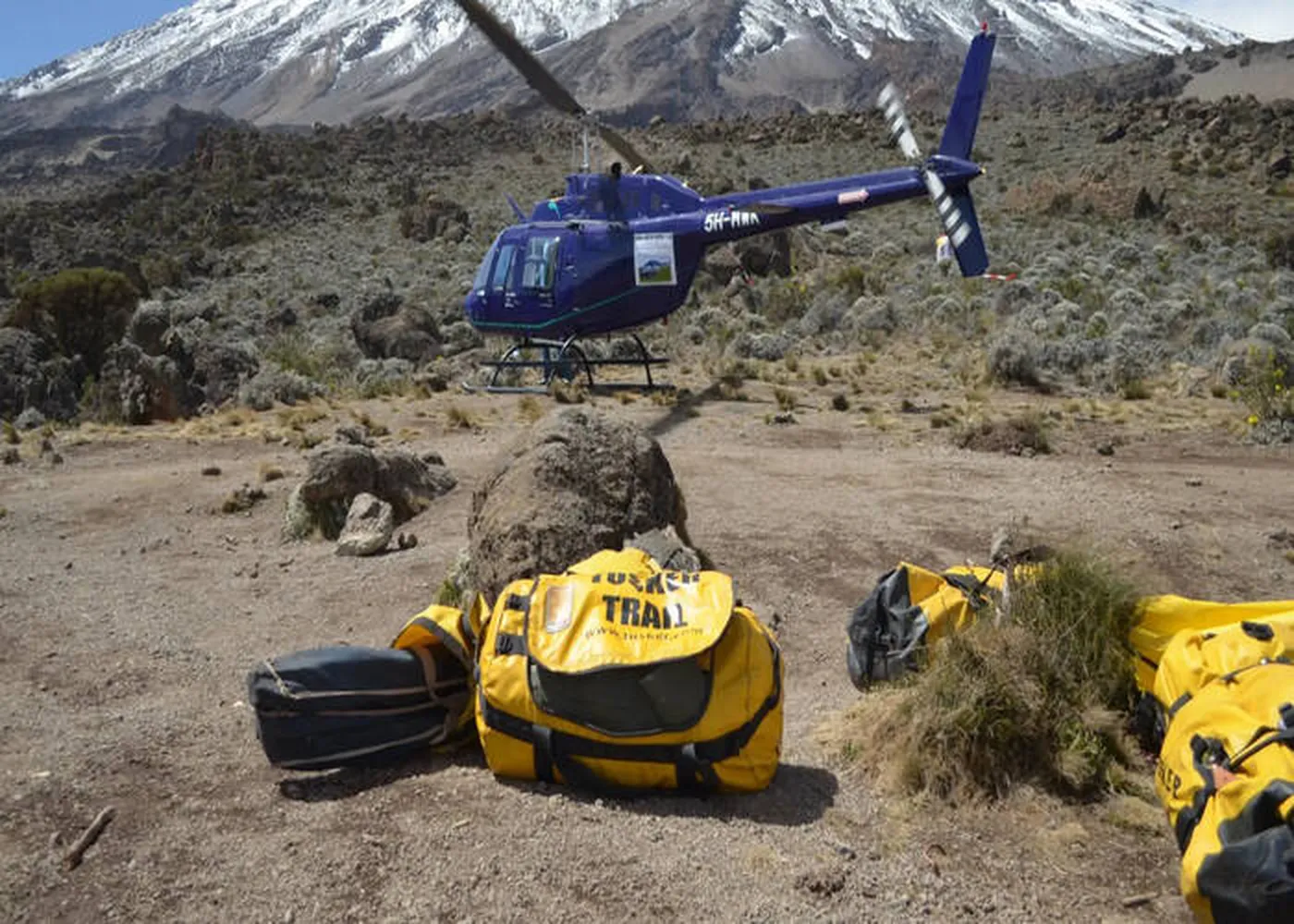
For critical emergencies, helicopter rescue operations are utilized. This specialized medical service is largely handled by authorized emergency evacuation bodies such as AMREF Flying Doctors or Kilimanjaro Search. However, helicopter extraction is subject to strict operational limits:
- Weather Constraints: Heavy cloud cover, dense mountain mist, or high winds prevent helicopters from flying safely or landing.
- Landing Zones: Helicopters can only land at designated, flat clearing zones across specific camps on the mountain routes.
- Elevation Limits: High altitude thin air significantly reduces a helicopter's lift capacity; pickups are rarely feasible directly from the true summit.
Safety Standards and Certifications
Ensure your chosen tour operator is fully certified to interact with emergency medical response units on the mountain. Review authorized safety bodies.
Read More: Finding Certified Safe OperatorsThe Vital Role of Guide Training & Safety Gear
A rescue protocol is only as good as the individuals implementing it. Reputable operators invest heavily in Wilderness First Responder (WFR) certifications for all lead guides. This training qualifies them to diagnose altitude illnesses accurately under extreme environmental stress, differentiate between simple fatigue and clinical AMS, and make critical decisions regarding forced descents.
Every standard emergency toolkit must include a hyperbaric chamber (Gamow bag) on specific high-altitude routes, portable oxygen tanks, a comprehensive trauma kit, and satellite communication devices or high-frequency radios to maintain constant contact with park rangers at the base.
Insurance, Logistics, and Vital Statistics
Understanding how to handle medical emergencies and understand the evacuation protocol if you get sick on Mount Kilimanjaro is ineffective without proper financial preparation. Standard international travel policies universally exclude high-altitude trekking. Climbers must purchase specialized adventure travel insurance that explicitly covers technical mountaineering up to 6,000 meters ($19,341 \text{ feet}$) including medical helicopter evacuation.
Once safely evacuated to the base of the mountain, patients are immediately rushed via ground ambulance to dedicated medical facilities in Moshi or Arusha. Facilities like Kilimanjaro Christian Medical Centre (KCMC) or Arusha Lutheran Medical Centre are fully equipped to handle high-altitude physiological emergencies and deep decompression recoveries.
Post-Climb Recovery and Wellness
After a grueling physical trek, transitioning into relaxation can speed up physical recovery. Discover the optimal way to pair your adventure with therapeutic rejuvenation.
Read More: Tanzania Wellness & Recovery SafarisRoute Selection and Its Direct Impact on Survival Rates
Statistics show that routes with longer itineraries have substantially lower emergency evacuation rates. Shorter routes, such as the 5-day Marangu or 6-day Machame, force rapid elevation gains that can compromise natural acclimatization profiles.
Opting for 7-day or 8-day variations—such as the Lemosho or Northern Circuit routes—allows your body to follow the golden mountaineering rule: "climb high, sleep low." This structural choice drastically minimizes the clinical likelihood of requiring emergency medical intervention or emergency helicopter extractions during your expedition.
Frequently Asked Questions
What is the very first step if I feel sick on Kilimanjaro?
Inform your head guide immediately. Never hide symptoms. Your oxygen saturation will be tested via pulse oximeter, and a localized plan for medication, rest, or immediate descent will be implemented based on clinical criteria.
Can a helicopter pick me up directly from Uhuru Peak?
No. Due to extreme altitude, thin atmospheric air density, and highly volatile wind patterns, helicopters cannot land safely at the peak. Patients must be brought down to lower helipads like Kosovo or Barafu Camp first.
Who covers the cost of a helicopter rescue?
The climber is solely responsible unless they hold specialized travel insurance that explicitly covers high-altitude search and rescue up to 6,000 meters. Ensure your policy details are verified by your operator before climbing.
References & Authority Sources
This mountain safety guide is built upon operational data and high-altitude health guidelines established by the Tanzania National Parks Authority (TANAPA), the Wilderness Medical Society protocols for high-altitude illnesses, and emergency field manuals from AMREF Flying Doctors rescue operations.