





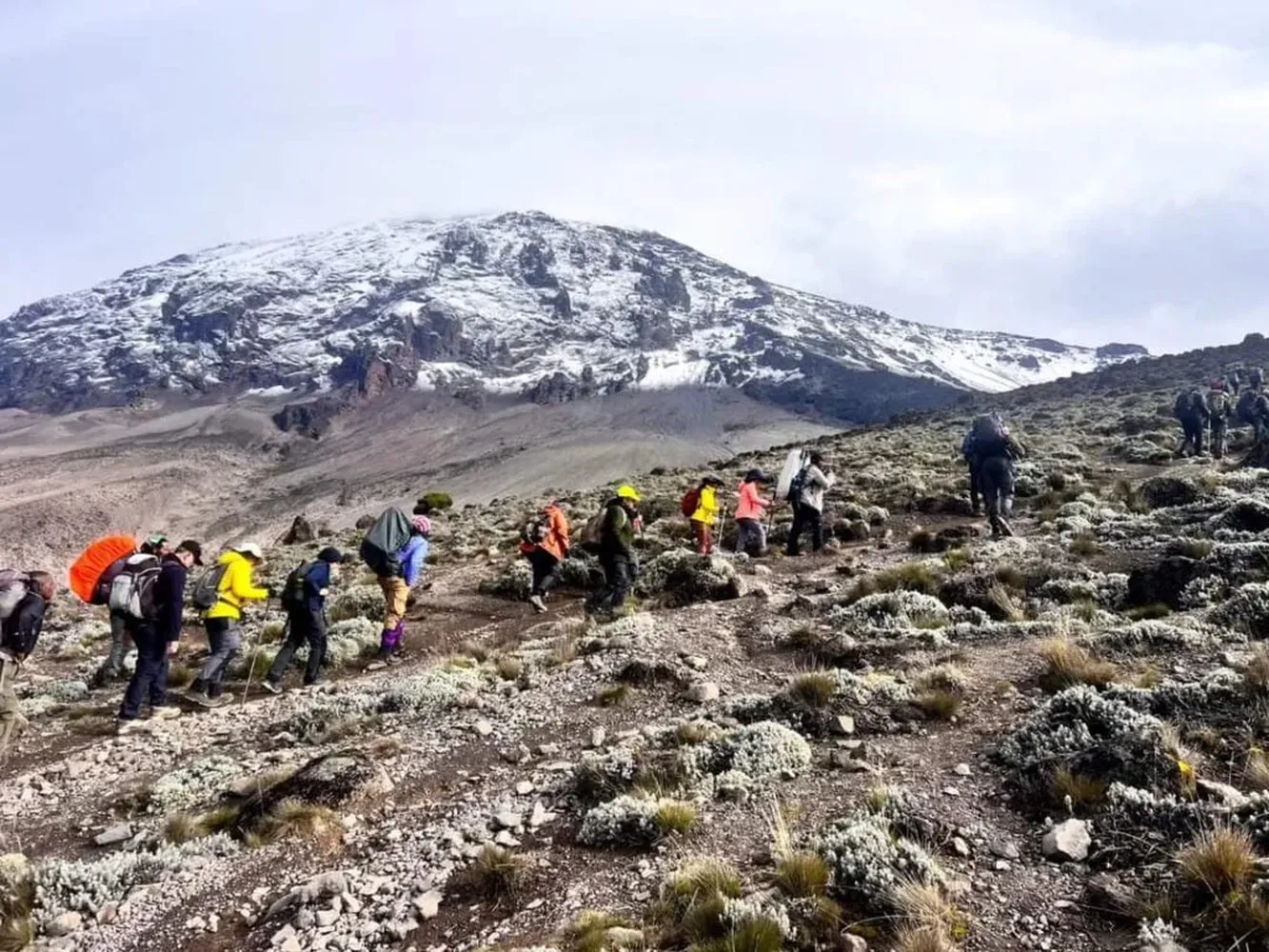
Reading a Rongai route review correctly can completely transform your entire mountain preparation framework. Many adventurers rush onto online forums searching for generic feedback, failing to realize that every single testimonial carries distinct contextual biases based on physical preparation, seasonal choices, and operational logistics. The Rongai route remains one of the most misunderstood pathways on Mount Kilimanjaro due to its remote starting parameters and distinct environmental behaviors. Failing to analyze user feedback carefully can lead you to adopt an incorrect training regimen, select inadequate equipment, or pick an itinerary length that severely limits your body's ability to adjust to high altitudes. By thoroughly exploring these authentic field reviews, you can separate subjective opinions from actionable, data-driven patterns, guaranteeing a safe, structurally sound approach to Uhuru Peak.
How to Locate the Rongai Route: Understanding Its Unique Starting Point on the North Side of Kilimanjaro
Locating the Rongai route correctly within online reviews requires understanding that this specific trail begins along the remote northeastern border separating Tanzania and Kenya. Unlike the popular southern routes that launch directly from the bustling areas of Moshi or Arusha, the Rongai approach demands a long, highly detailed transit operation across rural landscapes. When analyzing traveler logs, you will quickly notice that the journey to the trailhead at Nalemoru Gate can take anywhere from four to five hours. This extended travel time often surprises ill-prepared trekkers who expect a short drive, so analyzing past trip reviews ensures you factor this long commute into your initial day-one logistics. Experienced mountaineers emphasize that this transit should not be viewed as a simple inconvenience, but rather as an essential geographic separation that sets the tone for a completely unique high-altitude expedition.
The distinctive northern placement means that the Rongai route provides an entirely unique perspective of Mount Kilimanjaro's majestic volcanic topography. Traditional pathways like Machame or Lemosho climb the heavily eroded southern faces, whereas Rongai slowly winds up the unblemished, true leeward side of the mountain massif. Review platforms frequently mention how this northern approach offers spectacular, panoramic views across the sweeping Kenyan plains and Amboseli National Park. As you parse these descriptions, you will find that the initial trail sections cut directly through specialized agricultural zones and managed pine plantations rather than the dense, muddy tropical canopies characteristic of the southern slopes. This geographic distinction fundamentally alters your immediate environmental exposure from day one, offering a drier, more open introduction to the mountain's lower elevation zones.
Understanding this northern starting location is also critical because it influences your entire operator coordination strategy. Because the Nalemoru gate is highly remote, top-tier operators must execute precise logistical maneuvers to transport food, fresh water, tents, and safety support structures to the starting boundary. Reviewers who unknowingly selected ultra-budget operators often report delayed starts or missing equipment, caused directly by the complex transport loops required to reach the northern border. When evaluating these specific starting point reviews, always look closely to see how the operator handled the initial drive and border-adjacent staging. Selecting a company that exhibits flawless coordination at Nalemoru Gate is the earliest structural indicator that your team possesses the deep local knowledge required to execute a safe, highly successful alpine ascent.
How to Assess the Difficulty Level: What Climbers in Reviews Say About the Incline and Terrain
Assessing the true physical difficulty of the Rongai route through the lens of online reviews requires filtering out personal fitness biases to identify objective terrain characteristics. Across multiple forums, experienced mountaineers describe the first half of the Rongai route as a gentle, gradual, and remarkably steady incline that feels significantly less demanding than western or southern trails. The paths are generally wide, clearly defined, and completely devoid of the technical, hand-over-hand scrambling required on routes that cross the intimidating Barranco Wall. This continuous, predictable grade allows hikers to establish an efficient, rhythmic pacing strategy early on, preventing premature muscular fatigue and protecting lower-body joints during the initial multi-day push. For individuals concerned about sustained, steep elevation gains during the early phases of a trek, the northern approach offers an exceptionally smooth transition into the mountain environment.
However, an accurate analysis of difficulty reviews reveals a dramatic shift in intensity once the path converges with the Marangu route at the desolate Kibo Hut. Many reviews written by less-prepared hikers contain expressions of shock regarding the extreme physical difficulty of the final summit push. The terrain transitions from stable, dusty paths into massive, loose volcanic scree fields that slide backward with every single upward step. Climbers repeatedly emphasize that the section from Kibo Hut up to Gilman’s Point demands intense cardiovascular stamina and unwavering mental resilience to handle the steep, sliding gravel underfoot. By reading these descriptions closely, you will realize that while Rongai is physically easier on the joints during the initial five days, it matches the absolute highest difficulty standards of any Kilimanjaro route on summit night, requiring exceptional lower-body endurance.

To accurately assess these difficulty reviews for your own planning, you must cross-reference the reviewer's self-reported athletic background with their specific trail descriptions. A seasoned trail runner might call the volcanic scree fields simple and manageable, while an office worker who skipped intensive leg training might describe the exact same path as an exhausting, nearly impossible struggle. Look for specific, concrete mentions of physical indicators, such as how many hours the reviewer spent on the trail each day or how their quad muscles felt after navigating the high-altitude descent paths. Gathering these objective terrain metrics allows you to bypass emotional descriptions and build a highly customized, effective training plan that focuses squarely on the real-world conditions you will face on the northern slopes.
How to Evaluate Scenery Reviews: Comparing Rongai’s Wilderness to Other Crowded Routes
Evaluating scenery reviews for the Rongai route requires looking past simple aesthetic descriptions to understand the unique environmental contrasts of the northern slopes. Hikers frequently write glowing descriptions of the deep, untouched wilderness feel that defines the initial stages of this particular path. Because the northern side sees far fewer foot traffic boots, the natural ecosystems remain remarkably pristine, offering a raw mountain aesthetic that crowded southern routes simply cannot replicate. Reviewers constantly highlight the spectacular, unobstructed views of the expansive Kenyan lowlands sinking into the horizon as you steadily gain elevation. This vast, open-air perspective creates a profound sense of isolation and expansive space, allowing you to connect deeply with the African landscape without the constant distraction of neighboring tour groups or loud base camps.
A crucial detail to watch for in scenery feedback is the distinct absence of a thick, traditional rainforest zone along the northern approach. Southern routes plunge trekkers into dense, humid, and rain-soaked jungle canopies on day one, whereas the Rongai route passes quickly through a much drier, semi-arid montane heather belt. Some reviewers who expected classic, dripping tropical jungles express slight disappointment, characterizing the initial landscapes as dry, dusty, or scrubby. However, advanced eco-trekkers counter this view in their reports, praising the striking beauty of the unique Afro-alpine moorland, characterized by vast fields of prehistoric Senecio plants and delicate everlasting flowers. Understanding this structural landscape difference ensures that you form realistic visual expectations, allowing you to appreciate the stark, beautiful volcanic desert aesthetics that make the northern circuit famous.
When comparing these visual landscapes to alternative options like Marangu or Machame, reviews consistently point out the unmatched photographic positioning offered by Rongai. The path circles the dramatic eastern flank of the mountain, providing stunning, close-up perspectives of both the jagged, dark volcanic spires of Mawenzi Peak and the massive, ice-capped dome of Kibo. Photographers frequently note in forum trip reports that the lighting conditions on the northern and eastern slopes during sunrise are spectacular, completely free from the heavy morning mist that often blankets the southern faces. Evaluating these scenery reviews correctly means recognizing that while Rongai may lack the lush, wet greenery of the south, it delivers an unparalleled, raw, and high-desert wilderness experience that is visually magnificent from start to finish.
How to Analyze Weather Reports: Why Reviews Praise Rongai as the Best Choice During Rainy Seasons
Analyzing weather evaluations within Rongai route reviews requires an understanding of the regional microclimates and rain shadow effects that govern Mount Kilimanjaro. The vast majority of standard reviews enthusiastically praise the northern slopes as the absolute safest and driest option for anyone trekking during the volatile shoulder months or the official rainy seasons of April, May, and November. This is because the massive volcanic bulk of Kilimanjaro acts as a giant natural barrier against moisture-laden winds coming from the Indian Ocean. The southern and western faces intercept these wet air masses, resulting in heavy downpours and thick mud on routes like Machame and Lemosho. Meanwhile, the northern side experiences a pronounced rain shadow effect, which means it receives significantly less total rainfall and experiences far fewer disruptive mountain storms throughout the year.
When you look closely at specific seasonal trip reports, you will find detailed descriptions of how these drier trail conditions translate to daily physical comfort on the mountain. Reviewers who climb Rongai during wet periods frequently note that while they watched massive storm clouds gather on the southern side of the peak, their own trail remained entirely clear, dry, and easily passable. This reduction in precipitation means you are far less likely to spend your hiking hours slogged down in deep, energy-draining mud or dealing with completely saturated trekking gear inside your tent. Keeping your personal apparel and sleeping equipment completely dry during the initial phases of the climb is an enormous logistical advantage that directly preserves your physical energy and prevents early cold-weather issues like hypothermia.
However, a sophisticated reading of weather reviews should also alert you to the distinct cold profiles that characterize the northern slopes. Because the Rongai route is highly exposed to dry continental air masses moving across the plains, the campsites can experience intense, piercing winds that cause overnight temperatures to drop rapidly. Reviewers consistently warn that even though it doesn't rain frequently, the dry chill at Simba Camp and Second Cave can feel incredibly biting the moment the sun drops below the horizon. When analyzing these weather reports, do not confuse "dry" with "warm"; instead, use this specific climatic data to prepare an elite windproof layering system and a high-performance sleeping setup that can easily handle sub-zero temperatures in dry conditions.
How to Verify Acclimatization Schedules: Reviewing the 6-Day vs. 7-Day Rongai Itineraries
Verifying acclimatization details in Rongai route reviews is arguably the most critical step in ensuring your safety and ultimate success on the mountain. The online review ecosystem is split into two distinct categories: reports detailing the accelerated 6-day itinerary and profiles evaluating the extended 7-day variation. When you isolate the 6-day reviews, you will encounter a disproportionately high number of complaints regarding acute mountain sickness (AMS), severe headaches, extreme fatigue, and sudden summit failures. This pattern occurs because the 6-day profile forces trekkers to ascend quickly from Second Cave up to Kibo Hut, skipping a vital mid-elevation staging window and giving the human body insufficient time to adapt to the rapidly thinning atmosphere at high altitudes.
In sharp contrast, reviews of the 7-day Rongai itinerary consistently report a highly manageable, safe, and comfortable acclimatization journey across all elevation tiers. The 7-day framework introduces a critical, built-in rest and adaptation day at the specific location known as Third Cave. Reviewers who have experienced this variant describe how this extra 24-hour window allows their resting heart rates to stabilize and helps maintain excellent blood oxygen saturation levels before they face the demanding conditions of the higher camps. Physiological feedback found on tracking forums confirms that this single additional day dramatically improves your body's internal adaptation processes, making the final high-altitude push significantly safer and less shocking to your nervous system.
When parsing these specific itinerary reviews, you must always look closely to see exactly which variation the individual climber chose before you weight their personal success or failure. If a reviewer states that the Rongai route felt dangerously rushed or physically overwhelming, you can almost always trace that negative experience back to a poorly planned 6-day choice. Professional guide assessments and seasoned climber trip reports strongly recommend avoiding the 6-day option completely, regardless of your personal fitness level or athletic background. Investing in the 7-day northern trek ensures you are utilizing a scientifically sound acclimatization profile that aligns perfectly with elite mountain safety protocols.
How to Understand the Camp-by-Camp Experience: What to Expect from Simba Camp to Kibo Hut
Understanding the exact camp-by-camp progression of the Rongai route through user reviews allows you to mentally map your daily energy expenditures and recognize key trail milestones. The expedition kicks off at Nalemoru Gate, leading to your first overnight stay at Simba Camp, which rests peacefully at the edge of the heather moorland zone. Reviewers consistently praise Simba Camp for its quiet, tranquil atmosphere and gorgeous evening views over the lowlands. The transition on day two takes you to Second Cave, a beautiful, open campsite where hikers begin to experience the expansive, wide-open mountain environments. Testimonials highlight this specific section as an enjoyable, steady walk that helps build solid lower-body endurance without causing early joint strain or excessive muscular fatigue.
As you read further into advanced trip reports, the physical layout of the route shifts toward Kikelelwa Camp, or Third Cave, depending on your selected itinerary structure. Kikelelwa Camp is frequently described as a stunning, high-altitude location tucked beneath the towering ridges of Mawenzi Peak, offering an immersive alpine experience. Reviewers note that the air begins to feel distinctly thin and crisp at this stage, making proper hydration and slow, deliberate pacing absolutely essential. From there, the path crosses the vast, dry alpine desert known as the Saddle to arrive at the intimidating, stark outpost of Kibo Hut. Reviews of Kibo Hut focus heavily on its rocky, windswept nature and freezing temperatures, serving as a serious, high-altitude launching pad where teams gather their strength before launching the midnight summit push.
Analyzing these specific camp reviews closely helps you identify valuable, real-world operational tips that can make your stays vastly more comfortable. For instance, past climbers often mention exactly which campsites are prone to heavy evening dust or where tent placement is critical to avoid strong wind gusts. They also provide key details regarding the availability of natural water sources, which helps you plan your personal water filtration and purification strategies for each day. By studying these detailed camp-by-camp summaries, you can eliminate unexpected surprises, ensuring you arrive at each specific mountain location with the correct gear, clothing, and mindset needed to rest effectively and recover for the next day's challenges.
How to Identify the True Success Rates: What Real Data and Reviews Reveal About Reaching Uhuru Peak via Rongai
Identifying the true summit success rates of the Rongai route requires looking past superficial marketing percentages to analyze authentic, independent tracking data and climber logs. Many budget tour agencies post flat, unrealistic success metrics online, often claiming a generic 95% success rate for every single path they offer. However, objective reviews and independent data from the Kilimanjaro National Park Authority reveal a much more nuanced, realistic statistical reality. For climbers who select the rushed 6-day Rongai itinerary, the true success rate drops down to roughly 65% to 70%. This significant decrease is caused entirely by altitude-related complications, as the fast ascent profile prevents proper acclimatization, forcing many otherwise fit hikers to descend early due to severe AMS symptoms.
Conversely, when you look at verified reviews and trip reports for the 7-day Rongai variation, the true success metrics climb significantly to an impressive 85% to 90%. This substantial statistical jump highlights just how powerful that single extra acclimatization day at Third Cave is for your body. Reviewers who successfully reached Uhuru Peak via the northern route emphasize that their achievement was not driven by extreme physical strength, but rather by following a patient, disciplined, and slow climbing strategy. By analyzing these data-heavy reviews, you quickly learn that success on Kilimanjaro is directly tied to the structure of your itinerary rather than simple physical conditioning, making the 7-day northern path one of the smartest options on the entire mountain.
To accurately evaluate success metrics within individual review posts, look closely at the specific reasons why certain hikers failed to reach the summit. Frequently, trip logs reveal that failures were caused by clear, preventable mistakes, such as ascending too quickly in the early stages, ignoring mild early symptoms of altitude sickness, or using inadequate cold-weather gear on summit night. When you filter out these user-error accounts, the inherent success profile of the Rongai route shines through as exceptionally reliable. Choosing the 7-day option and pairing it with a professional, safety-focused guiding company maximizes your probability of standing safely on Uhuru Peak, turning the positive reviews you read into your own real-world success.
How to Filter Fake Reviews: Spotting Fabricated Operator Testimonials on TripAdvisor and Forums
Filtering out fake testimonials within the massive ecosystem of TripAdvisor, Google, and specialized mountain forums is a vital skill when researching the remote Rongai route. Because this specific trail requires complex logistics and long transit operations near the Kenyan border, lower-tier budget agencies often fabricate highly glowing, unrealistic reviews to draw in unsuspecting clients. To spot these artificial testimonials, look for overly enthusiastic marketing language that repeatedly mentions the full company name in almost every paragraph. Fake reviews also tend to use generic, vague phrasing like "Everything was perfect" or "The food was amazing," without ever providing specific details about daily campsite designations, guide names, or real physiological challenges encountered along the way.
Authentic, trustworthy reviews, on the other hand, are rarely flawless marketing brochures; they naturally include specific, granular, and sometimes messy human details. A real trekker will share authentic stories about a stubborn zipper on a tent, a specific meal that didn't sit well at 4,000 meters, or a slight delay during the morning gate registration process at Nalemoru. True reviews frequently mention their mountain guides, porters, and camp cooks by their actual local names, describing personal interactions and specific acts of care during difficult moments on the trail. When you find reviews filled with these highly detailed, specific personal experiences, you can trust that you are reading an authentic account of an actual expedition rather than a staged marketing script.
Another elite strategy for filtering your review data is to check the complete history and profile of the reviewer across the platform. If an account was created very recently and has only posted a single, hyper-positive review for one specific Tanzanian tour operator, there is a very high probability that the post is fake. Look for reviews written by established global travelers who have documented multiple trips over several years, as their feedback offers reliable, objective benchmarks. Diligently identifying and removing these fabricated promotional posts allows you to protect yourself from deceptive operators, ensuring your pre-climb research is built entirely on authentic, real-world mountain experiences.
How to Check Wildlife Content in Reviews: What Are the Real Chances of Seeing Animals on Day One?
Checking wildlife observations within Rongai route reviews requires managing your expectations by separating optimistic marketing brochures from actual, real-world trail data. Many promotional agency sites highlight the northern slopes as a prime wildlife viewing zone, occasionally leaving travelers with the unrealistic expectation of an active safari experience on day one. However, when you look closely at authentic traveler logs, you will find a much more grounded reality. The initial sections of the Rongai route pass through a mix of managed pine plantations, local agricultural plots, and low-elevation montane heather zones. Because these lower areas see regular human activity from park rangers and local communities, large safari animals are rarely seen directly on or alongside the active hiking trail.
That being said, authentic reviews do consistently highlight unique, smaller wildlife encounters that are highly specific to the quiet northern ecosystem. Hikers frequently write about spotting beautiful black-and-white Colobus monkeys swinging through the canopy during the early hours of the trek, alongside a vibrant variety of high-altitude birds like the striking white-necked raven. Reviewers also mention finding clear signs of larger wildlife, such as elephant tracks or buffalo droppings, in the muddy patches around Simba Camp and Second Cave. These indicators show that wild animals do move through these remote northern slopes, particularly during the quiet overnight hours when human trail traffic disappears completely, adding a wonderful, authentic touch of wild African nature to the experience.
To analyze these wildlife reviews accurately, you must understand that any potential animal sighting is an entirely random, occasional bonus rather than a guaranteed daily itinerary event. If your primary goal for visiting Tanzania is to see massive herds of big game up close, you should rely on a dedicated post-climb safari through the Serengeti or Ngorongoro Crater rather than expecting it on the mountain. Appreciating the subtle, quiet wildlife details mentioned in authentic Rongai trip reports—like the unique bird calls or the silent movement of small forest antelopes—allows you to enjoy the raw, untouched wilderness feel that makes the northern circuit so incredibly special.
How to Evaluate Crowd Levels: Why Reviews Consistently Rate Rongai as a Peaceful and Quiet Trail
Evaluating crowd-level reports within Rongai route reviews highlights the route's status as a peaceful sanctuary compared to the crowded southern trails. On busy paths like Machame or Marangu, choke points frequently form, forcing hikers into long, slow lines behind large tour groups. Reviews of the Rongai route constantly praise the deep silence and empty pathways encountered during the first four days of hiking. Because the northern entrance receives only a tiny fraction of total park visitors, you can often trek for hours without hearing or seeing another team. This high level of environmental isolation is highly valued by modern travelers looking for a profound, meditative wilderness experience rather than a packed, commercial festival atmosphere at camp.

However, when interpreting these low-crowd descriptions, smart readers should look for the specific trail dynamic that occurs late in the trek. As noted in comprehensive camp-by-camp reviews, the peaceful isolation of the northern slope changes dramatically on day five when the trail reaches Kibo Hut. At this specific intersection, the Rongai route merges directly with the high-traffic Marangu route. Reviews written by experienced mountaineers warn that the base camp can feel jarringly loud and chaotic after days of absolute wilderness quiet. Recognizing this geographic convergence prevents unexpected shock, allowing you to mentally prepare for a busier environment as you make your final push to Uhuru Peak alongside climbers from all over the world.