





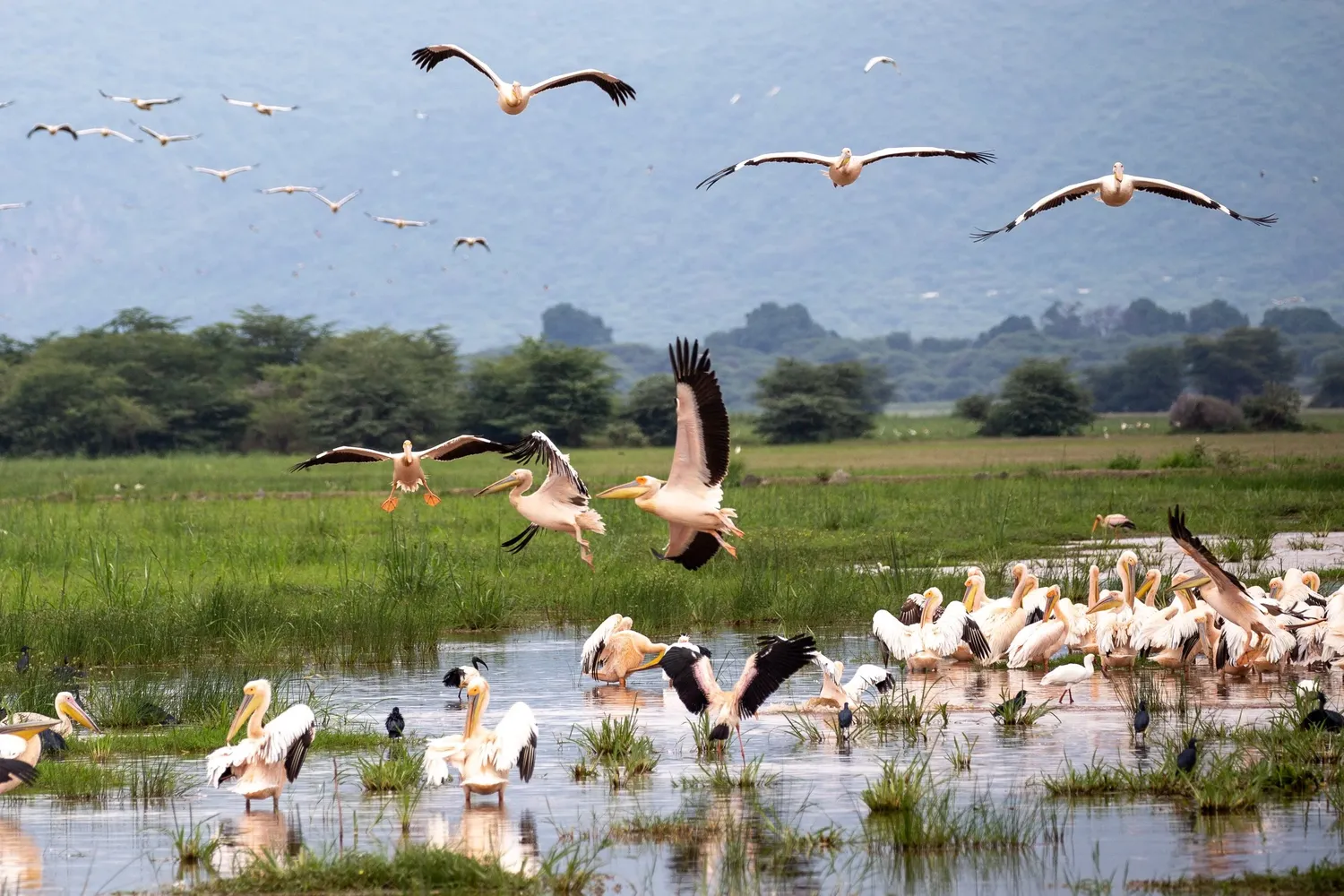
Tanzania’s Great Rift Valley serves as one of the most vital ecological corridors on earth, particularly for avian populations. Every year, a phenomenal environmental event takes place as millions of Palearctic and intra-African migratory birds descend upon the alkaline lakes and savannahs of this geological trench. For conservationists, ornithologists, and wildlife photographers, discovering how to catch the spectacular bird migration season in Tanzania’s Great Rift Valley unlocks access to over 1,100 recorded bird species, transforming a traditional big-game safari into a world-class birding expedition.
The Mechanics of the Rift Valley Avian Migration
The Great Rift Valley functions as a massive natural funnel for flight paths. As temperatures drop across Europe and Northern Asia between September and October, hundreds of species of raptors, waterbirds, and passerines initiate a long-distance journey southward along the West Asian-East African Flyway. The unique combination of thermal updrafts generated by the volcanic escarpments and the food-rich alkaline waters along the valley floor provides an exceptional refueling network.
These soda lakes, rich in specialized blue-green algae (Arthrospira fusiformis) and small crustaceans, support enormous flocks of Lesser and Greater Flamingos. The high mineral content of the water creates a unique ecosystem where cyanobacteria flourish, offering an endless food supply for the arriving flocks. To appreciate this event fully, travelers should combine their birding itineraries with key big-game excursions. Understanding how to maximize wildlife spotting in Tarangire during the peak dry season can reveal how species cluster around permanent water sources just before the rains trigger major migratory movements.
Planning an Avian Safari for the Family?
Discover structural and weather parameters to ensure a safe, smooth journey across remote tracking areas with young children.
Read More »Top Strategic Hotspots Along the Tectonic Trench
To successfully trace the bird migration, you must target the specific aquatic and terrestrial habitats where these species concentrate. The Rift Valley’s chain of lakes forms a crucial network of refueling stops, each offering a distinct microclimate and specific nutrient profile:
- Lake Manyara National Park: Famous for its groundwater forests and alkaline mudflats, Manyara hosts over 400 bird species. During the peak migration, the lake surface turns bright pink with millions of flamingos, alongside columns of Great White Pelicans and Yellow-billed Storks. The surrounding acacia woodlands also shelter Eurasian Bee-eaters and various European Rollers.
- Lake Natron: This highly caustic body of water is the ultimate breeding ground for East Africa’s Lesser Flamingos. Over 75% of the global population of Lesser Flamingos are hatched here, making it an irreplaceable destination for conservation photography. The high water temperatures and extreme alkalinity act as a natural barrier against predators.
- Lake Eyasi: Beyond its cultural significance, the seasonal grass flats of Eyasi attract numerous migrant waders, including sandpipers, plovers, and avocets fleeing the harsh northern winter. When the water level drops, the exposed mudflats become prime feeding zones.
When executing a multi-destination circuit across these remote points, choosing the right time of year is vital to prevent remote vehicle access issues. Travelers can benefit from analyzing strategies on how to plan a remote safari to Ruaha and Nyerere National Park during the dry season, as road conditions across Tanzania's wild networks require careful planning.
Seasonal Dynamics: When to Pack Your Optics
The migratory calendar is closely tied to seasonal weather patterns across East Africa. The transition from the dry season to the short rains triggers dramatic changes in food availability, altering flight paths almost overnight. The table below illustrates the typical distribution of species and localized environmental indicators over a standard annual cycle:
| Months | Migration Status | Target Avian Cohorts |
|---|---|---|
| Sept – Oct | Early Arrival | Raptors, Steppe Eagles, Honey Buzzards |
| Nov – Dec | Peak Abundance | Waterbirds, Waders, Palearctic Warblers |
| Jan – Mar | Breeding Focus | Lesser Flamingos (Natron), Local residents |
| Apr – May | Northward Departure | Flocks gathering for return journey |
Maximizing Visual Outcomes and Lighting Control
Photographing fast-moving birds against the high-contrast backdrops of alkaline lakes requires advanced planning and technical skill. The bright white crust of soda lakes can easily trick camera exposure meters, resulting in severely underexposed subjects. Professional photographers rely on manual exposure control and selective spot metering to capture the vivid feather details of flamingos and pelicans.
The choice of travel window affects more than just species counts; it directly impacts the quality of your image backgrounds and ambient contrast. During the green season, dust particles are washed from the air, providing exceptional clarity for long-distance telephoto shots. For a deeper breakdown of how atmospheric shifts influence your portfolio, see our technical article on how to choose your travel season for the best photography lighting in Tanzania.
Want to Master Safari Photography Timing?
Learn how to map out golden-hour contrast and seasonal dust dynamics across northern and southern wilderness systems.
Read More »Field Equipment Checklist for Professional Birding
To successfully capture the fast-paced bird migration season in Tanzania's Great Rift Valley, you need specialized equipment. Standard safari gear is often insufficient for distant waterbirds or small canopy dwellers. The vast landscapes of the Rift Valley, combined with the extreme glare from alkaline lake beds, demand high-performance gear that can withstand dust, heat, and long distances. Investing in the right tools ensures you don't miss rapid aerial behaviors or subtle plumage diagnostics.
- Advanced Optics and Binoculars: Binoculars with 8x42 or 10x42 magnification are recommended for sharp, steady image clarity in low-light environments. For open water surfaces like Lake Natron, a high-quality spotting scope (20x to 60x magnification) mounted on a heavy-duty tripod is absolutely essential for scanning distant mudflats where rare waders forage. Look for phase-corrected prisms and anti-reflective coatings to minimize the harsh midday equatorial glare.
- High-End Telephoto Lenses: A lens with a focal length of at least 400mm to 600mm is necessary to frame distant waders without disturbing their natural behavior. Professional sports and wildlife photographers prefer fast prime lenses (such as f/4 or f/2.8) or high-grade superzooms (like 150-600mm or 200-600mm). These allow you to maintain high shutter speeds (at least 1/2000s to 1/3200s) to freeze the motion of fast-flying species like the Lesser Kestrel or European Roller.
- Stabilization and Support Systems: Beanbags designed for safari vehicle window frames provide a stable platform for heavy lenses during extended observation sessions. When tracking birds outside the vehicle on guided walking safaris near Lake Eyasi, a sturdy carbon-fiber monopod with a gimbal head offers the perfect balance between mobility and structural support, reducing arm fatigue during multi-hour stalks.
- Audio Recording Equipment: Many canopy-dwelling passerines and nocturnal raptors are heard long before they are seen. Carrying a compact directional shotgun microphone or a portable digital audio recorder allows you to capture clean bird calls. You can cross-reference these audio files later using professional acoustic databases or mobile apps like Merlin Bird ID to confirm rare migratory warbler sightings.
- Protective Field Clothing and Sun Gear: The Great Rift Valley can experience rapid temperature shifts. Lightweight, moisture-wicking clothing in neutral colors (khaki, olive, or brown) is mandatory; bright colors can startle sensitive avian species. Additionally, because the white soda crust of the lakes reflects intense UV radiation, polarized sunglasses and a wide-brimmed safari hat are critical to prevent eye strain during long tracking hours.
- Reference Material and Digital Tools: Using updated field guides, such as the latest edition of Birds of East Africa, helps with quick identification of subtle plumage variations in wintering warblers. Complement your physical books with digital checklists like eBird to contribute to ongoing citizen science projects and monitor real-time migration updates from other trackers in the northern circuit.
Field Note from Local Experts: According to data recorded by the Tanzanian Bird Atlas project, sudden changes in water levels and chemical salinity along the Great Rift Valley lakes can cause massive flamingo movements within less than 48 hours. A heavy downpour fifty miles away can alter the lake's ecology overnight. Therefore, working with a flexible outfitter who coordinates directly with local community tracking networks, Maasai scouts, and park rangers is key to a successful, high-yield birding trip.
Frequently Asked Questions
When is the absolute peak window to catch the bird migration season in Tanzania’s Great Rift Valley?
The most productive period runs from late November through February. This is when Palearctic migrants from Europe and Asia are present in maximum numbers, taking full advantage of the insect boom caused by the short rains. Simultaneously, resident birds display vibrant breeding plumage and engage in complex courtship displays, offering photographers the best visual diversity of the entire year.
Do I need a specialized guide for a birding safari compared to a standard game drive?
Yes, booking with a certified ornithological guide is highly recommended. Avian identification depends on recognizing subtle, localized calls, flight profiles, and seasonal plumage variations that general safari guides might easily overlook. A specialized specialist guide understands specific micro-habitats, knows exactly where rare species hide, and carries specialized tracking equipment to optimize your daily itinerary.
How do changing water levels in the Rift Valley soda lakes affect bird photography?
Water levels directly dictate how close you can safely get to the birds. High water levels spread the bird populations across wider areas, making long lenses essential. Low water levels expose massive mudflats, which are excellent for tracking shorebirds but can make the terrain dangerous or physically inaccessible for heavy safari vehicles. Tracking water levels via weekly satellite updates or local guide networks is crucial before setting out.
Is malaria a concern when visiting the Rift Valley lakes during migration season?
Yes, because the peak migration season overlaps with the regional rainy seasons, mosquito activity increases near freshwater sources and marshes. While alkaline waters like Lake Natron suppress mosquito breeding due to high salinity, the surrounding wetlands and delta feeding systems do not. Travelers should consult a travel medicine expert regarding malaria prophylactics and use long-sleeved insect-shield clothing during early morning and late evening field sessions.
Scientific References Supporting Rift Valley Ecology
To ensure structural validity, this guide aligns with research data published by the Tanzania Wildlife Research Institute (TAWIRI) and tracking archives from the East Africa Natural History Society. These organizations track environmental variations and avian population shifts along the key soda lakes of the eastern rift branch.
Conclusion
Successfully catching the spectacular bird migration season in Tanzania’s Great Rift Valley requires balancing precise seasonal timing with the right high-performance gear. By focusing your trip around key waters like Lakes Manyara, Natron, and Eyasi between November and April, you will experience one of the planet's greatest wildlife spectaculars. Plan ahead, pack premium optics, and work with local experts to fully discover Tanzania's rich avian heritage.